Commercial HVAC downtime doesn't just mean discomfort in San Mateo—it means lost revenue, frustrated employees, and customers walking out. Here's how to protect your business.
Most business owners focus on the repair invoice—parts, labor, maybe an emergency service fee. That’s the visible cost. The real damage shows up everywhere else.
A Redwood City restaurant without working AC during lunch rush doesn’t just lose that day’s revenue. They lose customers who won’t come back and reviews that warn others away. A San Mateo office building where employees can’t focus costs more in lost productivity than the actual HVAC repair. A retail store in Hillsdale where shoppers leave within minutes loses sales that never get recovered.
Commercial HVAC isn’t about comfort. It’s about your ability to operate. When systems fail, businesses in San Mateo’s commercial corridors face a choice: close your doors or try to stay open while watching customers and productivity disappear.
Walk into any San Mateo office when the air conditioning has been down for six hours. Nobody’s focused on work. They’re focused on how miserable they are.
This isn’t employees being dramatic. When indoor temperatures climb above 77 degrees, cognitive function measurably declines. Decision-making slows. Errors increase. Productivity drops by percentages you can track. Multiply that across your entire staff, and one day of HVAC failure often costs more in lost work output than the emergency repair bill.
Customer experience suffers even faster. Restaurant diners notice uncomfortable temperatures immediately and don’t return. Retail shoppers who walk into stuffy stores walk right back out. Professional offices that can’t maintain comfortable meeting spaces lose credibility with clients who remember everything.
For San Mateo businesses, reputation damage spreads fast online. One bad experience becomes a review that potential customers read for years. Emergency HVAC service calls come with premium pricing—often double or triple standard rates—because contractors know you’re desperate and every other business waited until failure to call.
If your business involves temperature-sensitive inventory, equipment, or materials, you’re potentially looking at complete loss. Medical offices, restaurants with food storage, tech companies with server rooms, and retail spaces with specific product requirements can’t afford even brief outages without facing thousands in damaged goods.
The pattern holds across industries: businesses that treat commercial heating and cooling as an afterthought pay for it repeatedly in ways that don’t show up on repair invoices. Those that maintain systems proactively avoid most of these cascading costs entirely.
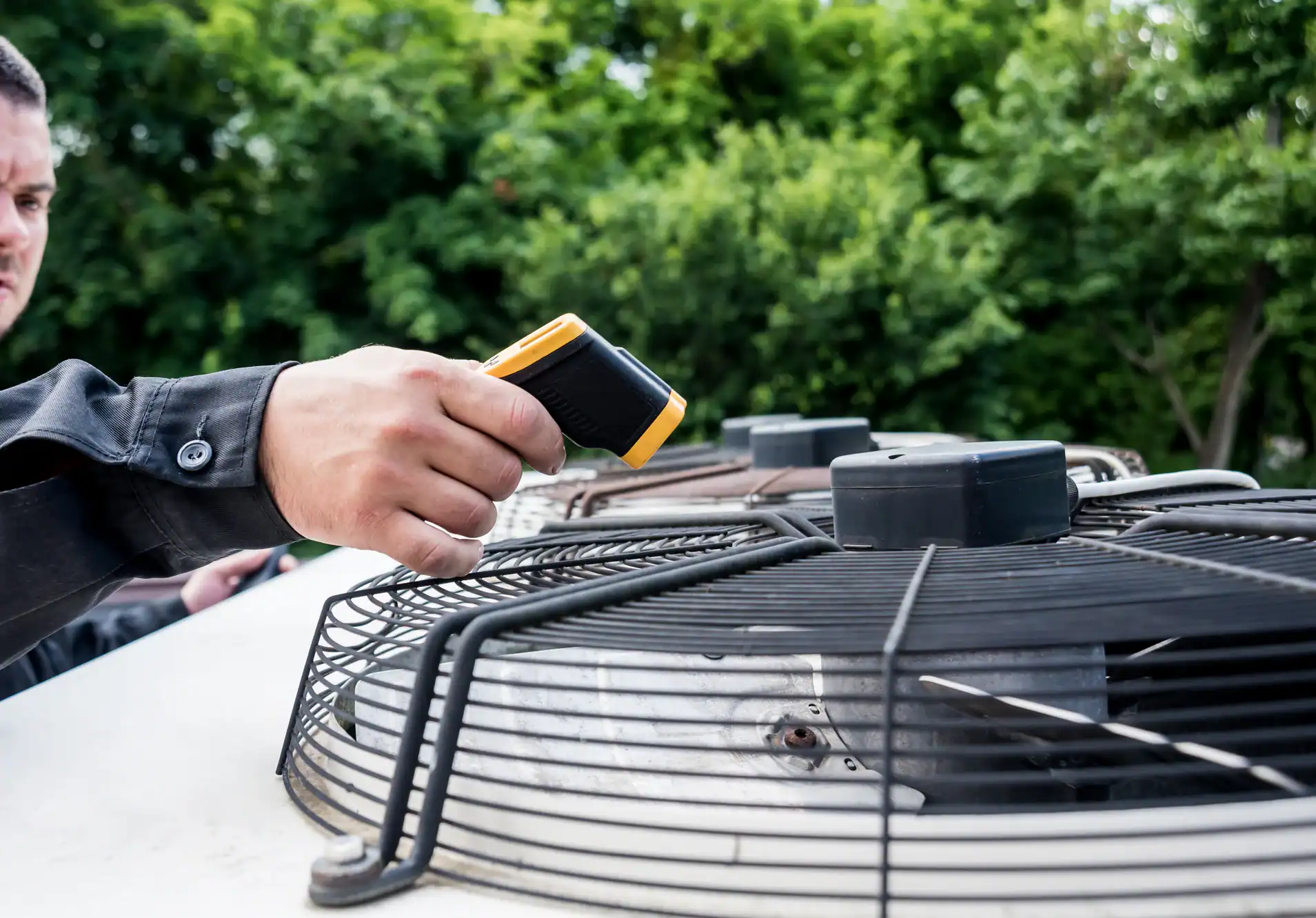
Most commercial properties across San Mateo County rely on rooftop HVAC units. They’re space-efficient, powerful, and reliable—until they’re not.
The problem with rooftop systems is visibility. You don’t see them daily. You don’t notice when filters clog with debris, when coils accumulate buildup, or when belts start showing wear. By the time symptoms become obvious inside your building, the system is often well past simple fixes and heading toward complete failure.
Rooftop units face constant exposure to San Mateo’s coastal climate—salt air, temperature swings, seasonal weather changes, and debris accumulation. These systems work harder than most business owners realize, cycling constantly to maintain comfortable indoor environments against external conditions that challenge them daily.
The most common failure points are also the most preventable. Dirty filters restrict airflow, forcing systems to work harder and putting stress on motors and compressors until something breaks. Clogged condensate drains cause water damage and trigger safety shutdowns. Worn fan belts slip or snap, leaving you without air circulation during the worst possible weather. Refrigerant leaks slowly degrade cooling capacity until your system can’t keep up with demand no matter how long it runs.
What makes these failures particularly frustrating for San Mateo business owners is that they’re almost always predictable. Commercial HVAC systems don’t suddenly die—they show warning signs for weeks or months beforehand. Energy bills creep higher. Temperatures become inconsistent across different zones. Unusual sounds come from the rooftop. Systems take longer to reach desired temperatures.
Business owners who catch these signs early get to schedule repairs on their timeline, during slow periods, with normal service rates. Those who ignore them end up calling for emergency commercial air conditioning service during July heat waves, paying premium rates, and potentially closing their doors while waiting for parts to arrive.
The difference between these outcomes isn’t luck or newer equipment. It’s whether someone with commercial HVAC expertise is regularly inspecting your system before small problems become expensive emergencies.
Get a Free Quote!
Connect with a Eco Air Cooling and Heating expert for fast, friendly support.
San Mateo businesses that avoid HVAC disasters aren’t the ones with the newest equipment. They’re the ones that treat their heating and cooling contractor relationship like the business partnership it should be.
Preventative industrial HVAC maintenance doesn’t prevent every possible issue—equipment ages, components wear out, and unexpected failures still occur. But it dramatically shifts the odds in your favor. Instead of hoping your commercial HVAC system survives another summer, you know exactly what condition it’s in, what it needs, and when you’ll need to budget for replacements.
Regular maintenance catches small problems while they’re still small. A worn belt gets replaced during a scheduled visit instead of snapping during your busiest sales week. A refrigerant leak gets sealed before it destroys your compressor. A clogged drain line gets cleared before it causes water damage to your ceiling.
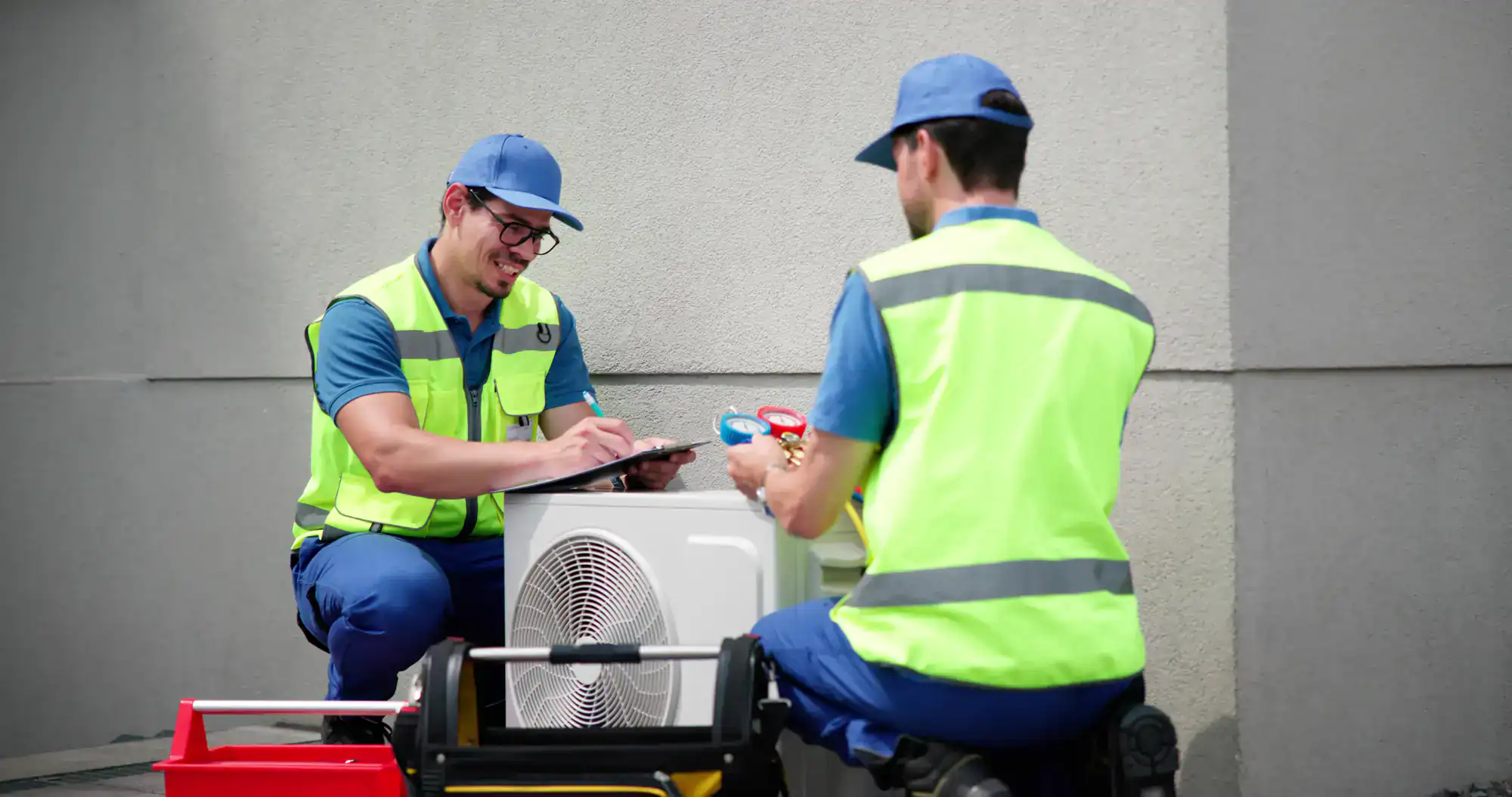
Real commercial HVAC maintenance goes well beyond changing a filter. For rooftop units serving San Mateo businesses, a thorough service visit covers every system that keeps your building operational.
Our experienced technicians start with complete visual inspection of the entire unit, looking for obvious signs of wear, damage, or deterioration that business owners can’t see from ground level. We check electrical connections, tighten components that have loosened from constant vibration, and test safety controls to ensure everything shuts down properly if problems occur.
Filter inspection and replacement is basic but critical for commercial systems. These units move enormous volumes of air compared to residential systems, and dirty filters don’t just reduce efficiency—they can cause complete system failure. Coils get cleaned to maintain proper heat transfer. Condensate drains get flushed to prevent clogs that trigger emergency shutdowns.
Refrigerant levels get checked and adjusted when needed. Low refrigerant doesn’t just mean poor cooling—it damages your compressor, turning a simple leak into a complete system replacement that costs tens of thousands. Belts get inspected for wear and proper tension. Motors get lubricated. Thermostats get calibrated to ensure accurate temperature control across all zones.
For businesses in San Mateo’s commercial districts, this level of attention means systems that run efficiently, last years longer, and fail far less often during peak seasons. The maintenance visit itself typically takes a few hours, scheduled during times that don’t disrupt your operations. Compare that to the days of downtime and thousands in lost revenue when systems fail unexpectedly during your busiest periods.
The best maintenance programs also include detailed documentation of everything found and everything done. You get records that show your system’s health over time and help you budget for upcoming needs instead of getting blindsided by emergency replacements. For businesses managing multiple locations across San Mateo County, this documentation becomes invaluable for tracking performance and making informed decisions about when to repair versus replace aging equipment.
Not every HVAC contractor understands commercial work. Residential heating and cooling and commercial HVAC might use similar equipment, but the stakes, the complexity, and the service expectations are completely different.
When your home AC breaks, it’s inconvenient. When your business HVAC breaks, it’s a financial emergency that costs you money every single hour it continues. You need contractors who understand that difference and respond accordingly—answering calls promptly, showing up when they commit to, and treating your downtime like the business crisis it is.
Commercial systems are also more complex than residential units. Rooftop installations, zoned climate control for different areas, integrated building management systems, and equipment that runs constantly under heavy loads all require specific expertise. A contractor who’s excellent with home systems might be completely out of their depth with commercial applications and industrial HVAC maintenance requirements.
Local experience matters significantly. Contractors who’ve worked extensively in San Mateo and Redwood City understand the specific challenges of the area—coastal climate patterns, common commercial building configurations, typical system installations, and seasonal demands that stress equipment. They know which systems work best for different business types and how to maintain them in local conditions.
You also want contractors with depth and capacity. One-person operations might offer lower prices, but what happens when they’re booked solid during a heat wave and your system fails? Established companies with multiple experienced technicians can respond faster, handle emergencies without leaving you waiting for days, and provide consistent service even during peak demand periods when everyone needs help simultaneously.
Look for contractors who communicate clearly about what your system needs, why it needs it, and what it will cost. You shouldn’t need an engineering degree to understand what’s wrong with your commercial air conditioning service. Good contractors explain problems in plain language, offer options when possible, and help you make informed decisions about repairs versus replacements based on your business needs and budget.
Long-term relationships matter in commercial HVAC. Contractors who maintain your system year after year develop deep knowledge of your specific equipment, your building’s quirks, and your business’s operational requirements. They spot developing problems faster, recommend solutions that fit your situation, and help you plan for future upgrades or replacements before you’re forced into emergency decisions.
For San Mateo businesses, finding a heating and cooling contractor with decades of local experience, a proven track record of commercial work, and the capacity to respond when you need them isn’t just about comfort—it’s about protecting your ability to operate without costly interruptions.
Commercial HVAC failures cost San Mateo businesses far more than repair invoices. They cost productivity, revenue, customer trust, and competitive advantage. The difference between businesses that weather these challenges and those that suffer repeatedly comes down to whether they treat climate control as critical infrastructure or just another expense to minimize until something breaks.
Preventative maintenance, responsive service, and contractors who understand commercial operations aren’t luxuries for San Mateo County businesses—they’re baseline protection against downtime that directly impacts your bottom line. Rooftop units and commercial air conditioning systems don’t fail randomly. They fail predictably, after showing warning signs that get ignored until emergency repairs become the only option.
The businesses that avoid these costly scenarios work with experienced commercial HVAC contractors who know San Mateo’s market, understand the urgency of business operations, and maintain systems before problems become crises. Since 1985, we’ve provided that level of service to commercial and residential clients throughout San Mateo County, with the local expertise, experienced technicians, and responsive service that keeps businesses running when it matters most.
Summary:
Article details:
Share: