AC running but the house is still hot? Walk through the most common reasons your central air isn't cooling — and when to call for help.
Your AC is running. The fan is going. The thermostat is set where it should be. And your house is still hot. That’s one of the more frustrating HVAC situations you can find yourself in — because everything looks like it’s working, but clearly something isn’t. Before you spend hours searching for answers or wait days for a technician, there are a few things worth checking on your own. Some of them take five minutes and cost nothing. Others are a sign you need a professional. Here’s how to tell the difference — and what’s most likely going on with your system.
The fact that your system turns on is actually useful information — it rules out a total electrical failure. But a running system and a cooling system are not the same thing. There are several reasons your central air can be running while doing almost nothing to lower the temperature inside your home.
The most common culprit is one most homeowners overlook: a dirty air filter. When a filter gets clogged, it restricts airflow through the system so severely that the evaporator coil — the part responsible for absorbing heat from your indoor air — can actually freeze over. At that point, you might feel air blowing, but it isn’t cold. According to the U.S. Department of Energy, a clogged filter can cause your system to use up to 15 percent more energy while delivering noticeably less cooling. One survey found that 29 percent of Americans never replace their filter at all.
Other common causes include low refrigerant, a dirty or blocked condenser unit outside, a tripped circuit breaker on the outdoor unit, or a thermostat that’s been accidentally switched to “fan only” mode instead of “cool.” That last one is worth checking first — it takes ten seconds and has saved more than a few homeowners an unnecessary service call.
When the fan is clearly running — you can feel air moving through your vents — but that air isn’t cold, the problem is almost always somewhere in the refrigeration side of the system rather than the air handling side. That distinction matters because it changes what you should check next.
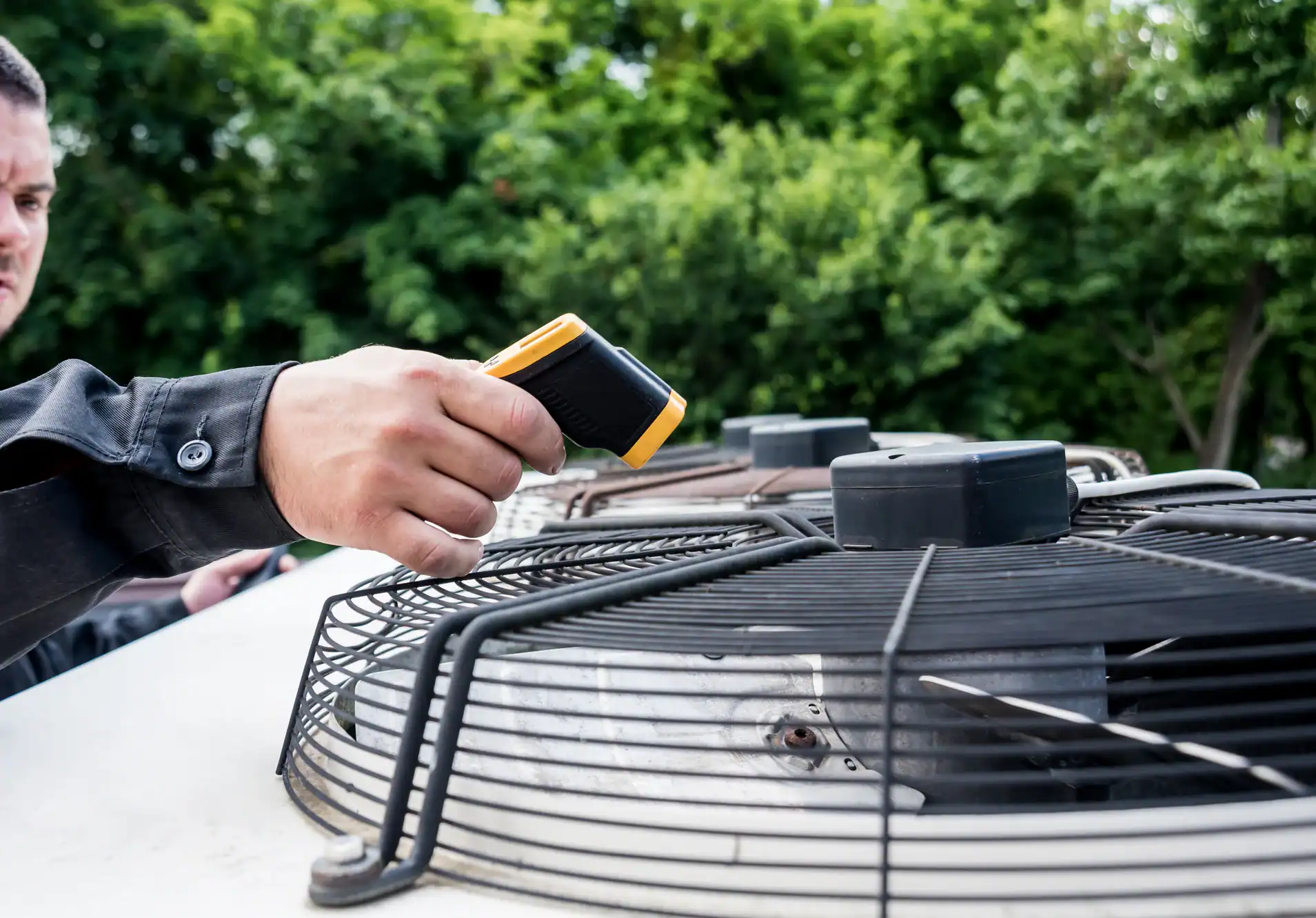
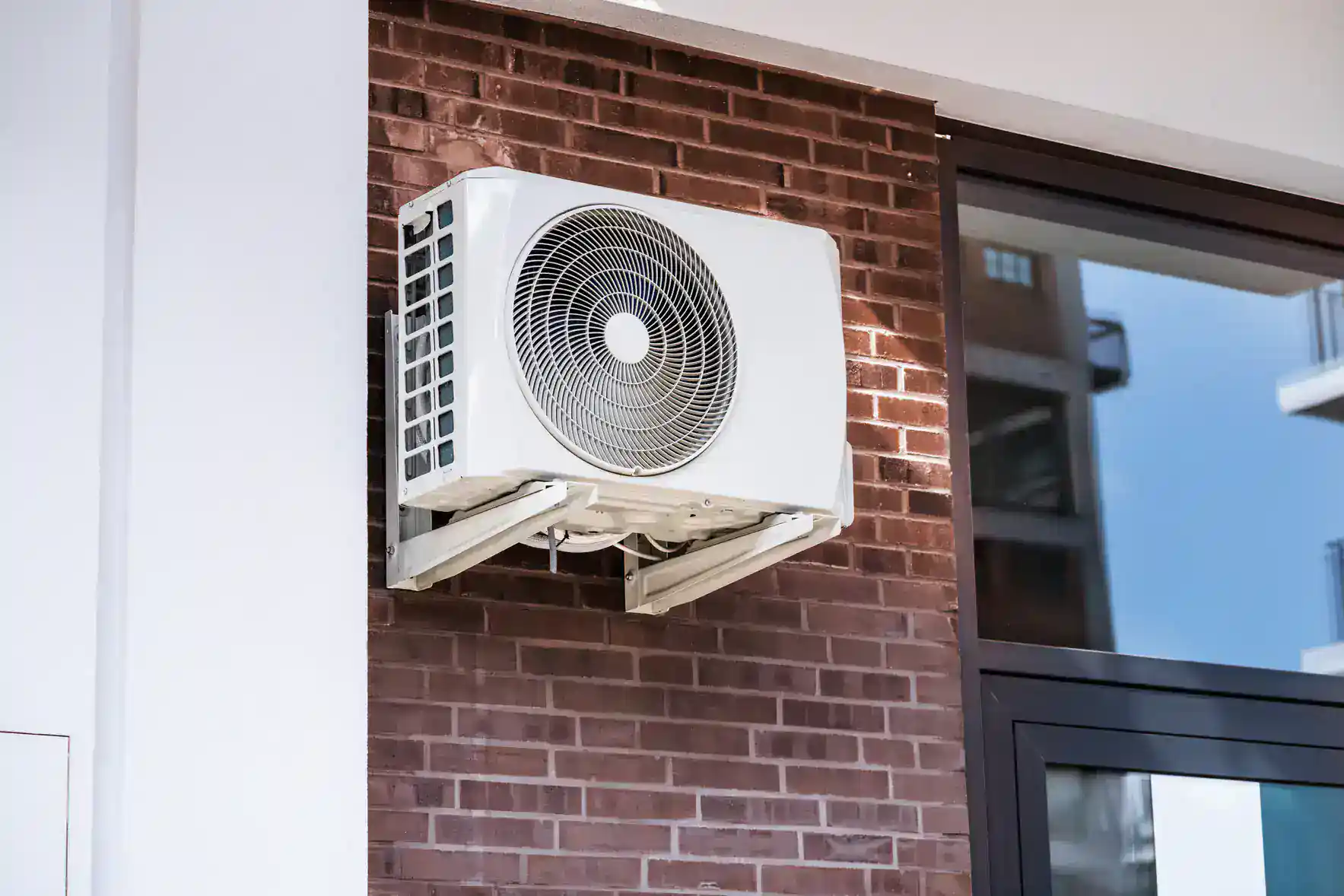
Start by walking outside and looking at your condenser unit. This is the large box that sits outside your home, and it’s responsible for releasing the heat your system pulls from inside. If it’s buried in overgrown shrubs, surrounded by leaves and debris, or if the fins look visibly dirty and matted, heat transfer is being strangled. Dirty condenser coils can reduce your system’s cooling efficiency by as much as 30 percent — meaning it’s working hard and accomplishing very little.
If the outdoor unit looks clean and clear, the next possibility is refrigerant. Refrigerant isn’t consumed under normal operation — if levels are low, that means there’s a leak somewhere in the system. A refrigerant leak is not a DIY repair. Federal law requires EPA Section 608 certification to handle refrigerants, so this is a job for a licensed technician. The symptom to watch for is air from your vents that’s slightly cool but never gets cold, even after the system has been running for a while.
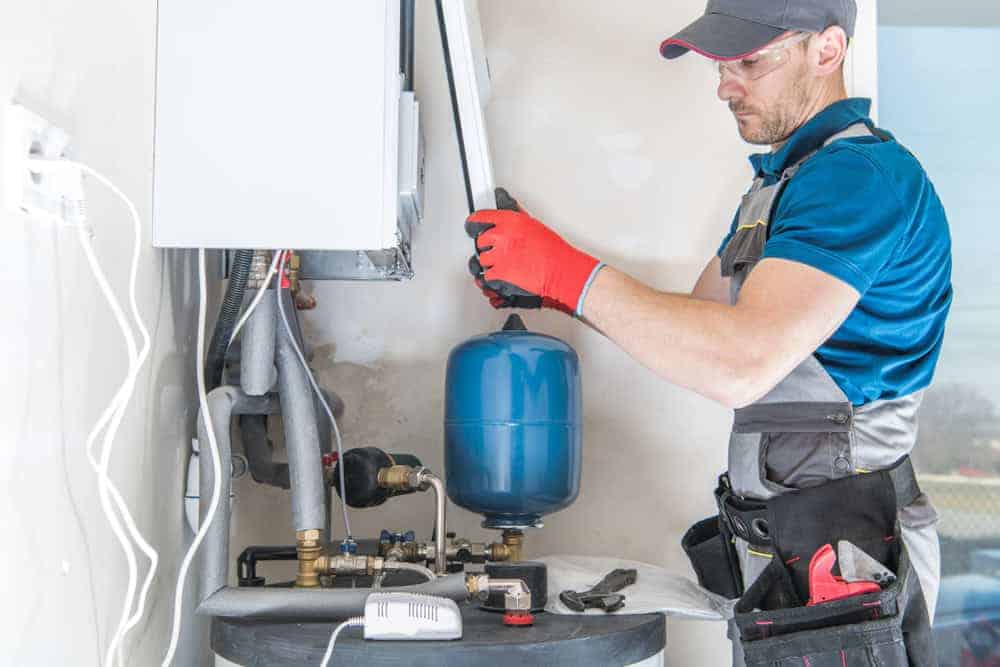
There’s also the compressor to consider. The compressor is the heart of your AC system — it’s what pressurizes the refrigerant and drives the entire cooling cycle. A failing compressor can cause the fan to run normally while producing little to no cooling. Compressor issues are among the more serious (and more expensive) failures in a central air system, which is why catching smaller warning signs early — like a capacitor that’s starting to fail — matters. A capacitor that costs around $40 to replace can, if ignored, take out a compressor that costs significantly more.
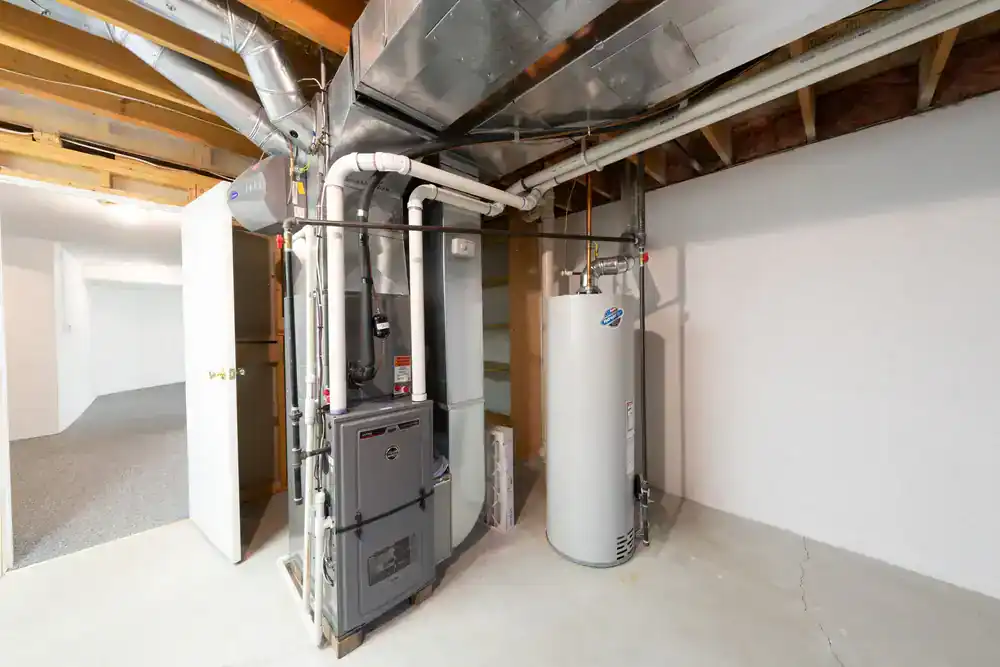
One more thing worth checking: the air handler inside your home. If you go to your indoor unit and notice ice forming on the copper lines or on the unit itself, that’s a frozen evaporator coil. Turn the system off and let it thaw — typically one to four hours — before running it again. If it freezes again after thawing, something is causing it to happen repeatedly, and that needs a diagnostic.
There’s something specific about living in San Mateo County that changes how AC failures happen here — and it’s worth understanding if you want to know why your system might be struggling right now.
Most of the Bay Area sits in a mild climate band where temperatures rarely push into the upper 80s or 90s for more than a few days a year. That means a lot of AC systems in San Mateo County run lightly — or not at all — for most of the year. A system that operates infrequently can develop problems that go completely unnoticed until the first real heat wave of summer hits. Low refrigerant, a failing capacitor, a partially clogged filter — none of these announce themselves when the system is only running a few hours a week. They show up when the system is asked to run hard for 12 hours straight against 95-degree outdoor temperatures.
San Mateo County also has one of the lowest rates of air conditioning ownership in California. According to data from the Climate Ready SMC Toolkit, many households in the county still don’t have central air at all. For those who do, the stakes are higher — especially as the county’s climate shifts. Projections show that communities including Redwood City, East Palo Alto, Menlo Park, and Atherton are expected to see an average of about 19 days per year above 86.5°F by 2050, up from roughly 7 days around 1990. That’s a meaningful change for a region that wasn’t built around air conditioning.
There’s also the coastal factor. San Mateo County’s proximity to the Pacific means outdoor condenser units are exposed to marine air year-round — salt, moisture, and humidity that accelerate corrosion of coil fins, electrical connections, and refrigerant lines. This kind of wear happens gradually and invisibly, and it tends to surface as a sudden failure on the hottest day of the year. It’s one of the reasons regular maintenance matters more here than it might in a drier inland market.
Get a Free Quote!
Connect with a Eco Air Cooling and Heating expert for fast, friendly support.
There’s a clear line between what a homeowner can reasonably check and what requires a trained technician with the right equipment. Checking your thermostat settings, replacing a dirty filter, clearing debris from around your outdoor unit, and resetting a tripped breaker — those are all reasonable first steps. If any of those fix the problem, great.
But if you’ve worked through those checks and your central air still isn’t cooling your house, you’re past the DIY threshold. At that point, the issue is most likely inside the system — refrigerant levels, electrical components, the compressor, the coil, or the ductwork — and diagnosing it correctly requires a full system inspection, not a guess.
This is worth understanding before you call anyone, because not all service calls are created equal. A thorough diagnostic isn’t just a technician glancing at the outdoor unit and recommending a refrigerant recharge. It’s a full inspection of how the system is performing — and why it isn’t.
When we diagnose a non-cooling AC system, we check refrigerant levels, inspect electrical components, test safety controls, and examine ductwork connections. The goal is to identify not just the obvious problem but anything else that could cause another breakdown down the road. A system that keeps failing every summer isn’t just inconvenient — it’s a sign that something is being missed or patched over rather than properly repaired.
One thing we hear often from homeowners in San Mateo County is that they’ve had a technician come out, add refrigerant, and leave — only to have the same problem return within a season. That happens because refrigerant doesn’t get consumed under normal operation. If it’s low, there’s a leak. Recharging without finding and sealing the leak is a temporary fix at best. A complete diagnostic finds the source.
We also look at the age and overall condition of the system. If a repair is going to cost more than the system is worth, or if the equipment is old enough that another failure is likely within a year or two, we’ll tell you that honestly. We won’t push you toward a replacement you don’t need, and we won’t patch a system that’s going to keep breaking down. That kind of straight answer is something we’ve built our reputation on over 40 years of serving San Mateo County families.
This is the question most homeowners dread, and it’s one we get asked regularly — especially from longtime residents of Redwood City, San Mateo, and the surrounding Peninsula communities who’ve had the same system for 15 or 20 years.
There’s no single right answer, but there are useful ways to think through it. A system that’s under 10 years old and has a repairable problem — a failed capacitor, a refrigerant leak that can be sealed, a dirty coil — is almost always worth repairing. A system that’s 15 or more years old, has already had multiple repairs, and is now facing a compressor failure or a major refrigerant leak is a different conversation. At some point, the cost of keeping an aging system alive approaches or exceeds the cost of replacing it with something more efficient.
The other factor worth considering is performance. Older systems in San Mateo County homes — particularly in neighborhoods with housing stock from the 1950s, 60s, and 70s that was retrofitted for central air — were sometimes undersized for the home’s actual cooling load. If your system has always struggled to keep up during heat waves, a repair might restore it to a baseline that was never adequate to begin with. That’s worth knowing before you spend money on a fix.
We’ve been doing this since 1985, and Ramiro — who took over the business from his father in 2006 — has seen every version of this situation across San Mateo County. The honest answer is that it depends on the specific system, the specific failure, and what you’re trying to accomplish. What we can promise is that we’ll give you a clear picture of both options, with real numbers, before you make any decision. We offer free quotes, and we’re available 24 hours a day — because AC failures don’t wait for Monday morning, and neither should your answers. Seniors and military members also receive a 15% discount on service, which we’ve offered for years because it matters to the community we work in.
If you’ve checked the filter, looked at the outdoor unit, confirmed the thermostat is set correctly, and your house is still hot — you’ve done what you can do on your own. The problem is inside the system, and it needs a proper diagnosis to fix it right.
San Mateo County’s climate is changing, and the summers that used to feel manageable without AC are getting harder to ignore. The last thing you want is to find out your system has a problem on the hottest day of the year when every HVAC company in the county has a full schedule.
If you’re ready to find out what’s actually going on with your system, Eco Air Home Services LLC is here to help — with upfront pricing, no hidden fees, and the kind of honest assessment that comes from four decades of working in this community.
Summary:
Article details:
Share: