From a basic filter swap to a full diagnostic, here's what different AC service levels actually cover — and why the price gap is bigger than you think.

You’ve seen the ads. “$79 AC tune-up special.” “$99 summer checkup.” And then you’ve also seen quotes that run $250, $350, even higher. Same service, right? Just different companies charging different amounts?
Not quite. The gap between a $79 visit and a $300 tune-up isn’t just markup — it’s often a completely different scope of work. And if you don’t know what you’re paying for, it’s easy to end up with a technician who spent 20 minutes at your house and left you with a list of repairs you may or may not actually need.
Here’s a plain-language breakdown of what each level of AC service actually involves — so you can tell the difference before anyone shows up at your door.
Most homeowners picture a tune-up as one thing. In reality, what HVAC companies call “AC service” spans a pretty wide range — from a quick visual inspection and filter swap to a multi-hour diagnostic that touches nearly every component in your system.
The confusion is understandable. There’s no industry-wide standard that defines what a tune-up must include. One company’s “full service” is another company’s baseline. That’s why price alone tells you almost nothing about the value you’re getting.
Understanding the tiers helps you ask better questions, spot the difference between a genuine service visit and a door-opener, and make a decision you’ll feel good about when summer hits.
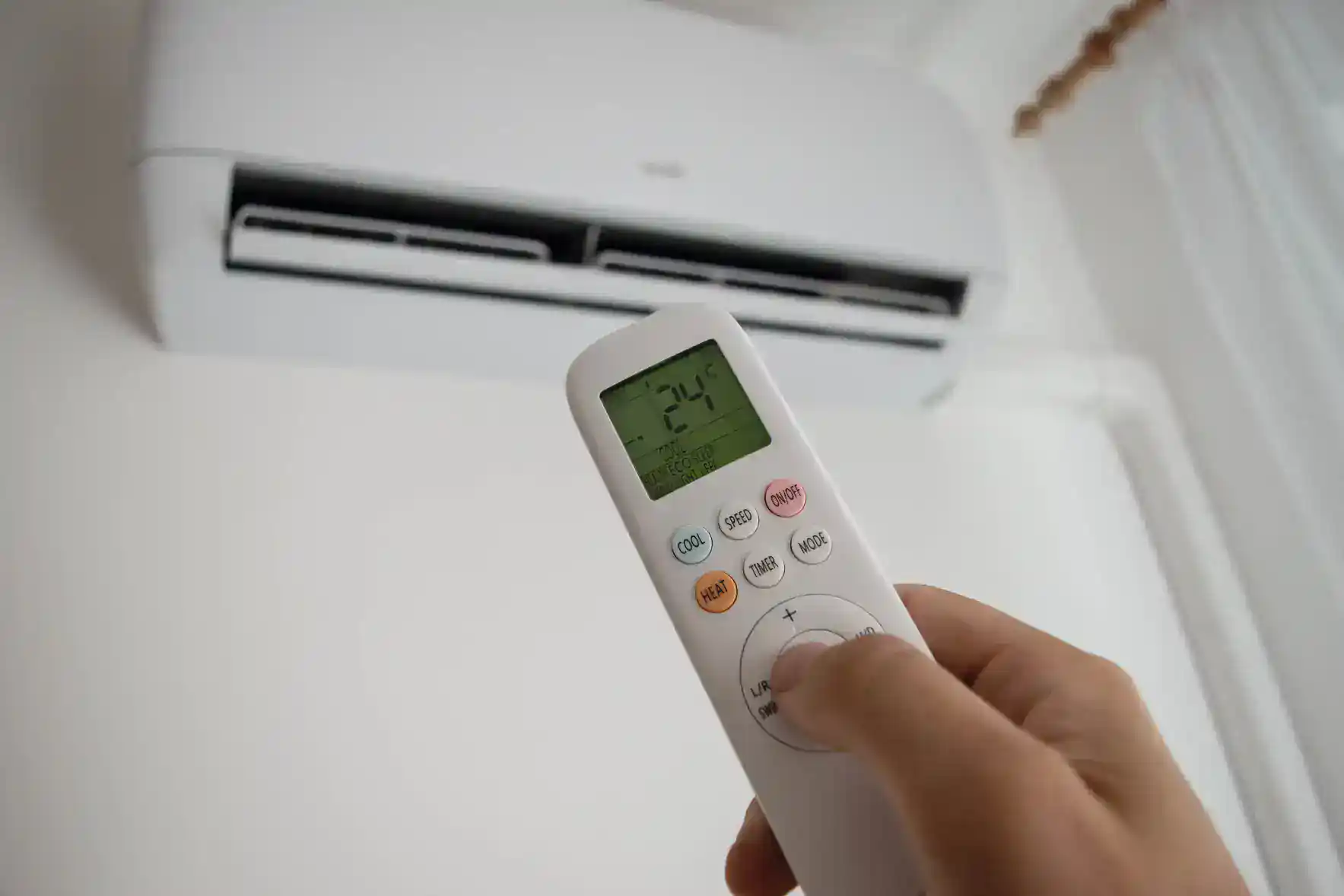
At the entry level, you’re typically getting a filter replacement and a visual walkthrough of the system. The technician will look at the unit, maybe check the thermostat, note anything that looks obviously wrong, and call it done. This kind of visit usually takes 20 to 30 minutes.
There’s nothing inherently dishonest about this level of service — it’s just limited. A clean filter matters. Restricted airflow forces your blower motor to work harder, uses more energy, and accelerates wear on internal components. So if your filter hasn’t been touched in six months, this visit has real value.
The problem is when this gets sold as a comprehensive tune-up. A filter swap doesn’t tell you anything about your refrigerant charge, the condition of your evaporator or condenser coils, whether your capacitors are degrading, or whether your condensate drain is about to back up into your ceiling. Those are the things that cause breakdowns — and they require hands-on diagnostic work to catch.
The $79 and $99 specials you see advertised are typically this tier. They’re priced to get a technician in the door, at which point the real conversation often becomes the list of additional services they found during their “inspection.” That’s not a conspiracy — it’s a business model. But it’s worth understanding before you book.
If your system is relatively new, recently serviced, and you just need a quick check between full tune-ups, a basic visit might be all you need. For most homeowners, especially those with systems that are five or more years old, it’s not enough.
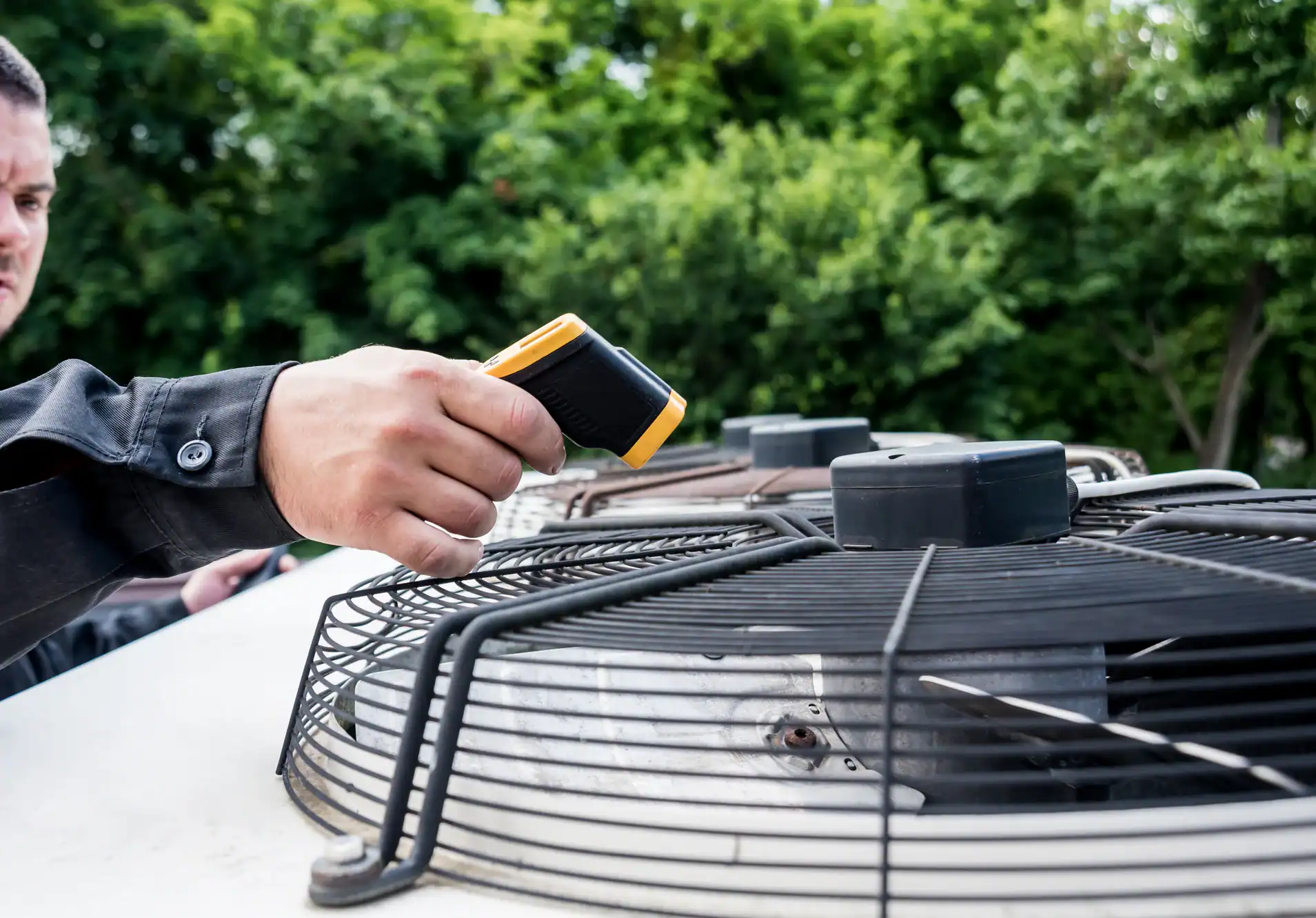
A genuine seasonal tune-up is a fundamentally different visit. It’s not just observational — the technician is actively cleaning, adjusting, testing, and measuring. It typically takes one to two hours, sometimes longer depending on the system’s condition and age.
At this level, a thorough service covers thermostat calibration and settings, electrical connections inspection and tightening, refrigerant charge check against manufacturer specifications, evaporator coil inspection and cleaning, condenser coil inspection and cleaning, condensate drain line clearing, air filter evaluation, blower motor and fan inspection, capacitor and contactor testing, airflow measurement, safety controls check, and a written summary of findings. That’s a meaningfully different scope than a filter change and a visual scan.
Why does each of those things matter? Take refrigerant as one example. Low refrigerant doesn’t just mean your AC blows warm air. It can freeze your evaporator coils, put serious strain on the compressor, and turn what would have been a $100 to $350 refrigerant top-off into a compressor repair that runs well over $1,000. Catching it during a tune-up is cheap. Missing it is expensive.
Coil cleaning is another one that gets overlooked. Even with a clean filter in place, evaporator coils collect dirt over time. The U.S. Department of Energy has confirmed this directly — dirty coils reduce the system’s ability to absorb heat, which means your AC runs longer, works harder, and costs more to operate. You won’t feel it as a dramatic difference day to day. You’ll feel it on your energy bill over a few months.
A proper tune-up catches these things before they compound. That’s the actual value — not a checklist for its own sake, but early detection of the issues that become expensive if they go unaddressed.
Get a Free Quote!
Connect with a Eco Air Cooling and Heating expert for fast, friendly support.
San Mateo County has a climate that most generic HVAC checklists aren’t built for. The coastal fog, the marine layer humidity, the salt air that rolls in off the Bay — these create maintenance demands that a technician following a standard national checklist may simply not think to address.
Salt residue accumulates on outdoor condenser units throughout the Peninsula. Coastal humidity affects how refrigerant behaves and how efficiently evaporator coils function. The temperature swings between morning fog and afternoon heat in places like Redwood City, Menlo Park, and Palo Alto put different stresses on a system than you’d see in a drier inland climate.
A technician who knows San Mateo County doesn’t just work through a list — they’re looking for the specific wear patterns that show up in Peninsula homes.

If you live anywhere near the Bay or the coast in San Mateo County, salt air corrosion on your outdoor unit is a real concern — not a theoretical one. It accumulates on condenser coils and electrical components over time, and it’s not something you’d notice just by looking at the unit from the outside. It takes a trained eye and hands-on inspection to catch it before it causes real damage.
The marine layer that rolls through Daly City, San Bruno, and the western parts of San Mateo County year-round keeps outdoor humidity elevated in ways that accelerate certain types of wear. And while the county’s mild climate meant many homes went decades without central air conditioning, the combination of older housing stock and increasingly warm inland summers means more systems are running harder than they were originally designed to.
This is why air con servicing from a company with genuine local experience delivers more than the same service from a provider who’s never worked a Peninsula home. It’s not about credentials on paper — it’s about knowing what to look for in this specific environment.
We’ve been servicing homes in San Mateo County since 1985. Ramiro’s father built Eco Air Home Services LLC on the Peninsula, and when Ramiro took over in 2006, he kept the same team, the same approach, and the same commitment to doing the work right. Our technicians aren’t new to this area. They know what coastal homes need, and they check for it on every visit.
**How often should I have my AC serviced?** Once a year is the standard recommendation, ideally in the spring before you’re relying on the system daily. For homes in coastal parts of San Mateo County where salt air and humidity are ongoing factors, annual service isn’t just a best practice — it’s genuinely protective against the kind of corrosion and buildup that shortens system life.
**Is a tune-up worth it if my system seems to be working fine?** This is the most common question, and the honest answer is yes — for most systems. An AC that’s blowing cold air can still be operating at significantly reduced efficiency, costing you more on your utility bills every month without any obvious symptom. Dirty coils, a slightly low refrigerant charge, and a degrading capacitor are all invisible to the homeowner until they become a breakdown. A well-maintained system can run 15 to 20 years. A neglected one often starts failing closer to 10.
**What’s the difference between AC service and AC repair?** Maintenance is preventive. Repair is reactive. The cost difference is significant — emergency HVAC repairs in San Mateo County typically run 50 to 100% more than a scheduled service call, and that’s before accounting for the fact that summer demand means longer wait times and fewer available technicians. Scheduling a tune-up in April costs less and causes a lot less disruption than an emergency call in July.
**Do you offer discounts?** Yes. We offer a 15% discount for seniors and military members — no fine print, no hoops. Given that a significant portion of our calls come from older homeowners in San Mateo County, this is a discount we’re genuinely committed to, not a promotional footnote.
**How do I know what’s actually included before I book?** Ask. Any reputable HVAC company should be able to tell you exactly what their service covers before you agree to anything. We give you upfront pricing before any work begins, and we’re happy to walk you through what the visit includes. Call or text us at 650-690-6175 and we’ll give you a straight answer.
The difference between a $79 special and a real tune-up isn’t always obvious from the outside. But once you know what a genuine service visit covers — and what the cheaper alternatives skip — the choice gets a lot clearer.
For most San Mateo County homeowners, especially those with systems that are five or more years old, a comprehensive seasonal tune-up is the most cost-effective thing you can do for your AC. It extends system life, keeps efficiency up, and catches the small problems before they become the expensive ones.
If you want to know exactly what your system needs and what it’ll cost before anyone shows up, reach out to Eco Air Home Services LLC. We’ve been doing this on the Peninsula since 1985, and we’ll give you a straight answer.
Summary:
Article details:
Share: