Your AC can run all day and still leave your house warm. Here's what's actually going on — and what to do about it before summer hits.
Here’s a scenario that plays out every summer across San Mateo County: the temperature climbs into the 90s, someone turns on the AC, and nothing happens. Or worse — the system runs all day but the house never actually cools down. By the time you call for help, you’re looking at a week-long wait because every HVAC company in the area is slammed.
The good news is that most of those situations are preventable. Not with some miracle product or expensive upgrade — just with regular, professional AC maintenance done before the heat arrives. This guide covers what that actually means, what to watch for, and how to make a smart decision for your home.
This is one of the most common — and most confusing — AC problems homeowners face. The system sounds like it’s running. The fan is blowing. But the air coming out isn’t cold, and the house stays warm no matter how long you wait.
It doesn’t feel like a breakdown, so people often assume it’ll sort itself out. It usually doesn’t. The reason is that your AC can keep running even when something critical has failed or degraded. The fan motor doesn’t know the refrigerant is low. The blower doesn’t know the evaporator coil is frozen solid. The system just keeps cycling while the actual cooling function quietly stops working.
Understanding the most common causes helps you figure out what you’re dealing with — and whether it’s something you can address yourself or something that needs a professional.
When your air conditioner is running but not blowing cold air, the problem almost always comes down to one of a handful of causes.
The most common starting point is the air filter. A clogged AC filter restricts airflow so severely that the evaporator coil — the component that actually removes heat from the air — can’t do its job. When airflow drops too low, the coil gets too cold and freezes over. A frozen coil means warm air, even though the system is running perfectly fine otherwise. The fix sounds simple: change the filter. But if the coil has already frozen, you’ll need to let it thaw before the system will cool again, which can take a few hours.
Low refrigerant is another frequent culprit, and this one requires a professional. Refrigerant doesn’t get “used up” the way fuel does — if your levels are low, it means there’s a leak somewhere in the system. Handling refrigerant requires EPA Section 608 certification under federal law, so this isn’t a DIY fix. A technician needs to find the leak, repair it, and recharge the system to the correct levels. Trying to top it off without addressing the leak just delays the problem and can damage the compressor.
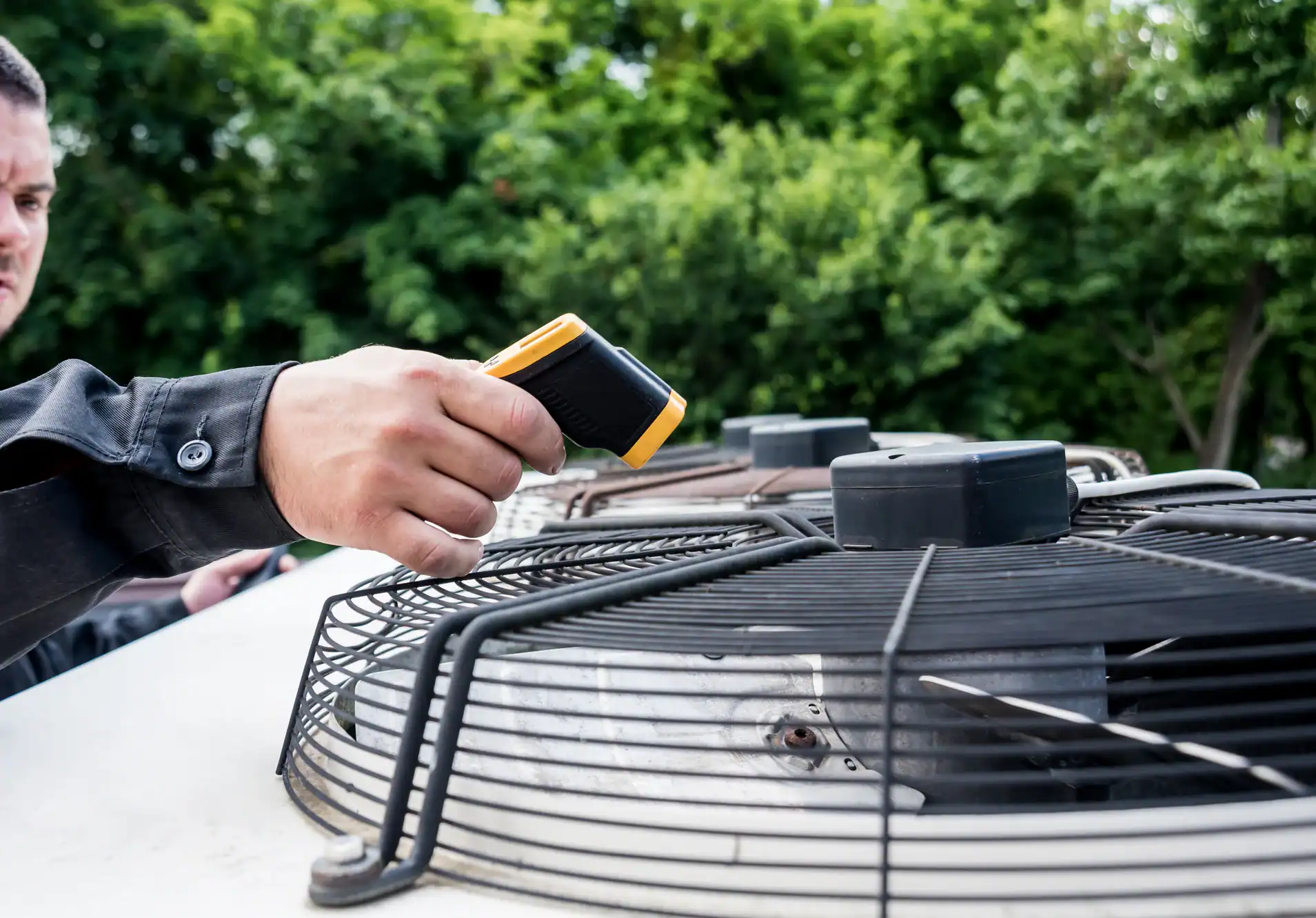
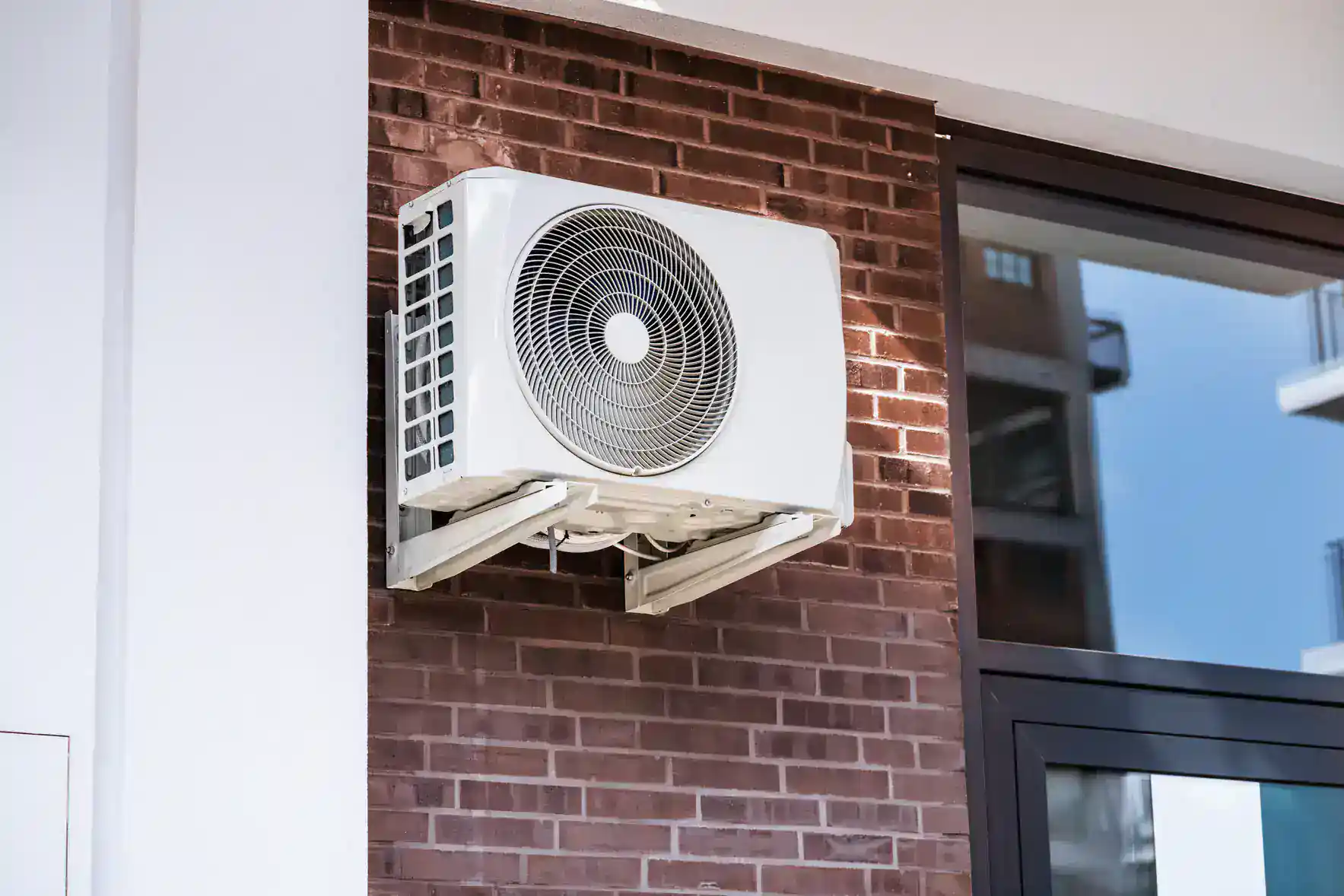
A blocked outdoor condenser unit is something homeowners can often address themselves. The condenser — the large unit sitting outside your home — releases the heat pulled from inside. If it’s packed with leaves, dirt, or debris, it can’t release heat efficiently, and the whole system backs up. In San Mateo County, where coastal properties deal with salt air and inland homes contend with dust and pollen, keeping a few feet of clearance around the unit and gently rinsing the fins with a garden hose once a year makes a real difference. Just make sure the system is off before you do it.
Leaky ductwork is a less obvious cause that gets overlooked constantly. If the ducts running through your attic, crawlspace, or walls have gaps or disconnected sections, the cold air your system is producing never makes it to your living spaces. It just bleeds out into unconditioned areas. You might feel cool air near the vents closest to the air handler but notice rooms farther away staying warm. A duct inspection can confirm this, and sealing the leaks is often less expensive than homeowners expect.
If the fan is running but you’re getting room-temperature air — not just slightly warm, but genuinely uncooled air — there’s a good chance the compressor isn’t running. The compressor is the heart of your AC system. It pressurizes the refrigerant and drives the entire cooling cycle. The fan can operate independently of it, which is why you can have airflow without any actual cooling happening.
A few things can cause the compressor to stop working. A tripped breaker or a blown capacitor are relatively straightforward repairs. A failed compressor itself is a much bigger deal — it’s one of the most expensive components in the system, and depending on the age of the unit, it may make more financial sense to replace the whole system rather than just the compressor. That’s a conversation worth having with a technician who will give you a straight answer rather than just defaulting to the most expensive option.
One thing worth checking before you call anyone: make sure your thermostat is set to “cool” and “auto,” not just “fan on.” When the fan is set to run continuously regardless of the cooling cycle, it will circulate air even when the compressor is off. It’s a surprisingly common cause of the “fan running but not cooling” scenario, and it takes about ten seconds to rule out.
In San Mateo County, where coastal cities like Pacifica and Half Moon Bay see relatively mild summers but inland areas like Redwood City and Foster City can hit the 90s during heat events, a compressor that’s struggling won’t always show obvious signs until it’s under real load. A pre-season check is the best way to catch a weak capacitor or a compressor drawing too much current before it fails on the hottest day of the year.
Get a Free Quote!
Connect with a Eco Air Cooling and Heating expert for fast, friendly support.
The phrase “AC tune-up” gets used loosely in this industry, and not every company means the same thing by it. A legitimate AC check-up isn’t a technician glancing at your system for fifteen minutes. It involves measurement, testing, and cleaning — the kind of work that requires tools and expertise, not just a visual inspection.
A thorough air conditioning service visit covers the electrical connections (tightening and testing them), the refrigerant levels (measured against manufacturer specs, not just estimated), the evaporator and condenser coils (cleaned to maintain heat transfer efficiency), the condensate drain line (flushed to prevent water backups and mold growth), the blower motor and fan operation, and the thermostat calibration. The technician should also check airflow across the evaporator and inspect the ductwork for obvious leaks or damage.
At the end of the visit, you should understand what was found and why it matters — not just receive an invoice.
Of everything involved in keeping an AC system running well, filter maintenance is the one task that falls squarely on the homeowner. It doesn’t require tools, training, or a service call. It just requires remembering to do it — and most people don’t, at least not often enough.
The filter’s job is to catch dust, pet dander, pollen, and other airborne particles before they reach the interior components of your system. When it gets clogged, airflow drops. When airflow drops, the evaporator coil gets too cold and freezes. When the coil freezes, your AC blows warm air. The whole cascade starts with a filter that hasn’t been changed in six months.
How often you need to change it depends on your household. A single-occupant home with no pets in a less dusty environment might get away with changing the filter every 90 days. A home with two dogs, three kids, and someone who cooks a lot might need a change every 30 days. The honest answer is: check it monthly and change it when it looks gray and loaded. Don’t wait for a schedule to tell you.
For the coastal cities in San Mateo County — places like Half Moon Bay and Pacifica — the marine layer and humidity can cause filters to load up with moisture-borne particles faster than you’d expect. In areas like Redwood City, Menlo Park, and Foster City, where summer days can get genuinely hot and the system runs hard, a restricted filter puts real strain on the equipment. A clogged AC filter during a heat wave isn’t just an inconvenience. It can push a system that was already running on the edge into a full breakdown.
One more thing: filter quality matters. A cheap fiberglass filter catches large particles but lets the fine stuff through. A mid-range pleated filter with a decent MERV rating does a much better job protecting the system and improving the air you’re breathing. You don’t need to buy the most expensive filter on the shelf — just don’t buy the cheapest one either.
Choosing an HVAC contractor in San Mateo County isn’t complicated, but there are a few things worth verifying before you let anyone touch your system. In California, HVAC contractors are required to hold a C-20 license issued by the Contractors State License Board. That’s not optional — it’s a legal requirement to do the work. Any company that can’t provide a license number when you ask for one is a company you should pass on.
Beyond the state license, look for technicians who hold EPA Section 608 certification. This is a federal requirement for anyone who purchases or handles refrigerants. It’s not a nice-to-have credential — it’s the law. If a technician is going to check your refrigerant levels or recharge your system, they need to be certified to do it.
NATE certification — from the North American Technician Excellence organization — is voluntary, but it’s a meaningful signal. NATE is the largest nonprofit certification body for HVACR technicians in the country, and a NATE-certified tech has demonstrated competency through independent testing. It’s worth asking about.
Beyond credentials, pay attention to the basics: Does the company have a real local address? Do they give you a written quote before starting work? Do they explain what they found and what they’re recommending — and why? These aren’t high bars, but they separate the companies that are actually accountable to their customers from the ones that aren’t.
We’ve been doing this work in San Mateo County since 1985. That’s forty years of local experience — not a regional franchise, not a call center dispatching technicians from two counties over. When Ramiro took over from his father in 2006, the commitment to honest, straightforward service came with the job. Our technicians have been with us long enough to know the local building stock, the microclimates across the county, and the specific wear patterns that show up on systems dealing with coastal salt air versus the drier inland heat.
We also offer a 15% discount for seniors and military members, because that’s the right thing to do for the people who make up so much of this community. If you want upfront pricing, a technician who shows up when they say they will, and a company that will tell you what’s actually wrong instead of what’s most profitable to sell you — call or text us at 650-690-6175.
The pattern plays out the same way every year. Homeowners skip the spring tune-up, the first real heat wave hits, the AC that was “running fine” suddenly isn’t, and the wait for a technician stretches to a week. By then, you’re sleeping in a hot house and paying emergency rates.
The smarter move is simple: get the system checked before you need it. Clean the filter regularly. Know the warning signs — warm air from a running system, ice on the lines, rooms that never quite cool down — and don’t wait to see if they resolve on their own. They usually don’t.
If you’re in San Mateo County and you want a straight answer about what your AC actually needs, Eco Air Home Services LLC is here to help. Forty years in the area, upfront pricing, and technicians who will explain what they found in plain language — no surprises, no pressure.
Summary:
Article details:
Share: