Not sure if your AC actually needs a tune-up — or what one even covers? Here's a straight answer, no fluff.

Most people don’t think about their air conditioner until it stops working — usually on the hottest day of the year, usually on a weekend. By then, you’re not scheduling maintenance. You’re calling for emergency help and hoping someone can come out fast.
That’s the situation a tune-up is designed to prevent. Not in a vague, “take care of your stuff” kind of way — in a specific, here’s-what-we-check-and-why kind of way. If you’ve been wondering what an AC tune-up actually involves, whether yours is overdue, or what happens when you skip one too many, you’re in the right place.
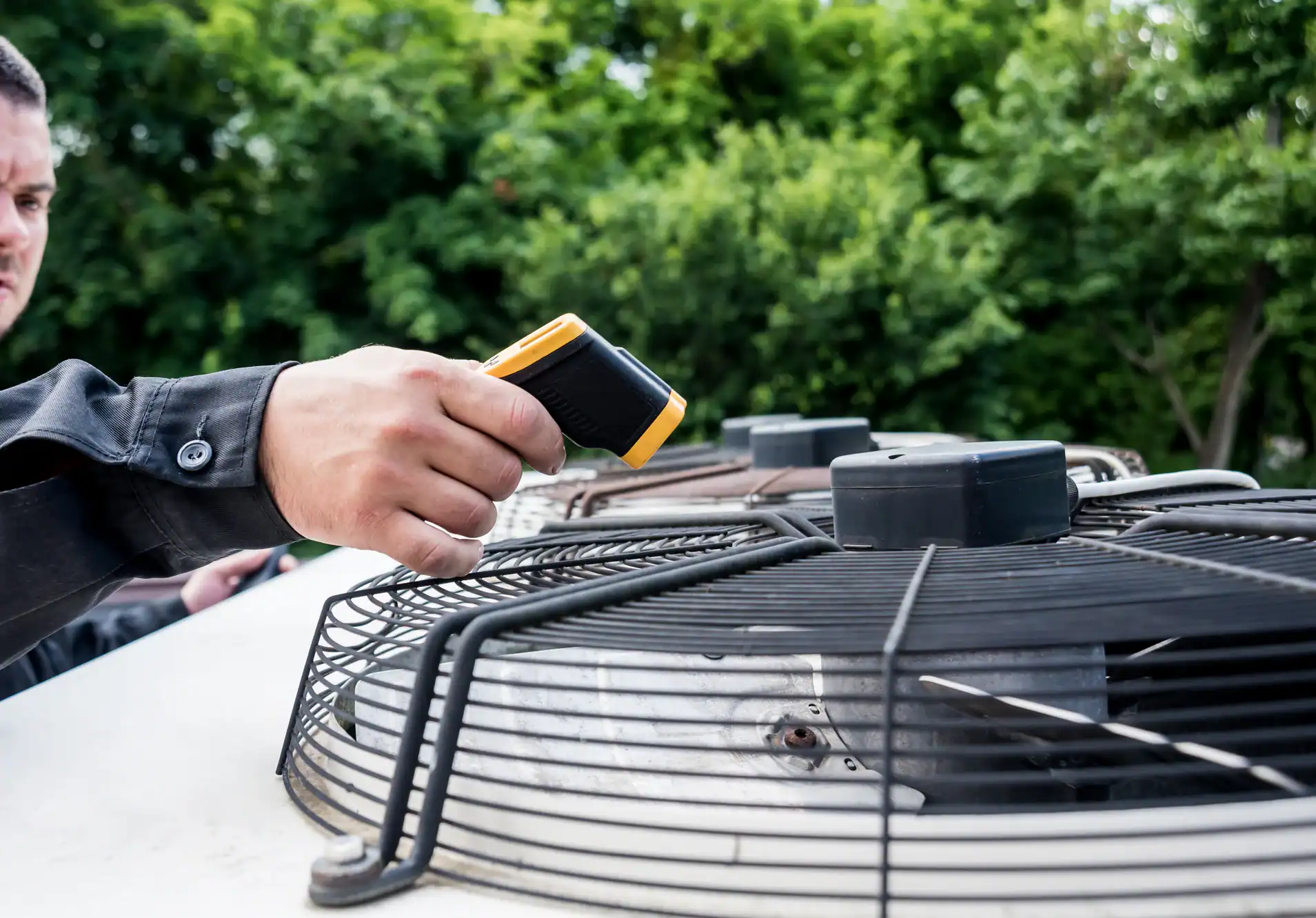
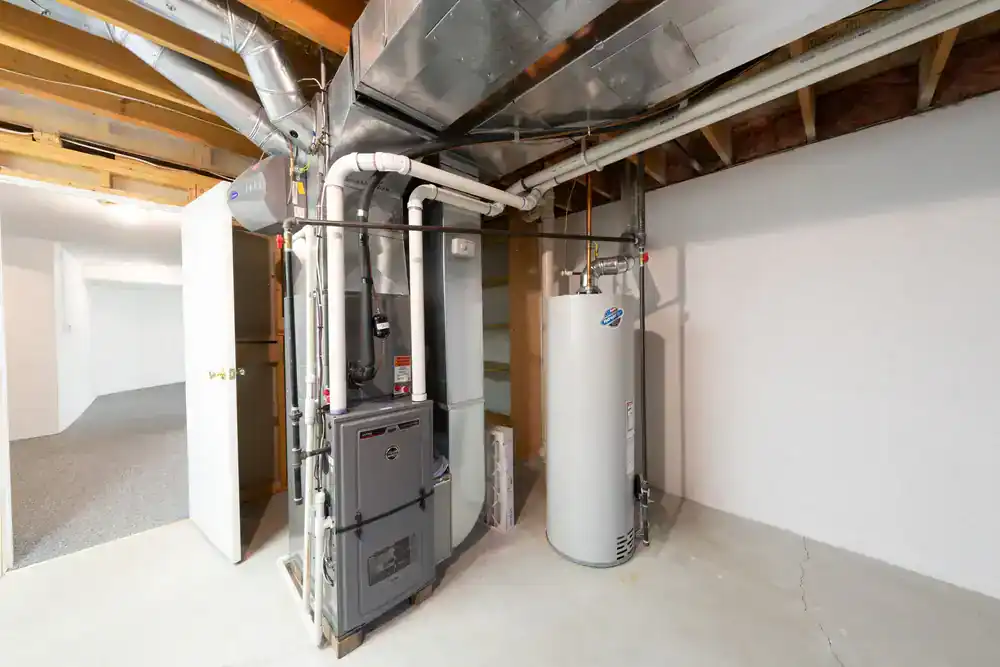
A tune-up isn’t one thing — it’s closer to fifteen or twenty things done in a single visit. Our technicians work through both the indoor and outdoor components of your system, inspecting what can’t be seen from the outside and servicing what’s accumulated wear since the last time anyone looked.
The inspection side covers electrical connections, refrigerant levels, thermostat calibration, ductwork condition, and the system’s start and stop cycles. The cleaning side covers the evaporator and condenser coils, the condensate drain line, and the blower components. Then there’s the service work — lubricating moving parts, tightening loose connections, and flagging anything that’s showing early signs of wear before it fails at the worst possible moment.
The whole visit typically runs one to two hours. That’s not a long window, but it’s enough time to catch the small problems that become expensive ones if they’re left alone.
Where you live changes what your AC system deals with, and San Mateo County has a specific set of conditions that put real stress on outdoor units in particular.
The marine layer and coastal humidity that roll in off the Bay — especially in communities like Daly City, South San Francisco, and Pacifica — accelerate corrosion on outdoor condenser coils in a way that inland climates simply don’t. Salt-laden air and persistent moisture create the kind of surface buildup that quietly degrades efficiency over time. You won’t notice it on a mild spring day. You’ll notice it when the system is straining through a heat event and not keeping up.
Then there’s the microclimate variation across San Mateo County itself. Coastal neighborhoods rarely push past 65°F in summer, so residents there may barely run their AC at all. But move inland to Redwood City, Foster City, or Menlo Park, and summer temperatures regularly climb into the mid-to-upper 80s — with occasional spikes well above 90°F during heat waves, as the county saw in both 2020 and 2022. For homes in those inland corridors, an AC system that sat dormant through a mild winter and hasn’t been serviced is being asked to perform hard work on very little preparation.
The extended dormancy period is its own issue. Because San Mateo County winters rarely drop below 50°F, most homeowners run their AC for only a few months out of the year. That off-season isn’t neutral — dust accumulates in the system, insects occasionally nest in outdoor units, and condensate drain lines can develop mold or blockages when they sit unused. A spring tune-up clears all of that before the system has to work in earnest.
Wildfire smoke is another factor worth taking seriously. Northern California’s fire seasons have become a recurring reality, and during smoke events, an AC system with a dirty or degraded filter isn’t protecting your indoor air — it’s recirculating it. For families with respiratory sensitivities, that’s not a minor inconvenience. It’s a health consideration that connects directly to whether the filter and air handling components are actually in good shape.
The honest answer is: usually nothing, for a while. Systems don’t fail the moment you miss a tune-up. They degrade gradually — efficiency drops, components accumulate wear, small issues compound — and then something gives, typically at the moment of peak demand.
What that looks like in practice is a capacitor that was showing early wear going undetected until it fails mid-summer. Or a condensate drain that was partially clogged becoming fully clogged, backing up water into the air handler and causing water damage. Or refrigerant that was slightly low dropping further until the system can’t maintain temperature and the compressor starts working under conditions it wasn’t designed for.
Each of those is a repair, not a tune-up. And repairs cost significantly more — both in the service call itself and in the wear they represent on the broader system.
There’s also the warranty angle, which most homeowners don’t find out about until it’s too late. Many HVAC manufacturers require documented annual professional maintenance as a condition of honoring their equipment warranties. A system that cost thousands of dollars to install could have its warranty voided simply because no one scheduled the annual visit.
The energy cost piece is real too. The U.S. Department of Energy has documented that a clogged filter alone can increase an AC system’s energy consumption by 5 to 15 percent. Dirty coils compound that further. For a system running through a San Mateo County summer, that inefficiency shows up on your utility bill every month — not as a dramatic spike, but as a steady, unnecessary expense that a tune-up would have prevented.
Get a Free Quote!
Connect with a Eco Air Cooling and Heating expert for fast, friendly support.
You’ve probably seen HVAC companies advertise heavily discounted tune-ups — sometimes as low as $29 — as a way to get in the door. Some of those offers are legitimate. Some are designed to generate upsell revenue from homeowners who came in for a bargain and left with a repair quote they weren’t expecting.
The question worth asking isn’t “who has the lowest price?” It’s “what does the price actually include?” A real tune-up covers the full inspection and cleaning process described above. A discount visit that only checks a few items and then pivots to a sales conversation isn’t a tune-up — it’s a lead generation call.
When you call us, you’re getting the full scope of work. No surprises, no hidden upsells. We’ve been doing this work in San Mateo County since 1985, and our reputation depends on being straightforward about what you need and what you don’t.

Filter maintenance is one of the most talked-about parts of AC upkeep, and also one of the most misunderstood. The confusion usually comes from the difference between reusable filters and disposable ones — and what “cleaning” actually means for each.
Disposable filters — the kind most residential systems use — can’t be cleaned. They’re designed to be replaced, typically every one to three months depending on usage, household size, and air quality conditions. In San Mateo County, homes near wildfire-prone areas or in dusty inland neighborhoods may need to replace filters more frequently than the manufacturer’s baseline recommendation. Trying to vacuum or rinse a disposable filter doesn’t restore it — it just damages the filtration material and gives you a false sense of having done something useful.
Reusable or washable filters are a different story. These can be removed, rinsed with water, allowed to dry completely, and reinstalled. The key word is “completely” — a filter reinstalled while still damp creates exactly the kind of moisture environment where mold and mildew thrive inside your air handler. If you have a reusable filter, let it dry for several hours before putting it back.
What we do during a professional tune-up that you can’t replicate at home is address the components beyond the filter. Evaporator coils — the indoor coils that cool the air — collect dust and debris over time even with a clean filter in place. When those coils get dirty, the system has to work harder to transfer heat, efficiency drops, and in severe cases, the coils can ice over. Condenser coils on the outdoor unit face a different challenge: they’re exposed to the elements, and in coastal San Mateo County, that means salt air, pollen, and whatever the marine layer brings in. Neither of those can be cleaned with a filter swap.
The filter is your job to maintain between our professional visits. Everything behind it is what the tune-up is for.
A clogged AC filter doesn’t announce itself with a warning light. It shows up as a collection of symptoms that are easy to misread as bigger problems — or easy to ignore until they become bigger problems.
The most common sign is reduced airflow from your vents. If the air coming out feels weaker than usual, or if some rooms in your home aren’t cooling as well as others, a clogged filter is often the first place to check. The filter’s job is to let air pass through while catching particles — when it’s too full to let air through efficiently, the whole system has to strain to move the same volume of air.
A spike in your energy bill without a corresponding change in how much you’re running the system is another signal. The AC is working harder to compensate for restricted airflow, and that extra effort shows up in your electricity usage. In Redwood City and other inland parts of San Mateo County where summer cooling loads are already higher, this can translate to a noticeable monthly cost difference.
Musty or stale smells from the vents are worth taking seriously. When a filter is clogged and airflow slows, moisture can accumulate in the air handler — creating conditions where mold and mildew can develop. That smell isn’t just unpleasant. It’s a sign that something in the system needs attention beyond a simple filter swap.
In more advanced cases, a severely restricted filter can cause the evaporator coils to freeze. If you notice ice forming on the indoor unit or refrigerant lines, shut the system off and call a technician. Running a system with frozen coils can damage the compressor — one of the most expensive components to replace.
Check your filter before you assume something is seriously wrong with your system. A lot of service calls that homeowners think are going to be expensive turn out to start with a filter that hasn’t been changed in eight months. But if you’ve changed the filter and the symptoms persist, that’s the signal that we need to look at the rest of the system.
Spring is the ideal window — before the system has to work hard, before every HVAC company in San Mateo County is booked out, and before a heat wave arrives and reminds you that you meant to call. But if spring has already passed, don’t wait until next year. A tune-up done in summer or fall is still far more valuable than one that never gets scheduled.
For San Mateo County homeowners — especially those with older systems, homes that have been through multiple wildfire smoke seasons, or equipment that hasn’t been serviced in a few years — the conversation is less about optimal timing and more about getting it done.
We’ve been doing this work in San Mateo County since 1985. That’s four decades of knowing what these systems deal with, what the local climate does to outdoor units, and what the difference looks like between a system that’s been maintained and one that hasn’t. If you’re ready to schedule, or just want to know where your system actually stands, reach out to Eco Air Home Services LLC at 650-690-6175. Seniors and military members receive 15% off every service.
Summary:
Article details:
Share: