Your AC is running, but the house just keeps getting hotter. Here's what's actually going on — and what to check before you call anyone.

You can hear the system running. The fan is blowing. But walk into any room in the house and it’s still warm — maybe getting warmer. That’s one of the more frustrating AC problems to deal with, because everything sounds like it’s working.
The fact that your system is running is actually useful information. It narrows things down considerably. This isn’t a total failure — it’s a specific kind of problem, and most of the causes behind it follow a predictable pattern. We’ll walk you through what those causes are, which ones you can address yourself, and which ones need a technician before they turn into something more expensive.
The most common causes of an AC running without cooling are not dramatic. A clogged air filter, an incorrect thermostat setting, a blocked outdoor unit — these are the things that send homeowners into a panic and then turn out to be a ten-minute fix. Before anything else, it’s worth ruling these out.
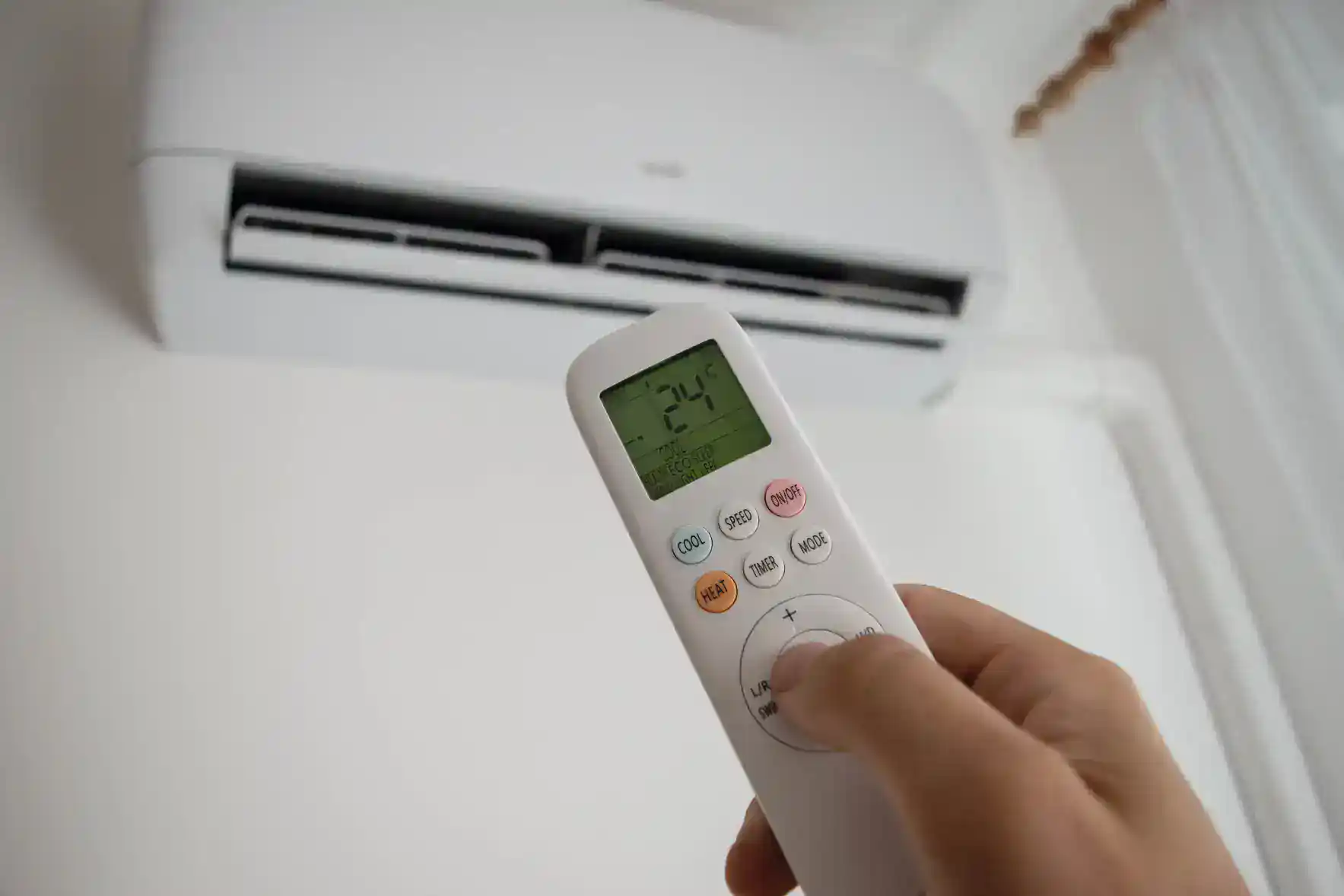
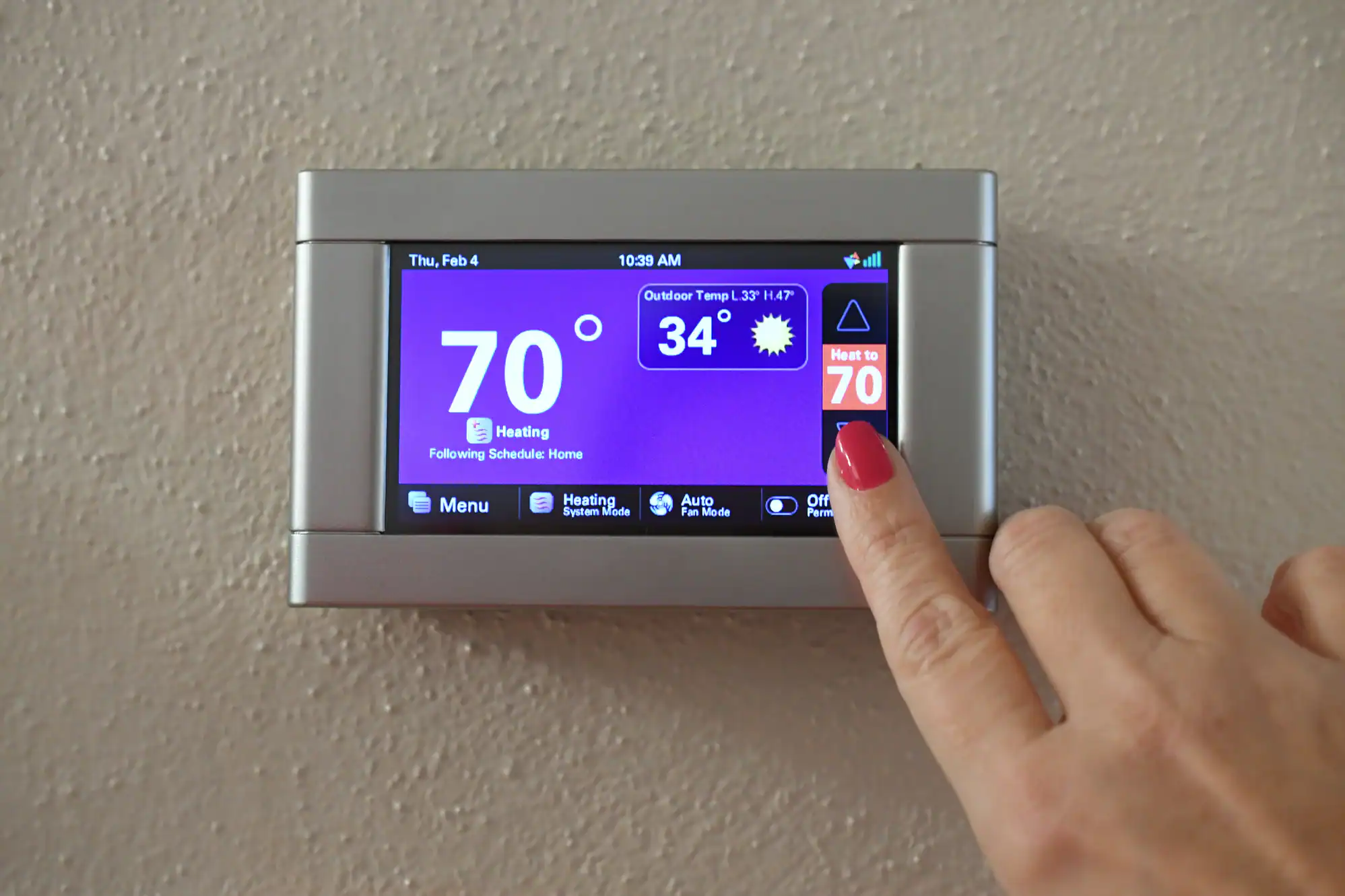
Check your thermostat first. Make sure it’s set to COOL, not just FAN. When the fan is set to ON rather than AUTO, it runs continuously — even when the system isn’t actively cooling. The result is a steady stream of room-temperature air that feels like the AC has stopped working, when really the compressor just isn’t running at that moment. Switching the fan setting to AUTO often resolves this immediately.
Then check your air filter. A filter that’s clogged with dust and debris restricts airflow so severely that the system can’t move enough air across the evaporator coil to cool it. Carrier, Bryant, and Trane all identify a dirty filter as the single most common cause of an AC running without cooling. If yours looks gray and matted, replace it — filters should typically be swapped out every one to three months.
If the thermostat and filter check out fine, the problem is happening somewhere inside the system itself — and this is where things get a little more technical, but still very explainable.
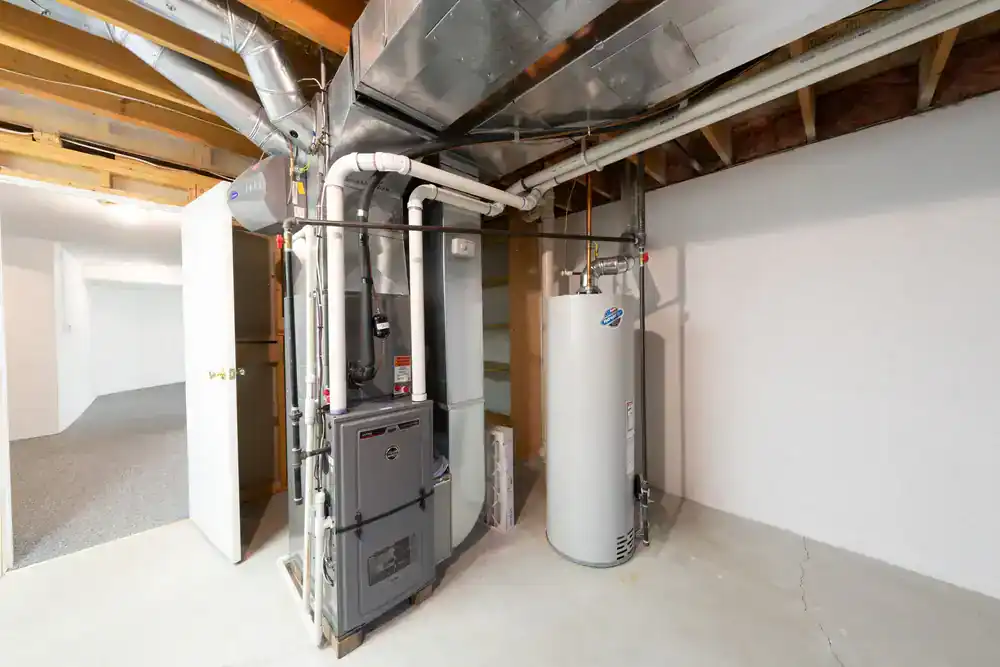
One of the most common culprits at this stage is a frozen evaporator coil. The evaporator coil sits inside your air handler and is responsible for absorbing heat from the air in your home. When airflow across that coil is restricted — usually from a dirty filter, blocked vents, or a blower fan issue — the coil gets too cold and ice forms on it. Once it’s frozen, it can’t absorb heat at all, and your system blows warm or barely cool air even though the compressor is running.
If you see ice on the indoor unit, or notice water pooling near the air handler, turn the system off completely — not to fan-only. Let the coil thaw for a few hours. Running the system while the coil is frozen doesn’t speed anything up; it puts extra strain on the compressor, which is the most expensive component in the system to replace. A compressor failure can run anywhere from $1,000 to $3,000 or more, depending on the system. A frozen coil that’s caught early is a fraction of that.
Low refrigerant is another possibility, and this one trips up a lot of homeowners. Refrigerant is not like gasoline — it doesn’t get used up over time. If your system is low on refrigerant, it means there’s a leak somewhere in the system. Simply recharging it without finding and fixing the leak is a temporary patch, not a repair. The refrigerant will leak out again, the system will stop cooling again, and you’ll be back to square one. A proper repair means finding the source of the leak, fixing it, and then restoring refrigerant to the correct level.
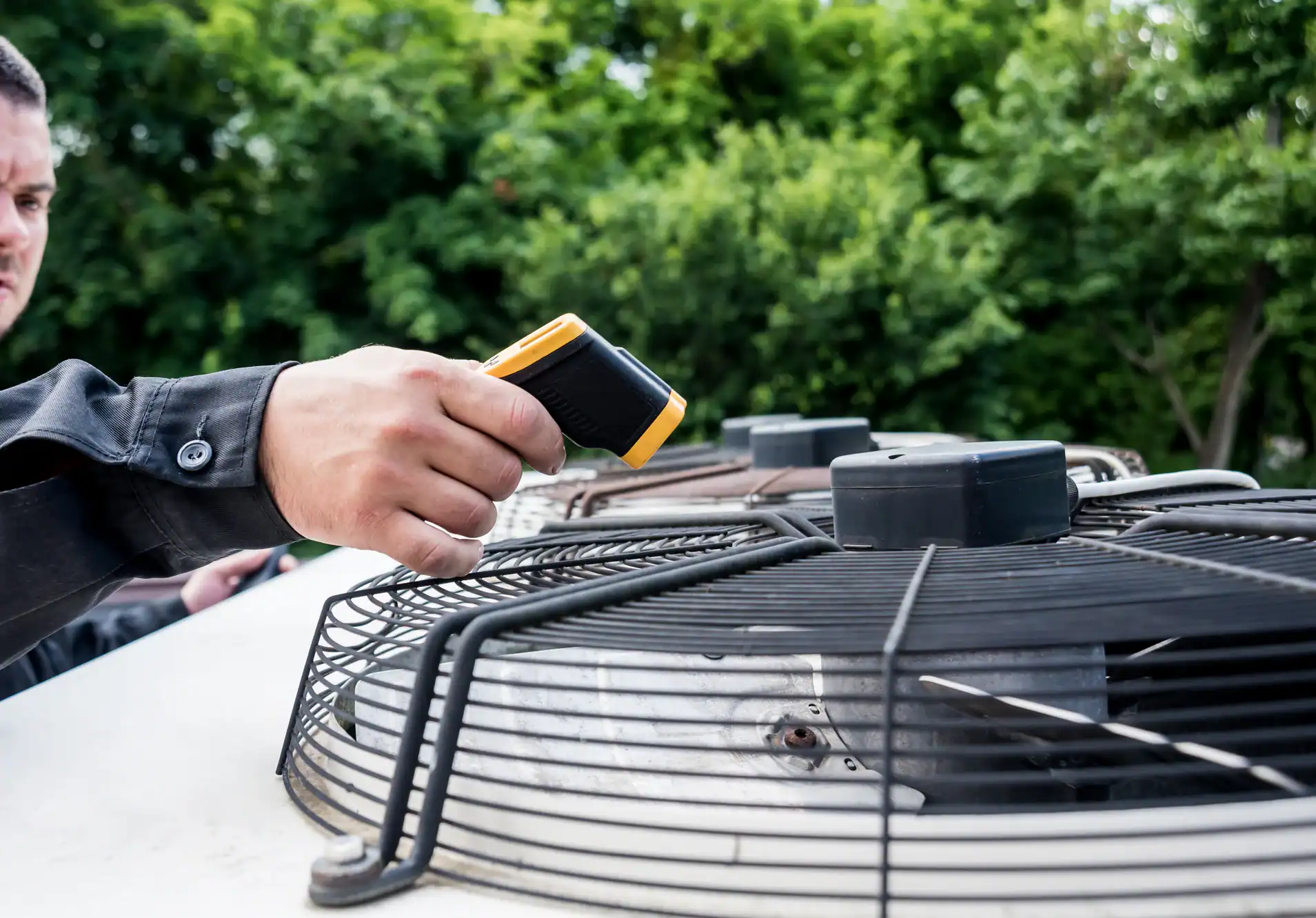
There’s also the condenser unit to consider — that’s the large outdoor unit that releases heat from your home to the outside air. If the condenser coils are coated in dirt, or if the unit is surrounded by overgrown shrubs or debris that block airflow, the system can’t release heat efficiently. It keeps running, but it can’t complete the cooling cycle. In San Mateo County, this is a more common issue than many homeowners expect. The marine layer that rolls in off the Pacific brings elevated humidity and, in communities closer to the coast, salt air — both of which accelerate the buildup of grime on condenser coils and can cause corrosion on electrical components over time.
Here’s something the national troubleshooting guides won’t tell you: the age and construction of your home matters as much as the age of your AC unit.
San Mateo County has a significant amount of housing stock built between the 1950s and 1970s — homes in San Mateo, Burlingame, San Carlos, Belmont, and Redwood City that were built in an era when duct systems were designed for different equipment and different standards. Those ducts are now anywhere from 50 to 70 years old. The Department of Energy estimates that typical homes lose 20 to 30 percent of their conditioned air through duct leaks. In a home with aging flex duct or original sheet metal that’s degraded over decades, that number can be even higher.
What this means practically is that your AC unit may be functioning perfectly — cooling the air, circulating refrigerant, running all its cycles — but a significant portion of that cooled air never reaches the rooms you’re trying to cool. It leaks into the attic, the crawl space, or the walls. The system runs longer and longer trying to hit the thermostat’s target temperature, the house stays warm, and the homeowner assumes the unit is broken.
We’ve been inside these homes since 1985. When we diagnose an AC system in an older Redwood City or San Mateo home, we’re not just checking the unit — we’re looking at the whole picture, including ductwork connections and airflow distribution. A technician who only inspects the outdoor unit and checks the refrigerant charge can miss the actual problem entirely, which means the repair doesn’t fix anything. That kind of misdiagnosis is more common than it should be, and it’s exactly the scenario that turns a manageable repair into an expensive and frustrating cycle.
There’s also a regulatory dimension specific to California. Older systems — particularly those built before the mid-2000s — may use R-22 refrigerant, which has been fully phased out under federal EPA rules. If your system uses R-22 and it has a refrigerant leak, it cannot simply be recharged. The options are refrigerant conversion or system replacement, and understanding which makes more sense requires an honest assessment of the system’s overall condition, not a quick upsell.
Get a Free Quote!
Connect with a Eco Air Cooling and Heating expert for fast, friendly support.
There’s a clear line between what a homeowner can reasonably address and what requires a licensed technician. Knowing where that line is saves you money and prevents the kind of well-intentioned DIY attempts that make the problem worse.
On the homeowner side: changing the air filter, adjusting the thermostat settings, clearing debris from around the outdoor condenser unit, and checking the circuit breaker are all reasonable first steps. A tripped breaker can cause the outdoor unit to stop running while the indoor fan keeps going — which looks exactly like an AC that’s running but not cooling. Check your electrical panel before you call anyone.
Once you’ve ruled those out and the problem persists, it’s time to call a technician. Refrigerant handling, coil cleaning, electrical component testing, and ductwork inspection all require tools, training, and in the case of refrigerant, federal certification.
A proper AC diagnosis isn’t a five-minute visual inspection. When we arrive at a home, we check refrigerant levels, inspect electrical components, test safety controls, and examine ductwork connections — not just the obvious failing part. The reason for that is straightforward: HVAC systems fail in patterns. The thing that’s visibly broken is often a downstream effect of something else that’s been quietly degrading for months.
A technician who only addresses the presenting symptom — say, a frozen coil — without asking why it froze will send you a bill and leave you with the same problem six weeks later. The coil froze because airflow was restricted. Airflow was restricted because the blower motor is underperforming, or because two return vents are blocked, or because a duct connection has separated. Fix the coil without finding the cause, and it will freeze again.
This is why the diagnostic process matters as much as the repair itself. In San Mateo County, where homes range from relatively new construction in Foster City to mid-century houses in Burlingame that have had three or four different HVAC systems installed over the decades, there’s no one-size-fits-all checklist. The technician needs to understand the system in front of them — its age, its configuration, its history — before they can give you an honest answer about what it needs.
We’ve been diagnosing and repairing AC systems across San Mateo County since 1985. When a technician has worked on hundreds of homes in a specific area over decades, they’ve seen the failure patterns, the common duct configurations, the equipment brands that were popular in different eras, and the ways the local climate stresses specific components. That kind of accumulated knowledge is genuinely useful when the problem isn’t obvious.
We also offer upfront pricing before any work begins. You’ll know the full cost before we touch anything — no surprises when the invoice arrives, no add-ons you didn’t agree to. If you’re a senior or an active or veteran military member, we extend a 15% discount as a straightforward acknowledgment of the people who make up so much of this community.
This is the question most homeowners are quietly asking when they start searching. The honest answer is: it depends on what’s causing it, but waiting almost always makes it worse.
A dirty filter is benign — swap it out and you’re done. But if the underlying cause is a frozen evaporator coil and you keep running the system, you’re putting continuous strain on the compressor. The compressor is the heart of the system, and it’s the most expensive component to replace. A repair that costs a few hundred dollars today can become a compressor replacement in the $1,000 to $3,000 range if the system runs too long in a compromised state.
Low refrigerant is similar. The compressor is designed to operate within a specific pressure range. When refrigerant levels drop, the compressor works harder to compensate, runs hotter, and wears out faster. A refrigerant leak caught early — fixed, recharged, and tested — is a manageable repair. The same leak ignored for a season can result in compressor failure.
In San Mateo County’s inland communities — Redwood City, San Mateo, Belmont, San Carlos — summer heat events can push temperatures into the 90s. When that happens and your AC is already struggling, the system runs almost continuously, compounding whatever underlying problem exists. The timing matters. A system that’s been limping along through a mild June can fail completely during the first real heat wave of July.
If your system has been running but not reaching the set temperature, if it’s cycling on and off more frequently than usual, or if your energy bills have climbed without a clear explanation, those are signs something is wrong — and the window to address it cheaply is narrowing. We’re available 24 hours a day, seven days a week, including weekends and holidays, because AC problems don’t schedule themselves around business hours.
If your AC is running but not cooling, start with the simple checks — thermostat settings, air filter, outdoor unit clearance, circuit breaker. A meaningful percentage of these calls turn out to be something a homeowner can resolve in under ten minutes.
If those checks don’t solve it, the problem is inside the system, and that’s where professional diagnosis becomes important. Not because HVAC is mystifying, but because the right repair depends on accurately identifying the actual cause — not just the most visible symptom.
We’ve been diagnosing and repairing AC systems across San Mateo County since 1985, in homes of every age and configuration this area has to offer. If you’re not sure what’s wrong, or you’ve already tried the basics and the house is still warm, reach out to Eco Air Home Services LLC. We’ll give you a straight answer, upfront pricing, and a repair done right the first time.
Summary:
Article details:
Share: