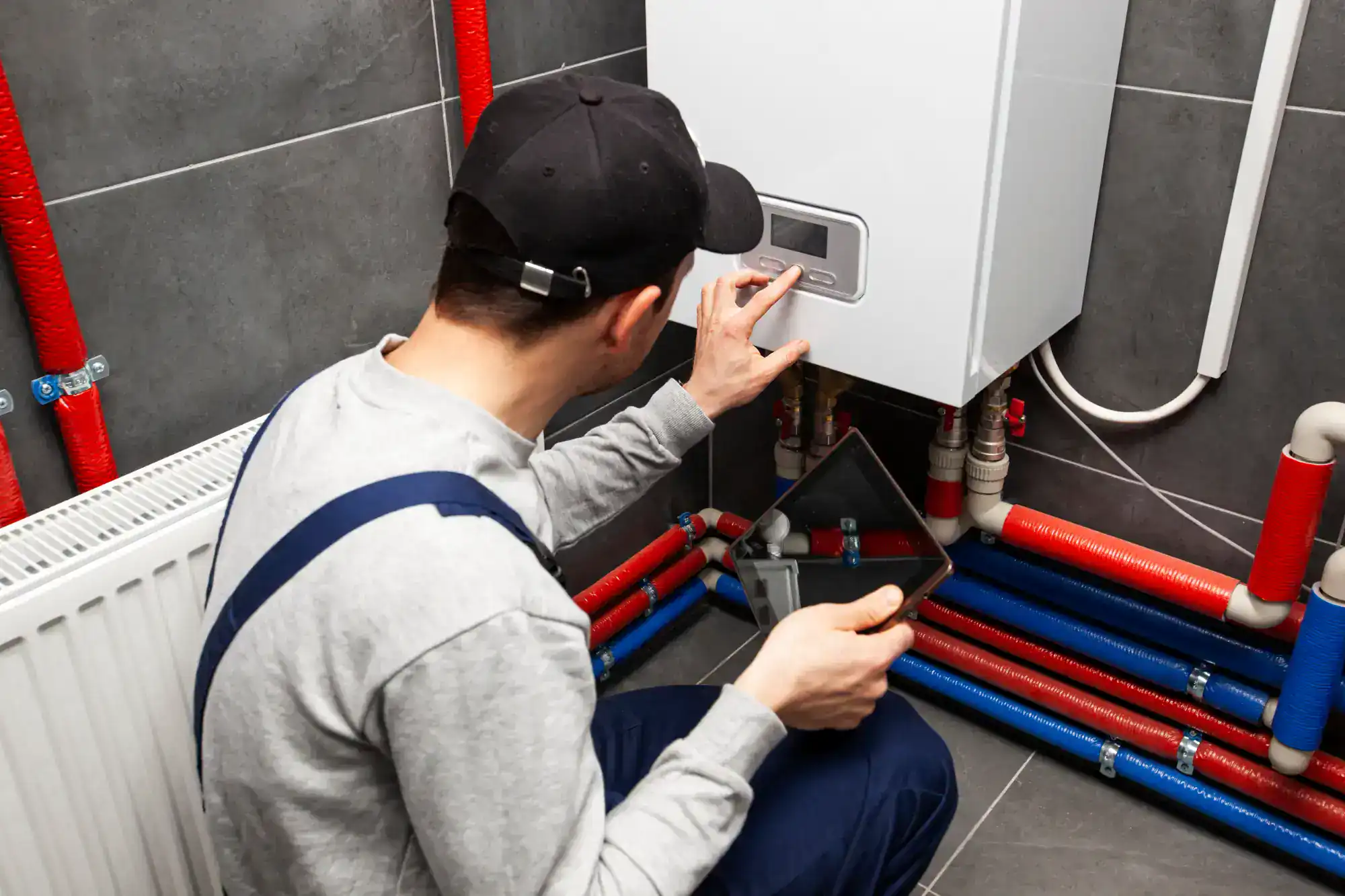
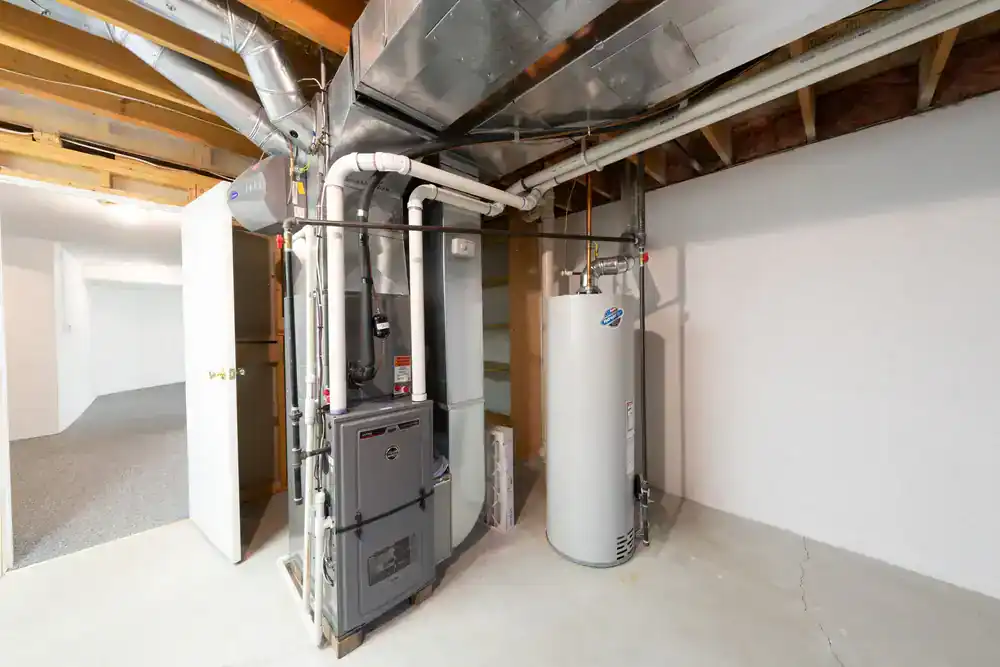
Your furnace might seem fine — until it isn't. Here are seven signs it's time to schedule a professional inspection before winter arrives in San Mateo County.
San Mateo County winters are mild enough that it’s easy to assume your furnace will just handle it. But that’s exactly the reasoning that leads to a cold house in November. Furnaces that sit idle through spring and summer can develop problems that only surface when you actually need them — and by then, you’re calling for emergency service instead of a routine visit.
The good news is that most of those problems are catchable early. You just need to know what to look for. Here are seven signs your furnace is telling you it needs attention before the heating season starts.
None of these signs require a technical background to notice. They’re the kinds of things you pick up on when you’re paying attention — and the kinds of things that are easy to rationalize away when you’re not. A banging sound when the furnace kicks on. A room that’s always colder than the rest of the house. A gas bill that keeps creeping up even though you haven’t changed your habits.
Each one of those, on its own, might be nothing. Together — or in combination with an older system — they’re worth taking seriously. Here’s what to watch for.
The first sign most homeowners notice is sound. A furnace that’s working properly runs quietly — you hear it cycle on, feel the heat come through, and that’s about it. When it starts making banging, rattling, squealing, or grinding noises, something has changed. Loose components, motor issues, and airflow problems all show up as sound before they show up as failure. Don’t wait for the noise to get worse.
The second sign is uneven heating. If certain rooms in your home are consistently colder than others — and you’ve lived there long enough to know that’s not normal — your furnace may not be distributing heat properly. This can be a furnace issue, a duct issue, or both. Either way, it’s worth a look before you’re layering up indoors in January.
Third: your energy bills. If your gas bill has been climbing without any obvious explanation — you’re not home more, you haven’t changed the thermostat — your furnace is likely working harder than it should to produce the same amount of heat. Dust and buildup on components like the burners and blower force the system to fight harder for the same output, and that shows up directly on your monthly bill. HVAC systems account for roughly 48% of the average household energy bill, so even a modest efficiency drop adds up fast.
Fourth, pay attention to your pilot light. On older furnaces, the pilot light should burn blue. A yellow or orange flame signals an imbalance in the gas-to-oxygen mixture — and that’s not a cosmetic issue. It can indicate incomplete combustion and, in more serious cases, the presence of carbon monoxide. If you’ve noticed a yellowish flame and haven’t had anyone look at it, that’s reason enough to make the call.
Fifth: short cycling. If your furnace turns on and off more frequently than it used to — running in short bursts rather than full heating cycles — it’s struggling. This can be caused by a dirty filter, a failing component, or a system that’s simply too worn to run efficiently. It’s also hard on the equipment and accelerates wear.
Sixth is age. Most furnaces have a lifespan of 15 to 20 years. If yours is approaching or past that range, an annual inspection isn’t just a good idea — it’s the only reliable way to know whether the system can be safely repaired or whether replacement is the smarter move.
And seventh: you can’t remember the last time it was inspected. That alone is reason enough. A furnace that hasn’t been serviced in several years is overdue, and the inspection will likely uncover things that a yearly visit would have caught and resolved much sooner.
This is the part most people don’t think about until it’s too late. A cracked heat exchanger — one of the more common findings in older furnaces — can allow carbon monoxide to leak into your living space. CO is colorless and odorless. You can’t see it, smell it, or feel it until you’re already affected. According to the CDC, CO exposure sends more than 20,000 Americans to the emergency room every year and causes approximately 400 deaths.
A professional furnace inspection includes a heat exchanger analysis — often using a specialized camera — specifically to check for cracks, rust, or structural fatigue. It also includes CO level testing to confirm that exhaust gases are venting properly and that CO levels in the furnace’s output are well below the 400 PPM legal limit. This is not something you can check yourself with a visual inspection.
For older homeowners especially, this matters more than most people realize. A significant portion of the housing stock across San Mateo County — particularly in communities like Burlingame, San Carlos, and older sections of Redwood City — was built in the 1950s, 60s, or 70s. There’s a reasonable chance your furnace system is aging too. The inspection is how you find out whether it’s aging gracefully or becoming a liability.
A CO detector in the home is a smart baseline precaution, but it’s not a substitute for having a licensed technician evaluate the heat exchanger directly. The detector catches a leak after it’s already happening. The inspection catches the crack before the leak starts.
Get a Free Quote!
Connect with a Eco Air Cooling and Heating expert for fast, friendly support.
A standard furnace inspection typically runs between $75 and $200, with an average around $100. If the system hasn’t been serviced in a few years and needs a tune-up alongside the inspection, expect that range to shift to around $130 to $200 for the combined visit. Most inspections take between 45 and 90 minutes, depending on the system’s condition and how accessible it is.
Those numbers matter when you put them next to the alternative. An emergency furnace replacement in the middle of peak heating season — when demand is high and scheduling is tight — can run anywhere from $3,000 to $8,000 depending on the system, the home, and the complexity of the installation. A $100 inspection that catches a repairable problem before it becomes a catastrophic failure isn’t an expense. It’s math that works in your favor.
This is a question we hear often, and it deserves a direct answer. Yes — and arguably more so than for anyone else.
For homeowners on a fixed income, the financial risk of an unplanned furnace failure is real. There’s no cushion for a surprise $4,000 or $5,000 bill in November. A pre-season inspection converts that unpredictable emergency into a planned, budgetable maintenance event. If the system needs a repair, you find out now — when you have time to compare options, make a decision without pressure, and schedule the work on your terms. If it needs replacement, you find out before winter, not during it.
We offer a 15% discount for seniors and military members, because the people who need this service most shouldn’t end up paying the most for it. That discount applies to the inspection and to any follow-up work that comes out of it.
There’s another angle worth mentioning for San Mateo County homeowners specifically. PG&E serves the county for both natural gas and electricity, and there are rebate programs available for high-efficiency heating equipment. If an inspection reveals that your aging furnace is a candidate for replacement, we handle the paperwork — so you’re not navigating that process alone. The rebate options can meaningfully reduce the out-of-pocket cost of upgrading to a more efficient system.
The bottom line: a pre-season inspection is the lowest-cost way to know exactly where you stand heading into winter. For anyone who needs to plan ahead financially, that information is worth having before the first cold snap, not after.
An inspection will tell you the condition of your system, but it helps to go in with some context about what the findings might mean. There’s a difference between a furnace that needs a tune-up and one that’s genuinely at the end of its useful life, and knowing the distinction helps you make a clear-headed decision when the technician walks you through what they found.
Age is the first factor. A furnace that’s 15 to 20 years old and showing multiple symptoms — inefficiency, uneven heat, frequent cycling, unusual noises — is telling you something. At that age, the cost of ongoing repairs starts to approach the cost of replacement, and a new system will almost always be significantly more efficient than what you’re running now.
The heat exchanger finding is the clearest signal. If the heat exchanger is cracked, that’s not a repair situation — it’s a replacement conversation. A cracked heat exchanger is a CO risk, and patching it is not a reliable long-term fix. If a technician finds a crack, the honest answer is that the furnace has reached the end of its serviceable life.
Repair frequency matters too. If you’ve been calling for furnace repairs every season — or if the last repair bill was substantial and the system still isn’t running right — the pattern itself is a sign. One repair is maintenance. Repeated repairs on an aging system is a signal that the system is in decline.
Finally, consider your comfort. San Mateo County winters are mild by most standards, but cool evenings start arriving in September and can linger through April. The marine layer that rolls in off the bay makes a 50°F night feel colder than it reads on the thermometer — especially in communities along the bay side of the county like Foster City, San Mateo, and Burlingame. A furnace that can’t reliably heat your home on those nights isn’t just inconvenient. For older adults living alone, it’s a health concern.
If your system is showing multiple signs from this list and it’s been in service for close to two decades, the inspection will give you the information you need to make the right call. We’ll explain what we found in plain language, give you upfront pricing before any work begins, and let you decide how you want to proceed. No pressure, no surprises.
The right time is before you need the heat. Mid-September through October is the window — early enough to catch problems before the heating season starts, late enough that the inspection reflects how the system held up over the summer. Waiting until November means competing with every other homeowner who also waited, and scheduling gets tight fast once the first cold stretch hits.
We’ve been serving San Mateo County since 1985. Ramiro’s father started the company, and Ramiro took over in 2006. We’re a family-owned business — not a franchise, not a chain — and we show up when we say we will and tell you the truth about what we find. If you’ve noticed any of the signs in this post, or if it’s simply been a while since your last inspection, reach out to Eco Air Home Services LLC. We’re available 24 hours a day, offer free quotes, and can be reached by call or text at 650-690-6175.
Summary:
Article details:
Share: