Your home's air quality directly affects your family's health. Discover how professional indoor air quality services address pollutants, allergens, and wildfire smoke in San Mateo County homes.
You can’t see the air you’re breathing, but that doesn’t mean it’s clean. Dust, mold spores, allergens, VOCs from household products, and wildfire smoke all circulate through your home—often without you realizing it. If anyone in your household deals with allergies, asthma, or unexplained headaches, your indoor air quality might be the problem. Professional indoor air quality services do more than just filter air. We assess what’s actually in your home’s air, identify the sources, and implement solutions that work with your existing HVAC system to create a healthier environment for everyone under your roof. Here’s what you need to know about improving the air you breathe every day.
Indoor air quality services cover a range of solutions designed to reduce pollutants and improve the air circulating through your home. These aren’t one-size-fits-all fixes. A professional assessment starts by measuring what’s actually in your air—particulate matter, humidity levels, carbon dioxide, VOCs, and other contaminants.
From there, we recommend specific solutions based on what we find. That might include upgrading your HVAC filtration system, installing air purifiers, improving ventilation, or addressing humidity issues that promote mold growth. The goal is to create a comprehensive approach that tackles your home’s specific air quality challenges.
The best part? Most solutions integrate directly with your existing heating and cooling system, so you’re not adding bulky equipment or making major changes to your home’s infrastructure.
You can’t fix what you can’t measure. That’s why professional air quality assessment is the foundation of any effective solution.
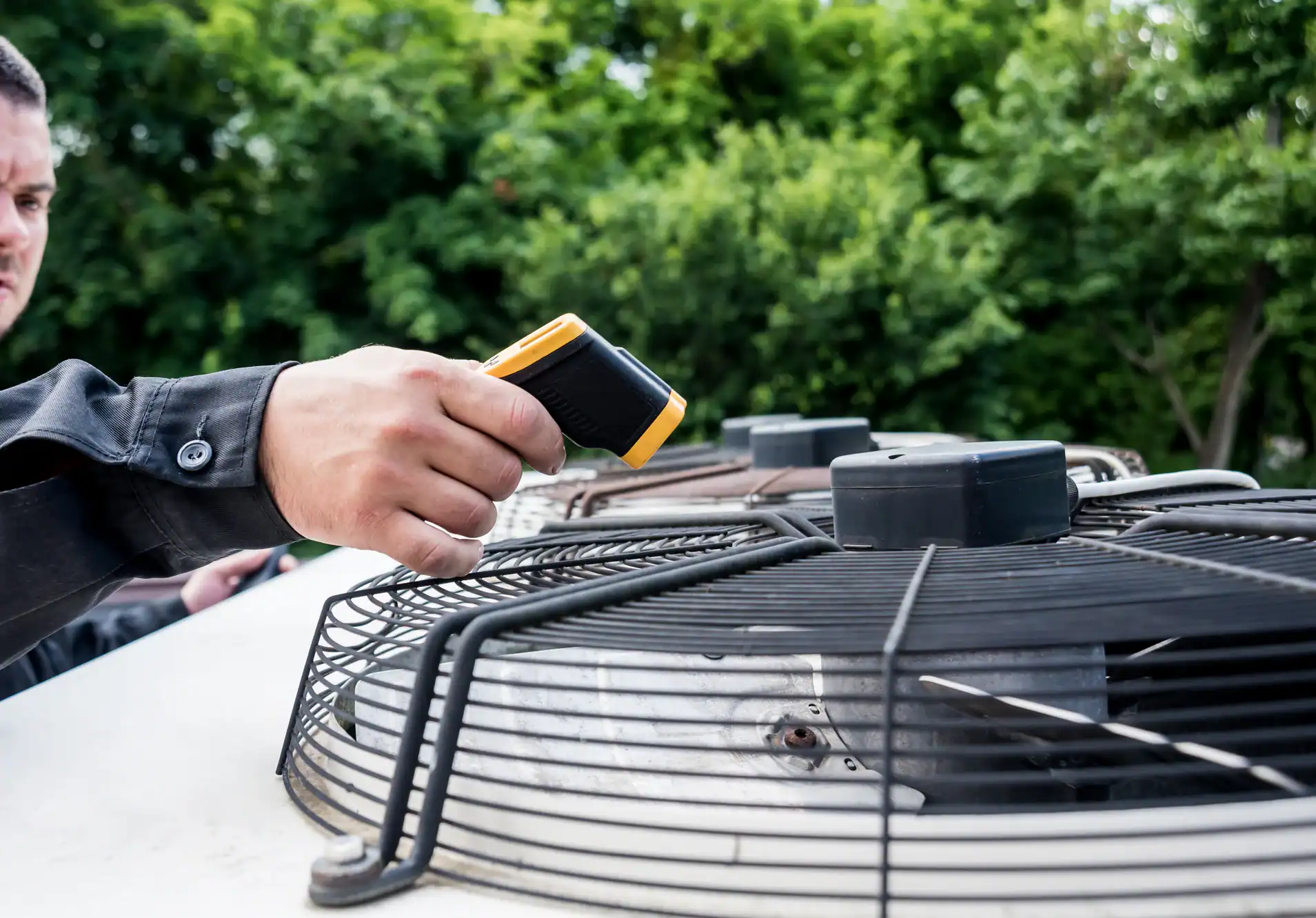
During an assessment, our trained technicians use specialized equipment to test for specific pollutants. We measure particulate matter like dust and pollen, check humidity levels that could encourage mold, test for carbon monoxide and other gases, and identify sources of contamination within your home. This isn’t guesswork—it’s data-driven analysis that tells you exactly what’s affecting your air quality.
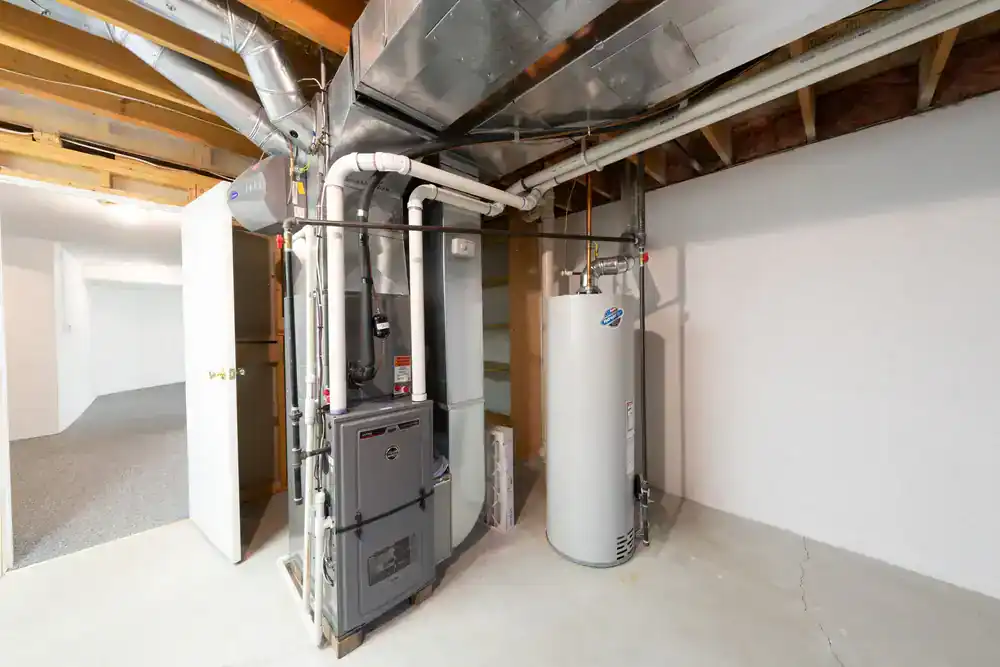
San Mateo County homes face unique challenges. The coastal climate brings humidity that can promote mold growth in ductwork and hidden spaces. Wildfire season introduces fine particulate matter that standard filters can’t catch. And because homes here are often well-sealed for energy efficiency, pollutants get trapped inside with nowhere to go.
A thorough assessment takes all of this into account. We inspect your HVAC system, check ductwork for leaks or contamination, evaluate your current filtration, and measure airflow throughout your home. We’re looking for the root causes, not just the symptoms.
Once testing is complete, you get a clear picture of what’s in your air and what needs to change. That might mean upgrading to MERV-16 filters that capture wildfire smoke particles as small as 0.3 microns. It could involve adding ventilation to bring in fresh outdoor air while filtering out allergens. Or it might require humidity control to prevent mold in those damp coastal months.
The assessment gives you a roadmap. No more wondering if your air is clean—you’ll know exactly what you’re dealing with and what solutions will actually work for your home.
Filtration is your first line of defense against indoor air pollutants. But not all filters are created equal, and what works in one home might not be right for another.
Standard HVAC filters—the ones you pick up at the hardware store—typically have a MERV rating between 6 and 11. They catch larger particles like dust and pet hair, but they miss the fine particulates that cause the most health problems. Pollen, mold spores, bacteria, and wildfire smoke particles are small enough to pass right through.
That’s where high-efficiency filtration comes in. MERV-16 filters capture particles as small as 0.3 microns, which includes most allergens and the PM2.5 particulates from wildfire smoke. These filters install directly on your HVAC return duct, treating every cubic foot of air that cycles through your system. Every room benefits from a single installation.
But filtration alone doesn’t solve every problem. Filters trap particles, but they can’t remove gaseous contaminants like VOCs from cleaning products, formaldehyde from building materials, or carbon dioxide buildup. That’s where air purification systems come in.
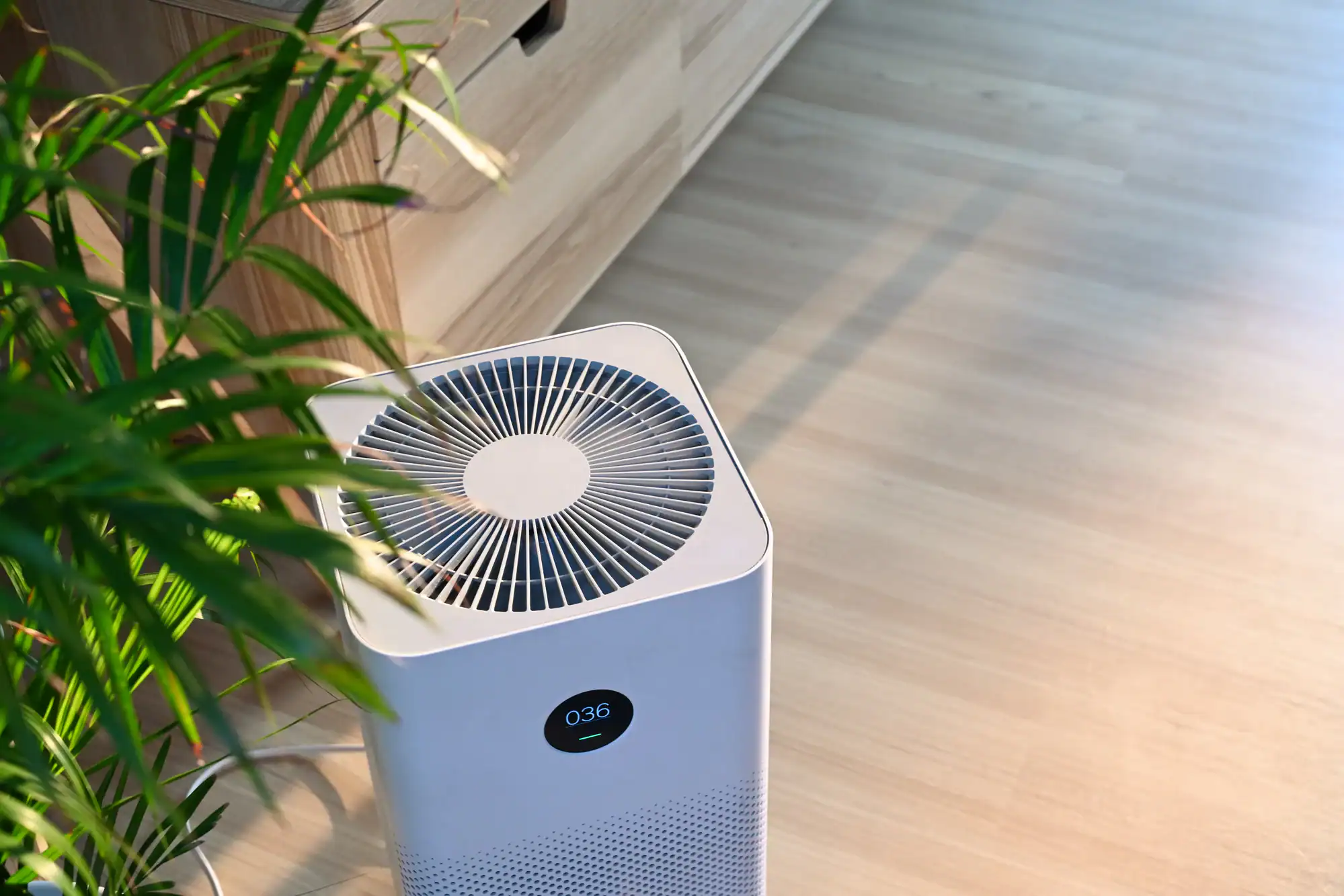
Whole-house air purifiers work alongside your HVAC system to address both particulate and gaseous pollutants. Some use UV light technology to neutralize bacteria, viruses, and mold spores. Others use activated carbon to absorb odors and chemical vapors. Advanced systems combine multiple technologies for comprehensive air cleaning.
The key is matching the solution to your specific needs. If wildfire smoke is your main concern, high-efficiency filtration is essential. If you’re dealing with persistent odors or chemical sensitivity, you’ll want purification that targets VOCs. If mold is an issue, UV light systems can prevent spores from multiplying in your ductwork.
We can evaluate your situation and recommend the right combination. We’ll also make sure your HVAC system can handle the airflow requirements of higher-efficiency filters without straining the motor or reducing efficiency.
Get a Free Quote!
Connect with a Eco Air Cooling and Heating expert for fast, friendly support.
Your heating and cooling system does more than control temperature. It’s the engine that circulates air throughout your home, and that means it plays a direct role in your indoor air quality.
When your HVAC system is properly maintained and equipped with the right filtration, it removes pollutants, controls humidity, and ensures adequate ventilation. But when it’s neglected, that same system can become a source of contamination—circulating dust, mold spores, and other pollutants into every room.
The relationship between HVAC performance and air quality is symbiotic. Each influences the other. A well-maintained system improves your air. Poor air quality can damage your system. Understanding this connection helps you see why regular maintenance and air quality improvements go hand in hand.
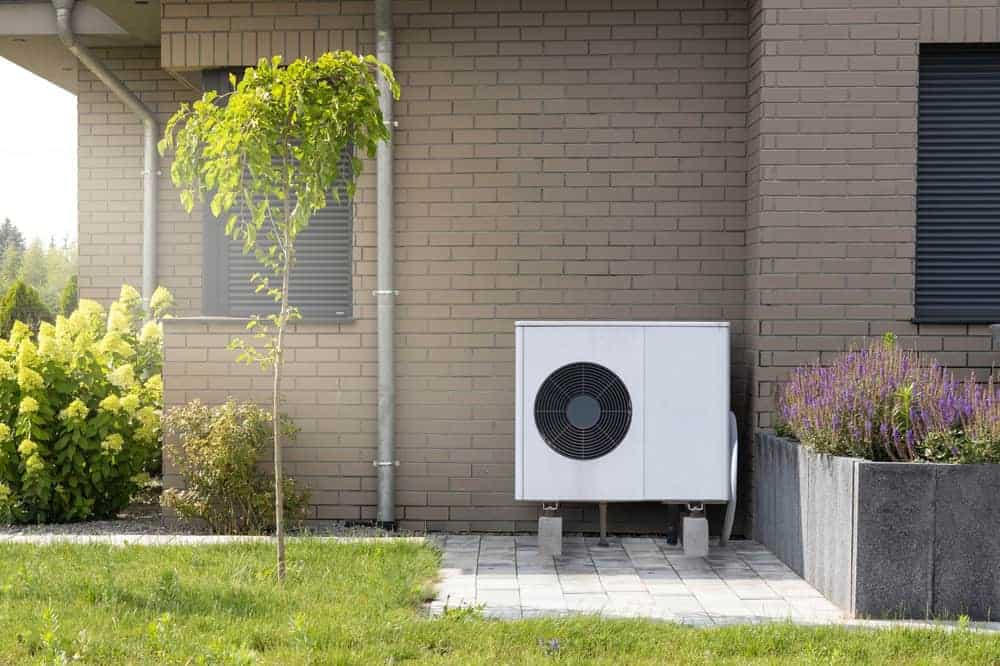
Your HVAC system can’t improve air quality if it’s not working properly. Dirty filters, clogged ducts, and poorly maintained equipment actually make things worse by recirculating contaminants instead of removing them.
Start with the basics: filters. Most homeowners don’t change them often enough. A clogged filter restricts airflow, forcing your system to work harder while doing a worse job of cleaning the air. It also creates back pressure that can push unfiltered air through gaps in your ductwork, bypassing filtration entirely.
Ductwork is another critical factor. Leaks, gaps, and poor seals allow unconditioned air—and all the dust and pollutants it carries—to enter your system. That contaminated air then gets distributed throughout your home. Dirty ducts are even worse, becoming breeding grounds for mold, bacteria, and allergens that get blown into your living spaces every time the system runs.
Humidity control matters too. Your AC naturally removes moisture as it cools, but if your system isn’t sized correctly or isn’t functioning properly, humidity levels can climb. In San Mateo County’s coastal climate, where marine layer and fog are common, excess humidity creates perfect conditions for mold growth in ductwork and hidden spaces.
Regular HVAC maintenance addresses these issues before they become problems. Our technicians check for duct leaks, clean components, verify proper airflow, and make sure your system is operating as designed. We catch small issues—a loose connection, a developing leak, a filter that needs upgrading—before they impact your air quality.
This is especially important if you’re investing in air quality improvements. Installing a MERV-16 filter or whole-house air purifier won’t deliver results if your ductwork is leaking or your system can’t maintain proper airflow. The foundation has to be solid.
Think of it this way: your HVAC system is the delivery mechanism for clean air. If that mechanism isn’t working right, even the best filtration and purification won’t reach every room effectively. Maintenance ensures the whole system works together to actually improve the air you breathe.
Filtration removes particles. Purification neutralizes contaminants. But ventilation solves a different problem: it brings in fresh outdoor air and removes stale indoor air that’s accumulated CO2, VOCs, and other gaseous pollutants that filters can’t capture.
Modern homes are built tight for energy efficiency. That’s great for your utility bills, but it also means pollutants get trapped inside. Cooking odors, cleaning product fumes, off-gassing from furniture and building materials—all of it builds up with nowhere to go. You end up breathing recycled air that gets more contaminated over time.
Ventilation fixes this by creating controlled air exchange. Fresh outdoor air comes in through filters that remove allergens and pollutants. Stale indoor air gets exhausted. The result is a constant supply of clean air without the energy waste of opening windows.
This is especially important during wildfire season in California. When air quality alerts tell you to keep windows closed, ventilation systems with MERV-16 filtration let you bring in fresh air while filtering out smoke particles. CO2 and VOCs don’t build up even though your home is sealed tight.
Mechanical ventilation systems integrate with your existing HVAC. Some use heat recovery technology to pre-condition incoming air, reducing the energy needed to heat or cool it. Others use demand-based controls that increase ventilation when CO2 levels rise, ensuring air stays fresh without wasting energy.
The right ventilation strategy depends on your home’s construction, your HVAC system, and your specific air quality concerns. Older homes with leakier construction might need less mechanical ventilation. Newer, tighter homes benefit from systems that provide consistent air exchange. Homes with gas appliances need ventilation that removes combustion byproducts.
We evaluate your current ventilation rates and recommend improvements during a professional assessment. We’ll measure how much outdoor air your home is getting, test for pressure imbalances that could draw pollutants from crawl spaces or attics, and design a ventilation strategy that works with your existing system.
Good ventilation isn’t just about comfort—it’s about health. It dilutes indoor pollutants to safe levels, prevents moisture buildup that leads to mold, and ensures your family isn’t breathing stale, contaminated air day after day.
The air inside your home matters more than most people realize. You’re breathing it all day, every day. Your kids are breathing it. Your elderly parents are breathing it. And if that air contains allergens, pollutants, or wildfire smoke particles, it’s affecting everyone’s health whether you notice it or not.
Professional indoor air quality services give you control. We identify what’s actually in your air, address the sources of contamination, and implement solutions that integrate with your HVAC system for whole-home results. You’re not guessing anymore—you know your air is clean.
For over 40 years, we’ve been helping San Mateo County families breathe easier. If you’re ready to find out what’s in your air and what it takes to improve it, reach out to us. Clean air isn’t a luxury. It’s something every family deserves.
Summary:
Article details:
Share: