Your air conditioner stopped working. Now you're stuck wondering if you should repair it or replace the whole system. Here's what actually matters in that decision.
Your air conditioner isn’t cooling like it should. Maybe it’s making strange noises. Maybe it won’t turn on at all. Now you’re facing a decision that feels bigger than it should: repair or replace?
The answer isn’t always obvious, and you probably don’t want to drop thousands on a new system if a $300 repair would solve the problem. But you also don’t want to throw money at an aging unit that’s going to fail again in six months.
This guide breaks down what actually matters when you’re deciding between air conditioner repair and replacement. You’ll learn what repairs cost, when system age tips the scales, and how to make the call without second-guessing yourself. Let’s start with what’s actually wrong with your system.
Most AC problems fall into a handful of categories. Some are quick fixes. Others signal that your system is on its way out.
The most common issues include refrigerant leaks, failed capacitors, compressor problems, electrical failures, and frozen coils. Each has a different price tag and a different implication for your system’s future. In San Mateo County, CA, the coastal environment—with its salt air and humidity changes—can accelerate certain types of wear, particularly on outdoor components.
Understanding what you’re dealing with helps you make a smarter decision about whether repair makes sense. Before you commit to any repair, get a clear diagnosis. A good technician will tell you what’s wrong, what it costs to fix, and whether other problems are likely to follow. That last part matters more than most homeowners realize.
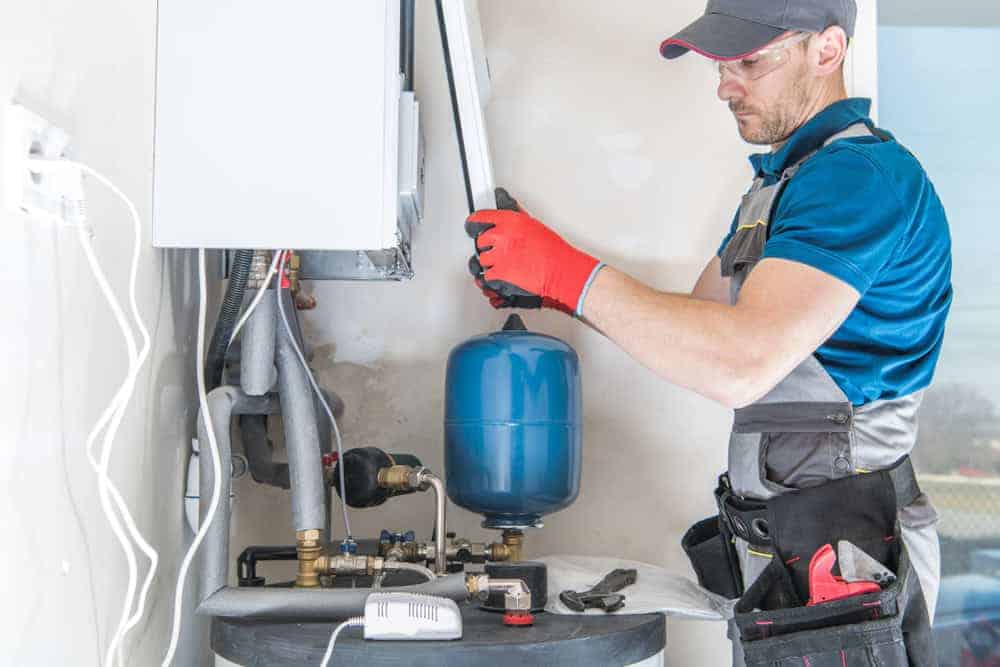
Your AC capacitor stores electrical energy and releases it to start your compressor and fan motors. When it fails, your system might not turn on at all, or it might hum without starting. You might notice the AC shutting off shortly after it starts, or warm air coming from your vents.
Capacitor failure is one of the most common AC problems, especially in systems that run hard during hot weather. The good news is it’s also one of the most affordable repairs. The part itself costs between $8 and $45. Professional replacement, including labor and service call fees, typically runs $150 to $450 in most markets.
Most capacitors last 8 to 20 years depending on usage and environmental conditions. If your system is relatively young and the capacitor is the only problem, repair is almost always the right call. A failed capacitor on a well-maintained 7-year-old system doesn’t mean the system is dying. It just means a small component wore out.
The situation changes if your system is older. A capacitor replacement on a 14-year-old AC that’s had other recent repairs might just be delaying the inevitable. The capacitor itself is cheap, but if you’re facing $400 for this repair today and you know the compressor or coils are likely to fail next year, you’re not solving the real problem.
We can replace a capacitor in about an hour once we’ve diagnosed the issue. The job involves safely discharging the old capacitor, installing the correct replacement, and testing the system to make sure it’s running properly. This isn’t a DIY project because capacitors store high voltage even when the power is off, creating a serious shock risk.
If your AC won’t start, makes a humming sound, or cycles on and off repeatedly, a failed capacitor is one possible cause. But those symptoms can also point to other problems, which is why proper diagnosis matters before you approve any work.
Your compressor is the heart of your AC system. It pressurizes refrigerant and pumps it through the system to remove heat from your home. When the compressor fails, your AC can’t cool at all.
Compressor replacement is one of the most expensive AC repairs you’ll face. The job typically costs between $800 and $2,300 nationally, with an average around $1,550. In the Bay Area, costs run higher—usually $2,200 to $5,500 depending on system size, refrigerant type, and accessibility. The compressor itself accounts for most of that cost. Labor adds another $700 to $1,500 depending on the complexity of the job.
Compressors rarely fail on newer systems. Most last 10 to 15 years, which is about the same lifespan as the AC unit itself. That timing matters because a failed compressor on a 12-year-old system raises a bigger question: is it worth spending $2,000 to $3,000 on a major repair when the rest of the system is aging too?
The math gets worse if your system uses R-22 refrigerant, also known as Freon. R-22 was phased out in 2020, and the remaining supply is expensive and getting harder to find. If you’re replacing a compressor on an R-22 system, you’re not just paying for the part and labor. You’re also committing to a system that will become increasingly expensive to service as R-22 becomes scarcer.
We typically recommend replacement over compressor repair when the system is out of warranty, over 10 years old, or uses outdated refrigerant. A new system costs more upfront—typically $4,500 to $12,000 for residential installations—but it comes with a full warranty, modern efficiency, and the peace of mind that you won’t face another major repair bill in six months.
Compressor failure doesn’t happen without warning. Common signs include the outdoor unit not running, loud or unusual noises from the outdoor unit, the system running but not cooling, or the circuit breaker tripping repeatedly. If you’re seeing any of those symptoms, get a diagnosis before the problem gets worse.
One thing to watch for: some contractors push compressor replacement when a simpler fix would work. A failed capacitor or contactor can cause symptoms that look like compressor failure. That’s why working with a technician who actually diagnoses the problem—rather than jumping straight to the most expensive solution—matters.
Get a Free Quote!
Connect with a Eco Air Cooling and Heating expert for fast, friendly support.
The repair-or-replace decision comes down to three factors: system age, repair cost, and repair frequency. When all three point in the same direction, the answer is usually clear. When they don’t, you need a framework to make the call.
HVAC professionals use a rule of thumb called the $5,000 rule. Multiply your system’s age by the repair cost. If the result exceeds $5,000, replacement typically makes more financial sense than repair. A $600 repair on a 10-year-old system totals $6,000, suggesting replacement. A $400 repair on a 7-year-old system totals $2,800, suggesting repair is fine.
That formula isn’t perfect, but it accounts for the reality that older systems are more likely to need additional repairs soon. You’re not just paying for today’s fix. You’re betting on how long the system will run before the next problem hits. For San Mateo County, CA homeowners, this calculation takes on added weight during heat waves, which have become more frequent in recent years.
Repair is usually the right call when your system is under 10 years old and the problem is relatively minor. A failed capacitor, broken contactor, or worn fan motor on a 6-year-old, well-maintained system doesn’t mean you need a new AC. It means a component wore out, which happens even on good equipment.
Repair also makes sense when you’ve been keeping up with annual maintenance. Systems that get regular tune-ups last longer and have fewer surprise failures. If we’ve been servicing your AC every year and telling you it’s in good shape, a single repair doesn’t change that assessment.
The repair cost matters too. If the fix costs less than 30% to 50% of what a new system would cost, and your AC is relatively young, repair is almost always more cost-effective. A $500 repair on a system that would cost $6,000 to replace is an easy decision, especially if the rest of the unit is healthy.
System efficiency plays a role as well. If your current AC has a decent SEER rating—14 or higher—and it’s cooling your home adequately, you’re not giving up much by keeping it. Newer systems are more efficient, but the energy savings from upgrading a 14 SEER system to an 18 SEER system might take years to offset the upfront replacement cost.
Warranty coverage can tip the scales toward repair. If your compressor or other major component is still under warranty, you might only pay for labor. That changes the math significantly. A compressor replacement that would normally cost $2,000 might only cost $600 if the part is covered.
One scenario where repair almost always wins: your system is under 5 years old. Equipment that new shouldn’t need major repairs, and if it does, there’s probably a warranty or installation issue. Get a second opinion before you consider replacement on a system that young.
The key is looking at the whole picture. System age, repair cost, maintenance history, and overall condition all matter. If most of those factors point toward repair, trust that assessment even if the repair bill feels high in the moment.
Replacement makes sense when your system is over 10 years old and facing a major repair. According to ENERGY STAR, air conditioners over 10 years old should be evaluated for replacement, especially if they need expensive repairs. Most residential AC systems last 10 to 20 years depending on climate, usage, and maintenance. By the time your system hits 12 to 15 years, you’re approaching the end of its expected lifespan.
The type of repair matters as much as the cost. Compressor failure, evaporator coil leaks, or major refrigerant leaks on an older system usually warrant replacement. Those repairs are expensive, and they don’t address the fact that other components are aging too. Fix the compressor today, and you might face a coil leak next year. At some point, you’re just delaying the inevitable while spending money that could go toward a new system.
Frequent breakdowns are another red flag. If you’re calling for repairs more than once a year, or if you’ve had two or three significant repairs in the past few years, your system is telling you something. One repair might be bad luck. Multiple repairs mean the system is wearing out, and each fix is buying you less time than the one before.
Energy bills that keep climbing despite regular maintenance suggest your system is losing efficiency. Older AC units become less efficient as components wear out and seals degrade. A system that started at 12 SEER might be operating closer to 9 or 10 SEER after 15 years. That inefficiency shows up every month on your electric bill, and it adds up to real money over time.
Refrigerant type is a major consideration. If your system uses R-22 refrigerant and develops a leak, replacement is almost always smarter than repair. R-22 is no longer produced in the United States, and the remaining supply is expensive and shrinking. Repairing an R-22 system commits you to a refrigerant that will only get harder and more expensive to obtain. Modern systems use R-410A or newer refrigerants that are readily available and more environmentally friendly.
Comfort issues that won’t go away can also justify replacement. If your system struggles to keep up with cooling demand, leaves some rooms too hot while others are too cold, or can’t maintain consistent temperatures, the problem might be improper sizing or duct design. In those cases, repair won’t fix the underlying issue. A properly sized new system, installed correctly, will deliver better comfort than trying to patch an inadequate setup.
The $5,000 rule applies here too. When system age multiplied by repair cost exceeds $5,000, replacement typically delivers better long-term value. That formula accounts for the likelihood of additional repairs and the opportunity cost of putting money into a dying system instead of investing in a new one with a warranty and modern efficiency.
One more factor: if the repair cost approaches 50% of replacement cost, lean toward replacement, especially if your system is over 10 years old. A $3,000 repair on a system that would cost $6,500 to replace doesn’t make financial sense when you factor in the age of the equipment and the likelihood of future problems.
The repair-or-replace decision comes down to system age, repair cost, and how many times you’ve been through this before. When your AC is under 10 years old and the repair is straightforward, fix it. When your system is over 12 years old and facing a major repair, replacement usually makes more sense.
Use the $5,000 rule as a starting point, but don’t ignore the other factors. Frequent breakdowns, rising energy bills, and outdated refrigerant all point toward replacement even if the math suggests repair might work. Trust your gut if the system feels like it’s on its last leg.
Get a clear diagnosis before you decide anything. A good technician will tell you what’s wrong, what it costs to fix, and whether other problems are likely to follow. That honest assessment is worth more than any formula or rule of thumb. If you’re in San Mateo County, CA and facing this decision, we can provide the straight answers you need to make the right call for your home.
Summary:
Article details:
Share: