
Hear from Our Customers
The hillside neighborhoods around the Notre Dame de Namur campus take a beating every winter. Atmospheric river events push water into flashing seams that were fine last year. Fog sits on north-facing slopes long enough to grow moss across shingles that are already past their prime. By the time you see a stain on the ceiling, the damage has usually been building for months.
Getting your roof properly assessed and repaired — or replaced before it fails — means you’re not scrambling during a storm at midnight looking for someone who picks up the phone. It means your home’s value stays where it should be in a market where properties in this area carry real weight. And it means the interior damage that follows a roof failure — soaked insulation, compromised drywall, potential mold — never gets the chance to start.
For homes built in the 1950s through 1970s, which make up a significant portion of the housing stock around Notre Dame de Namur, the roof is often the last major system that gets attention. That’s usually because it’s out of sight. But on a hillside lot with a steep pitch and complex drainage, the cost of waiting almost always exceeds the cost of acting.
We’ve been working in San Mateo County since 1985. Ramiro’s father started the company, Ramiro took over in 2006, and the same commitment to doing the work right has carried through every decade in between. Our Redwood City office is about six miles from Ralston Avenue — close enough to respond fast, local enough to know what Peninsula roofs actually deal with, and near enough to Notre Dame de Namur that we’re familiar with the specific drainage and weather patterns that affect homes in this neighborhood.
This isn’t a company that showed up last year with a new logo. The technicians here have worked on homes throughout the hillside communities near Notre Dame de Namur long enough to recognize fog-related shingle wear on sight, to know how hillside drainage behaves during a heavy rain event, and to understand what the City of Belmont’s permit process actually requires. That kind of experience doesn’t come from a training manual.
If you’re a senior homeowner or a military family in the area, we offer a 15% discount — not as a gimmick, but because this community has been the foundation of our business for four decades.
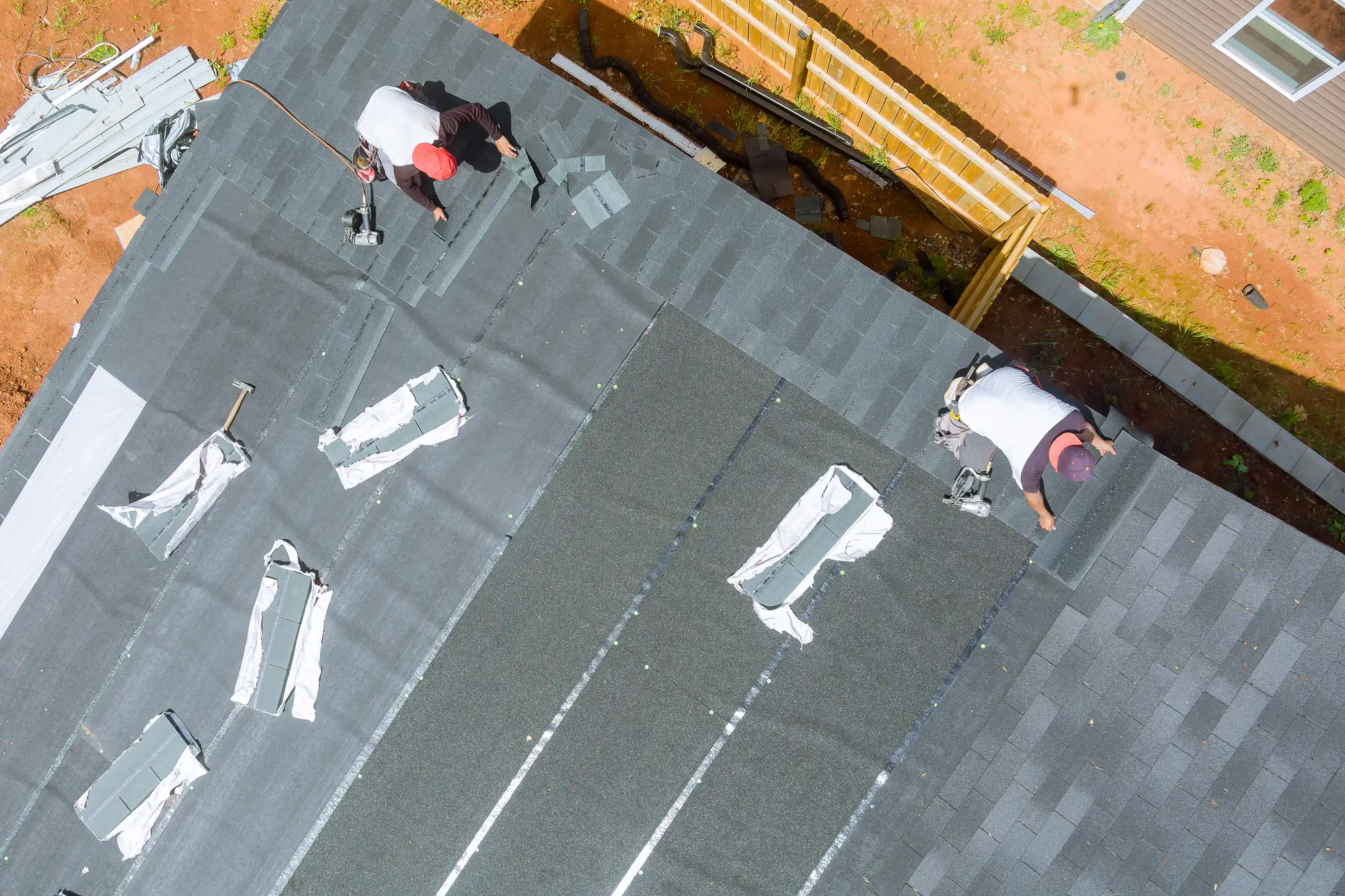
It starts with a real inspection — not a sales visit, not a quick glance from the driveway. On hillside properties near the Notre Dame de Namur campus, that means getting eyes on the pitch, the flashing, the ridge cap, the valleys, and anywhere water has a reason to collect or pool. Steep-slope homes in this area have roofing geometry that requires more than a surface-level look, and that’s exactly what you’ll get.
After the inspection, you’ll receive a clear assessment of what’s actually going on — what needs immediate attention, what can wait, and what a full replacement would involve if that’s the direction things are heading. No pressure, no inflated urgency. Just an honest read of the situation so you can make a decision that makes sense for your home and your timeline.
If work is approved, we handle the permit process with the City of Belmont Building Department. Re-roofing in Belmont requires a permit, and the city’s inspection protocol requires specific stages of the work to be visible before sign-off. That’s not a bureaucratic inconvenience — it’s a protection for you as the homeowner. Every project is completed to California Building Code standards, under a valid C-39 license, with the documentation you need if you ever sell the home or file an insurance claim.
Ready to get started?
The range of roofing work that comes up in the neighborhoods around Notre Dame de Namur isn’t one-size-fits-all. Some homeowners need a full re-roof on a 1960s home that’s been patched one too many times. Others need emergency roof repair after a storm moved through and left a flashing failure or a cracked ridge cap that’s now letting water in. Some just need a straight answer about whether what they’re seeing is serious or not.
We handle residential roofing services for the full range — inspections, repairs, re-roofing, and emergency response. For homeowners near Water Dog Lake and the hillside streets above Ralston Avenue, storm damage roof inspections are especially relevant after the heavy atmospheric river events that hit San Mateo County between November and March. Tarping services for leaking roofs are available when you need to stop the water immediately while permanent repairs are scheduled. Our 24-hour emergency roofer line exists for exactly those situations — when it’s late, it’s raining, and you can’t wait until Monday.
On the commercial side, we provide commercial roofing services in San Mateo County for property managers and business owners who need a licensed contractor capable of handling larger-scope projects. With the Notre Dame de Namur campus now under UC Investments ownership and multiple buildings slated for renovation, the institutional and commercial roofing demand in this part of Belmont is only growing.
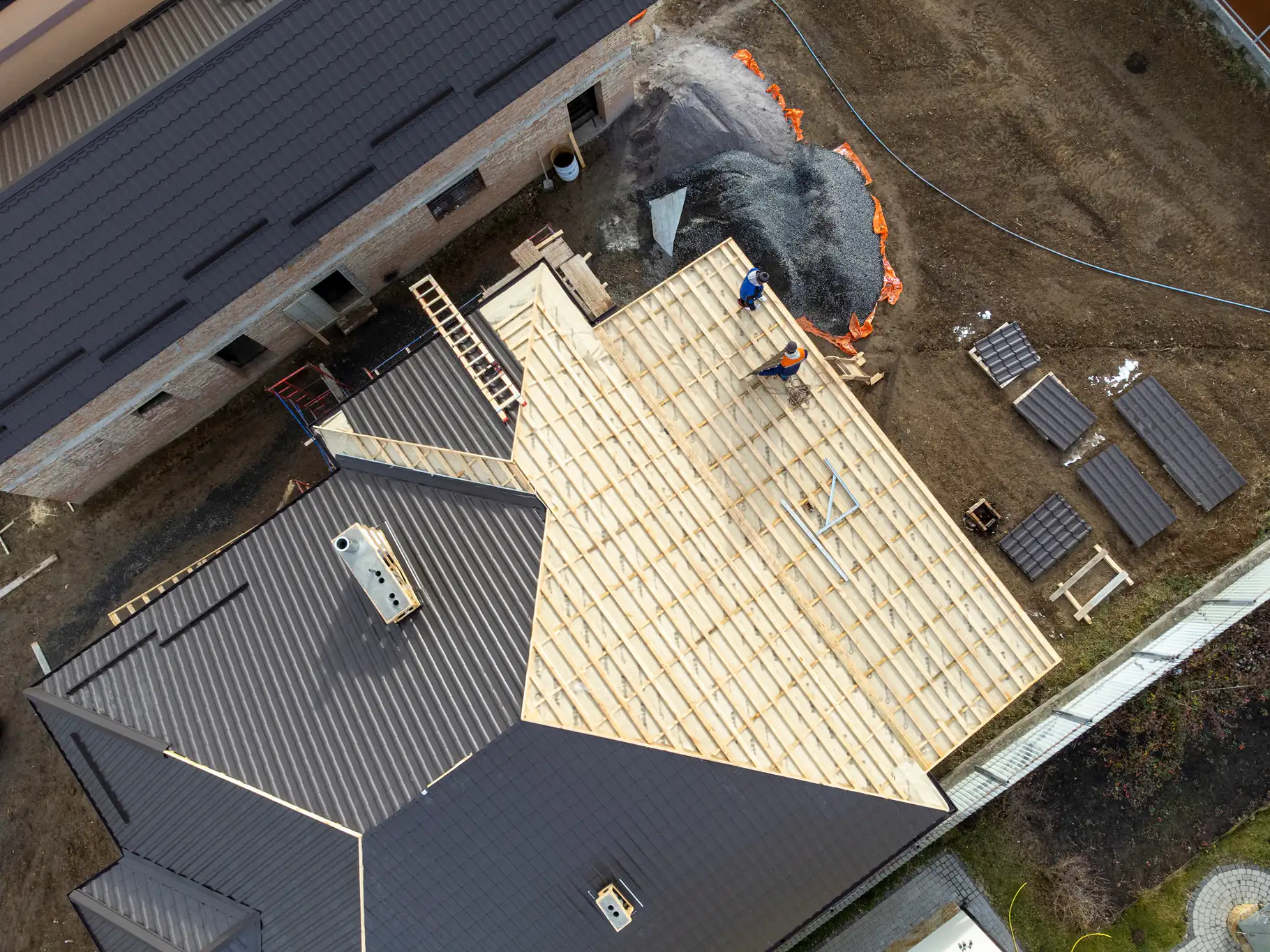
Yes — re-roofing in Belmont requires a permit from the City of Belmont Building Department, and that applies to most full replacement projects, not just new construction. The city’s inspection protocol also specifies that during the re-roofing process, a portion of the sheathing must be exposed and visible before the inspector signs off, and a minimum number of new courses must be in place at the time of inspection. It’s a specific process, and skipping it creates real problems — failed inspections, insurance complications, and potential liability if you sell the home.
Any roofing contractor working in Belmont is legally required to hold a valid California C-39 Roofing Contractor license issued by the Contractors State License Board. You can verify any contractor’s license directly on the CSLB website before you hire anyone. If a contractor can’t give you a license number upfront, that’s your answer right there.
For most residential homes in the neighborhoods around Notre Dame de Namur, a full roof replacement runs somewhere between $10,000 and $25,000, depending on the size of the home, the pitch of the roof, the material selected, and the complexity of the job. Hillside properties near the NDNU campus tend to sit on the higher end of that range — steeper pitches, more complex roof geometry, and access challenges all add time and labor to the project.
Material choice also plays a significant role. Asphalt shingles are the most common and most affordable option, but in a fog-heavy climate like ours on the Peninsula, the quality of the shingle and the installation method matter more than they would in a drier inland market. A lower-grade shingle installed without proper underlayment in a Peninsula climate is going to degrade faster than the same shingle installed correctly. Getting a written, itemized estimate — and understanding what’s actually included — is the most important step before committing to any contractor.
Moss on a roof is a symptom of persistent moisture — which is exactly what the marine fog layer and wet winters deliver to the hillside neighborhoods around Notre Dame de Namur on a regular basis. On its own, moss looks like a cosmetic issue. But over time, it holds moisture against the shingle surface, accelerates granule loss, and works its way under shingle edges, lifting them and creating pathways for water to get underneath. Left long enough, it becomes a structural issue, not just an aesthetic one.
North-facing slopes and shaded areas near mature trees — common on the hillside streets around the Notre Dame de Namur campus — are the most vulnerable. If you’re seeing moss or dark streaking on your roof, it’s worth having it looked at before the next rainy season. In some cases, treatment and cleaning are enough. In others, the underlying shingles have degraded to the point where replacement is the more cost-effective path. Either way, knowing which situation you’re in is the starting point.
The honest answer is that most homeowners can’t tell from the ground — and that’s exactly what makes post-storm damage easy to miss until it shows up as a ceiling stain or a wet attic. The signs that are visible without getting on the roof include missing or displaced shingles, granule accumulation in gutters or downspouts, visible gaps around chimney flashing or pipe boots, and water stains on interior ceilings or walls. But flashing failures, cracked ridge caps, and compromised valleys often aren’t visible at all from ground level.
San Mateo County’s atmospheric river events — the multi-day heavy rainfall episodes that hit the Peninsula between November and March — are the most common trigger for this kind of damage. After a significant storm, a professional storm damage roof inspection gives you a documented assessment of what actually happened to your roof, which matters both for making repair decisions and for any insurance claim you might need to file. Waiting until the next storm to find out isn’t a strategy — it’s just a more expensive version of the same problem.
Tarping is exactly what it sounds like — a weatherproof barrier installed over a damaged or compromised section of roof to stop water from getting in while permanent repairs are arranged. It’s not a long-term fix, but it’s an important one. When a storm tears through and leaves a gap in your roof at 11 p.m. on a Tuesday, the difference between tarping that night and waiting until a contractor is available on Thursday can be thousands of dollars in interior damage — soaked insulation, damaged drywall, ruined flooring, and the beginning of a mold situation.
For homeowners on the hillside streets near Water Dog Lake or in the older neighborhoods above Ralston Avenue, where homes have more complex rooflines and drainage patterns, an unaddressed breach during a heavy rain can cause water to travel in unexpected directions inside the structure before it ever shows up on a ceiling. We offer tarping services for leaking roofs through our 24-hour emergency line for exactly these situations — because some things genuinely can’t wait until business hours.
Yes — we offer a 15% discount for seniors, and the same discount applies to military members. In a community like the neighborhoods around Notre Dame de Namur, where a significant portion of homeowners are long-term residents who have owned their homes for decades, a roof replacement is one of the largest single home expenses they’ll face. On a project that runs $15,000 to $20,000, that 15% translates to real money — $2,250 to $3,000 in actual savings, not a token reduction.
The discount reflects something straightforward: the homeowners who have invested the most in this community over the longest period of time deserve a contractor who recognizes that. We’ve been working in San Mateo County since 1985, and the relationship with this area’s senior homeowners has been central to our business from the beginning. If you’re a senior homeowner near Notre Dame de Namur and you’re trying to figure out whether a repair or a replacement makes more sense, that conversation starts with a call — no obligation, no pressure, just a straight answer.
Other Services we provide in Notre Dame De Namur