
Hear from Our Customers
Most roofing problems in Millbrae don’t announce themselves with a dramatic collapse. They show up as a water stain on the ceiling weeks after a storm, or as moss quietly spreading across the north-facing slope of a Green Hills bungalow that’s been sitting in fog every summer since 1958. By the time you notice something, the damage underneath is usually further along than the surface suggests.
What a properly inspected, properly repaired, or fully replaced roof actually gives you is certainty. You stop watching the forecast with that low-grade anxiety every time a storm rolls in off the bay. You stop wondering if that dark spot on the drywall is old or new. For homeowners in Millbrae Meadows and Mills Estate — where hillside exposure to bay winds puts real stress on aging flashing and sealants — that peace of mind isn’t abstract. It’s the difference between a $400 repair and a $15,000 interior restoration.
Millbrae’s housing stock tells the whole story. The majority of homes here were built between 1940 and 1969, during the post-war expansion that followed SFO’s growth. Those roofs have had a long run. If yours is in that era and hasn’t been replaced, it’s not a question of if — it’s a question of when, and whether you’re ahead of it or behind it.
We’ve been operating in San Mateo County since 1985. That’s not a marketing line — it means that when many of Millbrae’s current long-term homeowners were first moving into their Capuchino split-levels or their Highlands cottages, we were already working in their county. Ramiro’s father built this company. Ramiro has run it since 2006. There’s a real person behind every job, and that person’s name is on the business.
What that history actually means for you is accountability. A company that’s been here for four decades in Millbrae and the surrounding area isn’t going anywhere after your check clears. You can call back. You can get answers. That’s not something a contractor who showed up after the last storm system can offer you — and in Millbrae, where neighbors talk and reputations travel fast, it’s the standard we’ve held ourselves to the entire time.
Senior homeowners receive a 15% discount, and military members and veterans receive the same. Those aren’t promotional add-ons — they reflect who we were built to serve.
It starts with a real conversation — not a form submission that disappears into a queue. When you call, you talk to someone who can actually help you figure out whether what you’re dealing with is urgent, manageable, or somewhere in between. If there’s active water intrusion, we move fast. Emergency tarping stops the damage while conditions are assessed properly — because getting up on a wet roof in the middle of a storm to do permanent repairs isn’t safe for anyone and rarely produces good work.
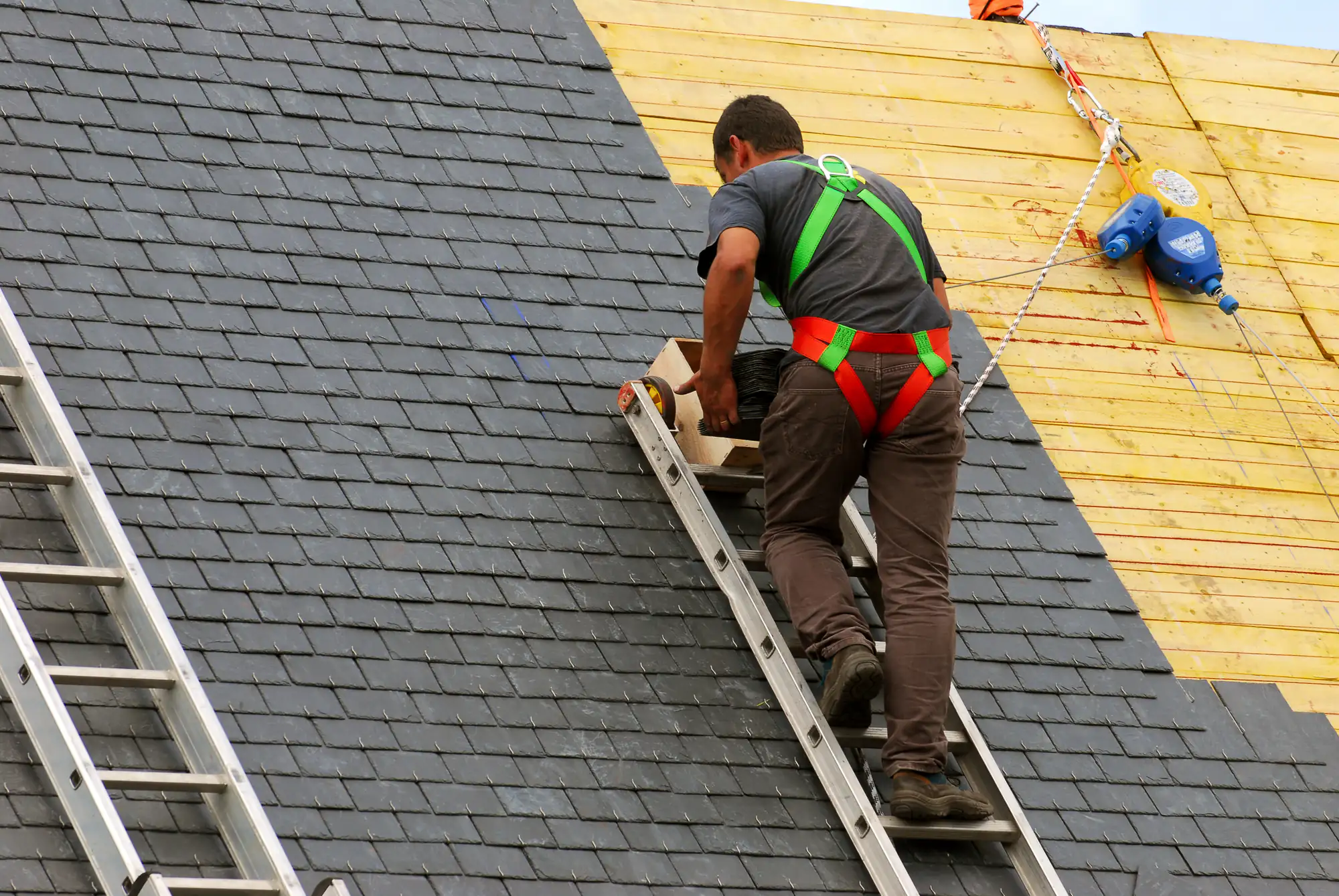
Once we can get a full look at the roof, our inspection covers everything: the field of the roof, the flashing around chimneys and penetrations, the gutters, the ridge, and any areas where the Millbrae fog cycle has accelerated moisture damage over time. North-facing slopes and older flat roof sections get particular attention here, because those are the areas that tend to fail quietly before they fail visibly. If dry rot is present under the surface — which is common in homes from the 1940s through 1960s — that gets documented and addressed directly. A new roof installed over compromised decking is just a delayed problem.
From there, you get a written estimate with clear line items — what needs to happen, why, and what it costs. The City of Millbrae requires permits for re-roofing work, and we handle that process. No shortcuts, no unpermitted work that creates problems when you go to sell.
Ready to get started?
The roofing needs across Millbrae’s neighborhoods aren’t uniform, and the approach shouldn’t be either. A Spanish Mission Revival home in Capuchino has different material requirements than a midcentury flat-roof property near El Camino Real, and a hillside home in Millbrae Meadows with bay wind exposure needs flashing and sealant work that a sheltered street-level property simply doesn’t. We cover residential roofing services across asphalt shingles, tile, flat roofing systems, modified bitumen, and metal roofing — whatever the structure actually calls for.
For Millbrae’s business community, we extend commercial roofing services across the SFO-adjacent corridor along East Millbrae Avenue and into commercial properties throughout the city. TPO membranes, flat roof maintenance, and commercial drainage are all part of that scope. The same licensing, permitting, and insurance standards apply regardless of whether the job is a single-family home in Lomita Hills or a commercial property near the Millbrae Intermodal Terminal.
We also offer storm damage roof inspections specifically for homeowners who need professional documentation after a weather event — which matters for insurance claims and for catching damage that isn’t visible from the ground. If you’re looking at a roof that’s been through a few Peninsula winters and hasn’t been inspected recently, that’s the right place to start.
Yes — the City of Millbrae Building Division requires a permit for re-roofing work, just as it does for most structural repairs and improvements. This isn’t a technicality you can skip. Unpermitted roofing work can create real problems when you go to sell your home, and in some cases it can affect your homeowner’s insurance coverage if a claim arises from work that wasn’t properly inspected.
The permit process in Millbrae is straightforward for a licensed contractor who’s done it before. The city’s online permitting portal is accessible 24/7, and the Building Division at 650-259-2330 can answer specific questions about your project. We handle the entire permit and inspection process for every job — no shortcuts, no unpermitted work.
That’s the right question to ask before anyone starts talking numbers. The honest answer is that it depends on the age of the roof, the extent of the damage, and what’s happening underneath the surface — and you can’t fully assess the last part without getting up there and looking.
In Millbrae, where a significant portion of the housing stock dates back to the 1940s through 1960s, the age factor alone puts a lot of roofs in replacement territory. If your home is from that era and the roof has never been replaced, repairs may buy you a season or two, but you’re likely managing a system that’s past its designed lifespan. On the other hand, a roof from the 1990s or 2000s with isolated storm damage is often a strong repair candidate. Our inspection tells you which situation you’re actually in — and we’ll show you what we found and explain the reasoning, not just hand you a replacement quote by default.
The first priority is limiting interior damage while you wait for conditions to improve enough for safe roof access. Move anything valuable away from the affected area, put down buckets or towels, and if water is near electrical fixtures, turn off the circuit at the breaker — that’s a safety issue, not just a property issue.
Call a roofer who offers emergency tarping services. A tarp installed correctly over the compromised section stops active water intrusion and protects the interior until a permanent repair can be done properly. In Millbrae, winter storm events — particularly the atmospheric river systems that hit the Peninsula hard in recent years — can make emergency calls spike overnight. Getting someone on the phone quickly matters. After the storm passes and the roof is safe to access, a full inspection should follow to document all damage, including anything that isn’t visible from inside the house. That documentation is important if you plan to file a homeowner’s insurance claim.
In San Mateo County, roof replacement costs generally run between $8,000 and $25,000 for a residential home, with most projects in Millbrae landing in the higher portion of that range. The reasons are straightforward: labor costs on the Peninsula are elevated, and the architectural variety here — from hillside homes in Millbrae Meadows to larger estates in Mills Estate — means more complex jobs than a standard flat-lot suburban house.
Material choice affects cost significantly. Asphalt shingles are the most common and most affordable option. Tile roofing costs more upfront but lasts considerably longer and is well-suited to Millbrae’s fog and moisture exposure. Flat roofing systems for commercial properties or mid-century homes are priced differently again. The right way to approach cost is to get a written, itemized estimate after a proper inspection — not a ballpark number over the phone. Any estimate that doesn’t include a look at your actual roof isn’t an estimate, it’s a guess.
Yes — senior homeowners receive a 15% discount on roofing services. Millbrae has a meaningful population of long-term homeowners who’ve been in their homes for decades, many of them now retired. A roof replacement or major repair is a significant expenditure, and that discount is a real reduction on a real number — not a token gesture.
Military members and veterans also receive a 15% discount. If you’re not sure whether you qualify, just ask when you call. There’s no complicated process — it’s applied to your estimate directly. For homeowners who’ve been in their Millbrae home since the 1970s or 1980s and are facing a first-ever roof replacement, having a contractor who actually accounts for that in the pricing makes a difference in how the decision feels and how manageable the project becomes.
It’s a factor that doesn’t get talked about enough. Millbrae’s summer fog pattern — marine layer rolling in off the bay night after night, then burning off during the day — creates a repeated moisture cycle that accelerates the breakdown of roofing materials over time. Asphalt shingles absorb moisture and dry out repeatedly, which degrades their flexibility and granule adhesion faster than in drier inland climates. Wood shake roofs are particularly vulnerable — moss and algae growth on north-facing slopes is common in Millbrae, and once that takes hold, it traps additional moisture against the surface and speeds up deterioration significantly.
What this means practically is that roofs in Millbrae tend to reach the end of their useful life closer to the lower end of the manufacturer’s stated lifespan, especially if they haven’t had regular maintenance. An asphalt shingle roof rated for 25-30 years in a dry climate may realistically need attention at 18-22 years here. Regular inspections — particularly after winter storm season — help you stay ahead of that curve rather than reacting to it after water is already inside.
Other Services we provide in Millbrae