
Hear from Our Customers
Most roofing problems in Downtown Menlo Park don’t start with a storm. They start years earlier — a cracked tile near a valley, a flashing that shifted, granules wearing off a shingle that was already on its last decade. By the time water shows up on your ceiling, it’s been traveling for a while. A proper roof repair or replacement stops that cycle before it becomes a structural problem.
The homes along the streets off Santa Cruz Avenue — many of them built in the 1950s and 1960s — are at a point where the original or first-replacement roofing systems are aging out. In a neighborhood where the median home value sits near $4 million, a deteriorating roof isn’t a minor maintenance item. It’s a liability that shows up in inspections, in negotiations, and in the next rainy season.
Menlo Park’s Mediterranean climate means your roof gets hammered with moisture from November through April, then baked and dried through the summer. That cycle — wet, dry, wet, dry — is hard on roofing materials, especially older ones. Add in the mature tree canopy that blankets neighborhoods like Allied Arts and Linfield Oaks, and you’ve got debris accumulation, moisture retention, and moss growth working against your roof year-round. Fixing it the right way, with the right materials and a contractor who pulls proper permits through the Menlo Park Building Division, means you’re not back on the phone in two years.
We’ve been working on San Francisco Peninsula homes since 1985. Ramiro’s father started the company, and Ramiro took over in 2006. That’s not a marketing angle — it’s just the reality of who shows up when you call. We’re a family business with four decades of accountability to the same communities we serve.
We’re headquartered in Redwood City, the San Mateo County seat — right next door to Downtown Menlo Park. That matters because we know the Menlo Park Building Division’s permit process, understand what the local building inspectors expect, and have worked on the kind of mid-century Peninsula homes that make up the majority of the housing stock in this area. No learning curve. No sending crews from three counties away.
We’re fully licensed and bonded, carry a California C-39 Roofing Contractor license, and employ long-term technicians who have been doing this work for years. We also offer a 15% discount for seniors and a 15% discount for military members — both of which reflect something real about how we view the people we work for.
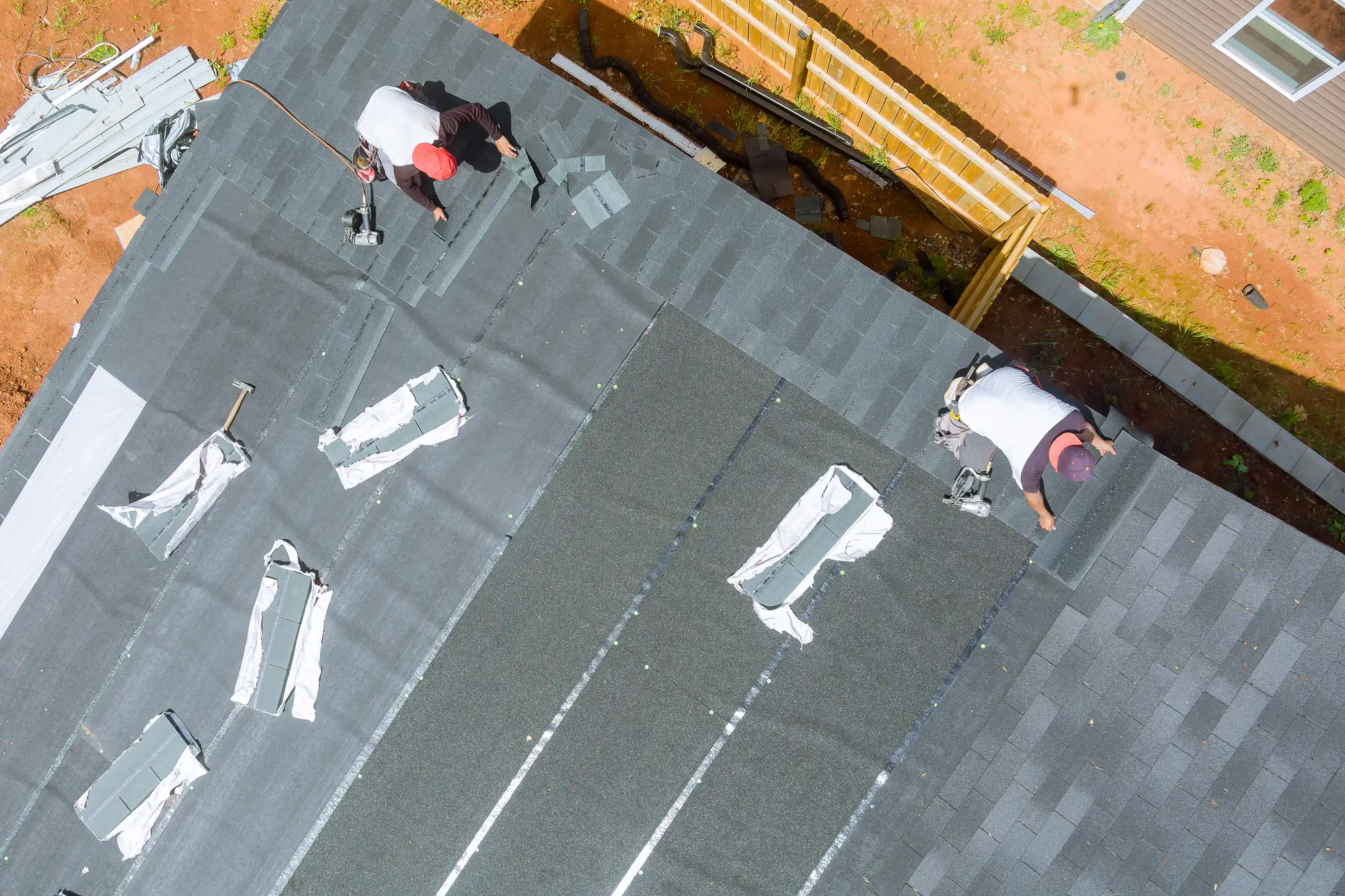
It starts with a roof inspection. Before anyone talks numbers, we get eyes on your roof — checking the field of the roof, the flashing at chimneys and skylights, the valleys, the ridge, the gutters, and the underlayment condition where accessible. In Downtown Menlo Park, where a lot of homes have mature trees overhead and roofs that haven’t been touched in fifteen or twenty years, this step tends to surface issues that weren’t visible from the ground. You’ll get a clear picture of what’s actually going on up there.
From there, you get a written estimate that breaks down what needs to happen and why. If it’s a repair, the scope is defined before work begins. If it’s a full replacement, material options are presented — including what’s appropriate for your roof’s pitch, your neighborhood’s aesthetic, and any solar compatibility considerations, which matter more and more in a city with Menlo Park’s adoption rate. The City of Menlo Park requires permits for residential reroofs, processed through the Community Development Department’s Building Division. We handle that paperwork as part of the job. You don’t chase down permits or schedule inspections — that’s handled.
Once work is underway, we protect your property, your landscaping, and your driveway. Cleanup is complete before we leave. After the job is done, you’ll have documentation of the work, the permit sign-off, and warranty information in hand. If something comes up later, you have a 40-year-old local company to call — not a disconnected number.
Ready to get started?
We provide residential and commercial roofing services in Downtown Menlo Park, CA — including roof leak repair, emergency roof repair, storm damage roof inspection, and tarping services for leaking roofs when a situation can’t wait. Whether it’s a single failing section after a January atmospheric river event or a full reroof that’s been overdue since the last decade, the scope of work is matched to what your specific roof actually needs.
For residential roofing in Downtown Menlo Park, that often means working with homes that have clay tile, aging asphalt shingles, or flat roof sections — all of which behave differently in the Peninsula’s wet-dry seasonal cycle. We’re familiar with the material matching requirements that matter in neighborhoods like Allied Arts, where architectural character is part of what makes the property valuable. If your home has a tile roof that needs repair, getting the color and profile right isn’t optional — it’s part of the job.
Commercial roofing services in San Mateo County follow the same standard: permitted, documented, and built to last. Emergency roof repair and tarping services are available when water intrusion can’t wait for a scheduled appointment — a reality that becomes urgent fast during Menlo Park’s rainy season, when storms can stack back-to-back for days. Whatever the situation, the work is done by a licensed and bonded roofing contractor who knows this area, knows the permit process, and has been doing this long enough to stand behind it.
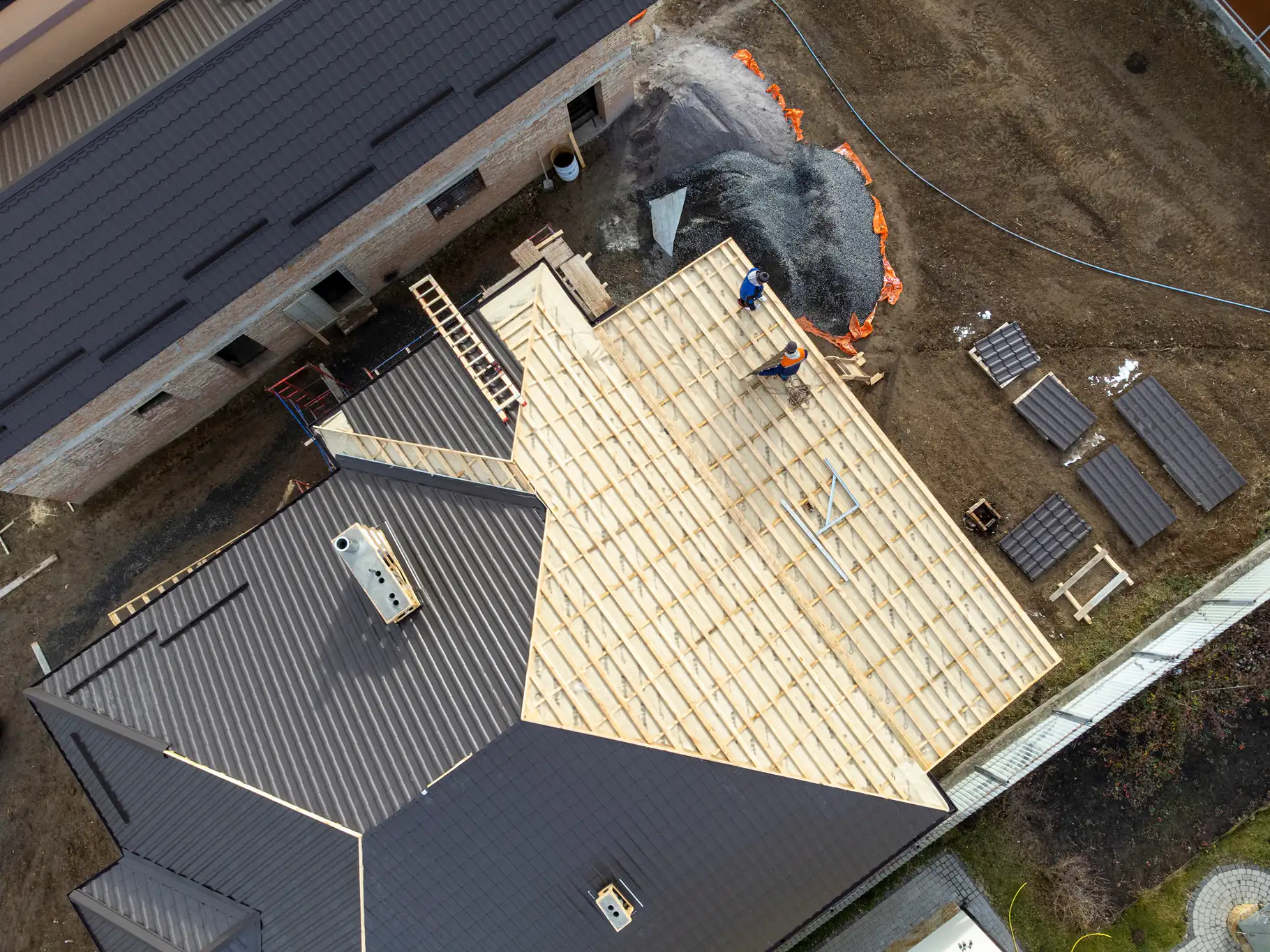
Yes — the City of Menlo Park requires a permit for residential reroofs, and it’s not something you want to skip. Permits are processed through the Menlo Park Community Development Department’s Building Division, and the city lists residential reroofs as a category that can be submitted through their online portal. The permit process exists to ensure the work meets California’s building code standards, including local amendments adopted by Menlo Park.
If a contractor tells you a permit isn’t necessary or suggests skipping it to save time, that’s a red flag. Unpermitted roofing work can create problems when you sell the home, complicate insurance claims, and leave you personally liable if something goes wrong. We pull permits as a standard part of every roofing project in Downtown Menlo Park — it’s included in the scope of work, not an add-on.
Roof repair costs in Downtown Menlo Park average around $398 for smaller repairs, but a full replacement is a different conversation. Depending on the size of your home, the roofing material you choose, and the complexity of your roof’s design — pitch, number of valleys, skylights, chimneys — a full residential reroof in this market typically runs anywhere from $8,000 to $25,000 or more.
In Downtown Menlo Park specifically, a few factors push costs toward the higher end of that range. Many homes here are mid-century builds with architectural details that require careful material matching. If your home has clay tile, for example, sourcing the right profile and color to match existing sections adds cost. If you’re planning to add solar or already have panels, the roofing system needs to be compatible with that installation. A written estimate from a licensed contractor — one that breaks down labor, materials, and permit fees — is the only way to get a number that actually applies to your specific home.
The majority of Downtown Menlo Park’s housing stock was built between the 1940s and 1960s, which means a significant number of homes are now working with roofing systems that are at or past the end of their designed lifespan. The most common issues in homes of this age are granule loss on asphalt shingles, failed or displaced flashing at chimneys and skylights, cracked or slipped clay tiles, and underlayment that has dried out and lost its waterproofing capacity.
Menlo Park’s climate accelerates some of these issues. The wet season runs November through April, and the sustained moisture — combined with the summer dry cycle — puts repeated stress on older materials. The mature tree canopy that makes neighborhoods like Allied Arts and Felton Gables so appealing also means debris accumulates on roof surfaces and in gutters, holding moisture against the roof longer than it should. If your home is more than 20 years old and the roof hasn’t been inspected recently, that’s the right place to start.
The first priority is stopping the water from spreading inside the home. If you’re seeing active water intrusion — dripping from the ceiling, wet drywall, or water pooling — move furniture and valuables out of the affected area and place buckets or towels to limit damage to flooring and walls. Document everything with photos before you clean anything up, especially if you plan to file a homeowner’s insurance claim.
From there, call a roofer who can deploy tarping services for leaking roofs as an emergency measure. A properly installed tarp over the compromised section can stop water intrusion until a full repair is scheduled and weather allows safe work on the roof. Menlo Park’s rainy season can bring back-to-back storms — the December 2025 events that caused flooding on Hamilton Avenue are a recent example — so waiting for a clear weather window before addressing an active leak isn’t always realistic. Emergency tarping buys you time without letting the damage compound. We provide emergency roof repair and tarping in Downtown Menlo Park when situations can’t wait.
Yes. In California, any roofing contractor performing work valued at $500 or more — including labor and materials — is legally required to hold a C-39 Roofing Contractor license issued by the Contractors State License Board (CSLB). This isn’t a technicality. Hiring an unlicensed contractor puts you at risk in several ways: the work may not meet code, your homeowner’s insurance may deny related claims, and you have limited legal recourse if something goes wrong.
You can verify any contractor’s license status directly on the CSLB website using their license number. A legitimate contractor will give you that number without hesitation. In a market like Downtown Menlo Park — where homes regularly sell for $3 million or more — this is not a step to skip. We’re a fully licensed and bonded roofing contractor, and the license number is available before any agreement is signed.
Yes — we offer a 15% discount for senior homeowners, and it applies to roofing work in Downtown Menlo Park. Many of the longtime residents in this area have owned their homes since the neighborhood was built. They’ve maintained these properties through decades of Peninsula weather, and a significant roofing expense hits differently on a fixed income than it does for someone mid-career.
The discount is straightforward — 15% off for qualifying senior customers, applied to the job. There’s no complicated process to access it. If you’re a senior homeowner in Downtown Menlo Park and you’re dealing with a roof that needs attention, mention it when you call and it’s factored into your estimate. We also extend a 15% discount to military members and veterans, reflecting the same straightforward recognition of people who’ve given a lot and deserve a contractor who’s upfront about what things cost.
Other Services we provide in Downtown Menlo Park