
Hear from Our Customers
Most homeowners in Central don’t think about their roof until something goes wrong. A water stain on the ceiling. A damp smell after the first November rain. By then, the damage is already happening — and it’s usually been happening for longer than you’d think.
A properly replaced or repaired roof doesn’t just stop leaks. It protects the structure underneath, keeps your insulation working the way it should, and removes the kind of uncertainty that follows you into every rainy season. For a home worth over a million dollars in the 94401 ZIP code, that’s not a small thing.
Central’s housing stock is old — most of it built between 1940 and 1969. That means aging underlayment, corroded flashing around chimneys, and original drainage systems that were never designed to handle the intense downpour events that San Mateo now sees more frequently. When you fix the roof right, you’re not just patching a problem. You’re protecting an asset that’s taken decades to build.
We started in 1985 when Ramiro’s father founded Eco Air Home Services LLC. Ramiro took over in 2006, and we’ve been serving San Mateo County homeowners continuously ever since. That’s not a tagline — it’s just what happened. When you’ve been working in the same area for 40 years, you get to know the neighborhoods, the housing stock, and the specific ways that Peninsula weather wears on older roofs.
Central San Mateo sits right next to some of the most established residential streets in the county — Baywood-Aragon, North Central, the blocks around Central Park. The homes here have character, and they have age. Our technicians aren’t rotating crews. They’re long-term team members who have worked on mid-century Peninsula construction long enough to know what typically fails, where, and why.
If you qualify for the senior or military discount — 15% off for each — ask about it when you call. A lot of the homeowners in Central do.
It starts with a real inspection — not a glance from the driveway. On a home built in the 1950s or 1960s, the visible surface is rarely the whole story. We look at the field material, the flashing, the underlayment condition, the drainage, and any areas where water has already found a path. You get a clear picture of what’s actually going on before any work is discussed.
From there, if your project requires a permit — and re-roofing in San Mateo does require one — we handle that process for you. The City of San Mateo requires a re-roof permit before work begins, and all roofing assemblies must meet a minimum Class B fire-retardant standard under the city’s adopted building code. That’s not something you want to find out after the fact. Every project we complete in Central is permitted, inspected, and code-compliant.
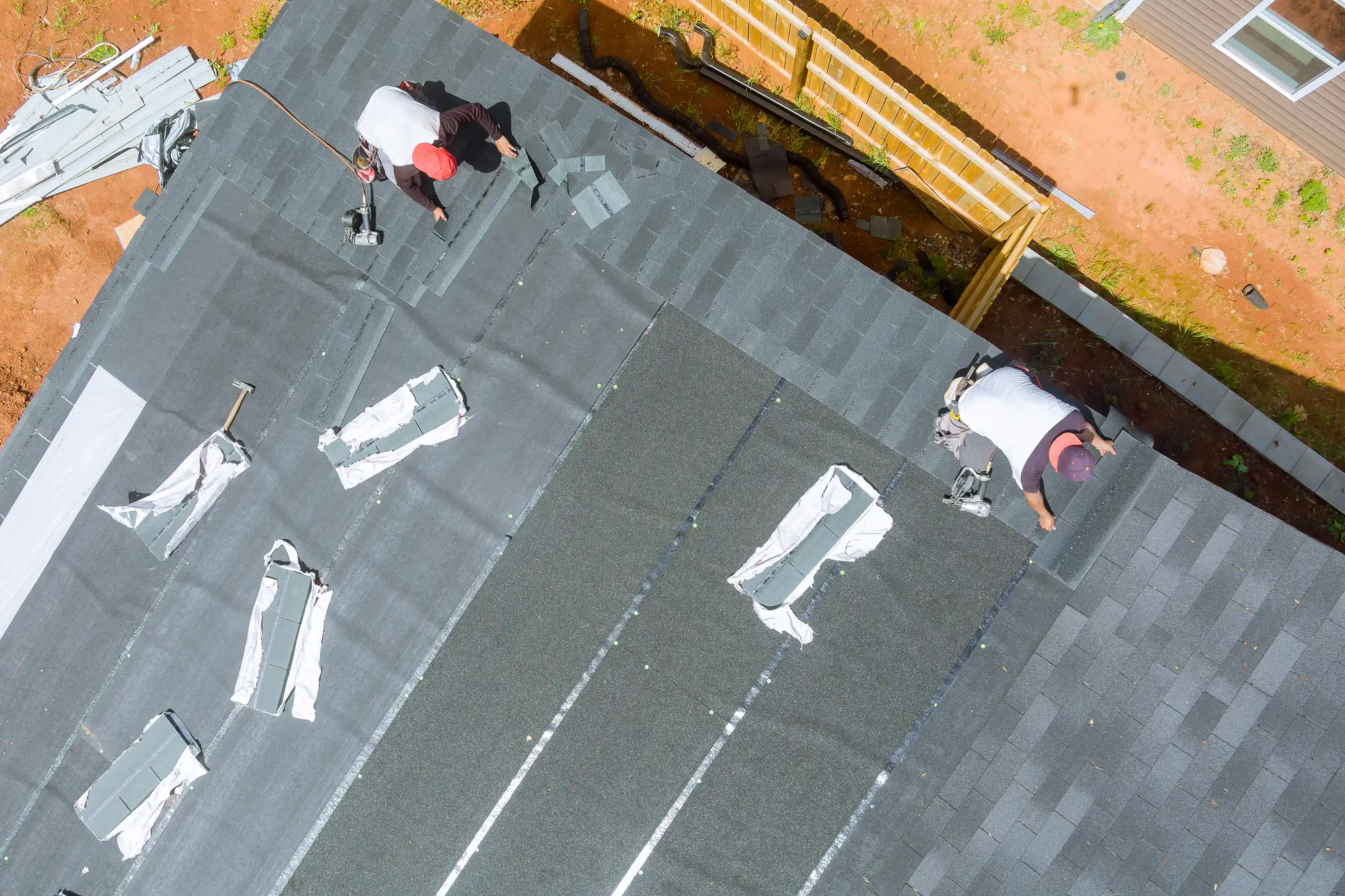
Once the scope is agreed on and the permit is in place, the work gets scheduled. If you’re in the dry season — June through September is the ideal window for full replacements in San Mateo — you’re looking at a clean installation with no weather risk. If you’re dealing with an active leak or storm damage in the middle of winter, emergency tarping gets your home protected fast while a permanent repair is planned. Either way, the process is straightforward, and you’ll know what’s happening at each step.
Ready to get started?
We offer residential and commercial roofing services in Central, San Mateo — and the range matters here because the neighborhood has both. Along the El Camino Real corridor running through Central’s commercial spine, you’ll find older mid-rise buildings and mixed-use properties with flat or low-slope roofing systems that require a completely different approach than the pitched roofs on the residential streets nearby. We handle both.
On the residential side, the services most relevant to Central homeowners are roof replacement, roof leak repair, storm damage inspection, and emergency tarping for active leaks. Given that San Mateo’s wet season increasingly delivers intense, concentrated rainfall rather than steady light rain, a small vulnerability in your roof can become a serious problem overnight. Post-storm inspections are something every homeowner in the 94401 area should be doing after significant rain events — and most aren’t.
For homeowners dealing with an insurance renewal, more carriers are now requiring documented roof age and condition before they’ll continue coverage in San Mateo County. A professional inspection from a C-39 licensed contractor gives you that documentation. We hold all required California licensing, bonding, and insurance — and you can verify our license independently through the California State License Board before you ever sign anything.
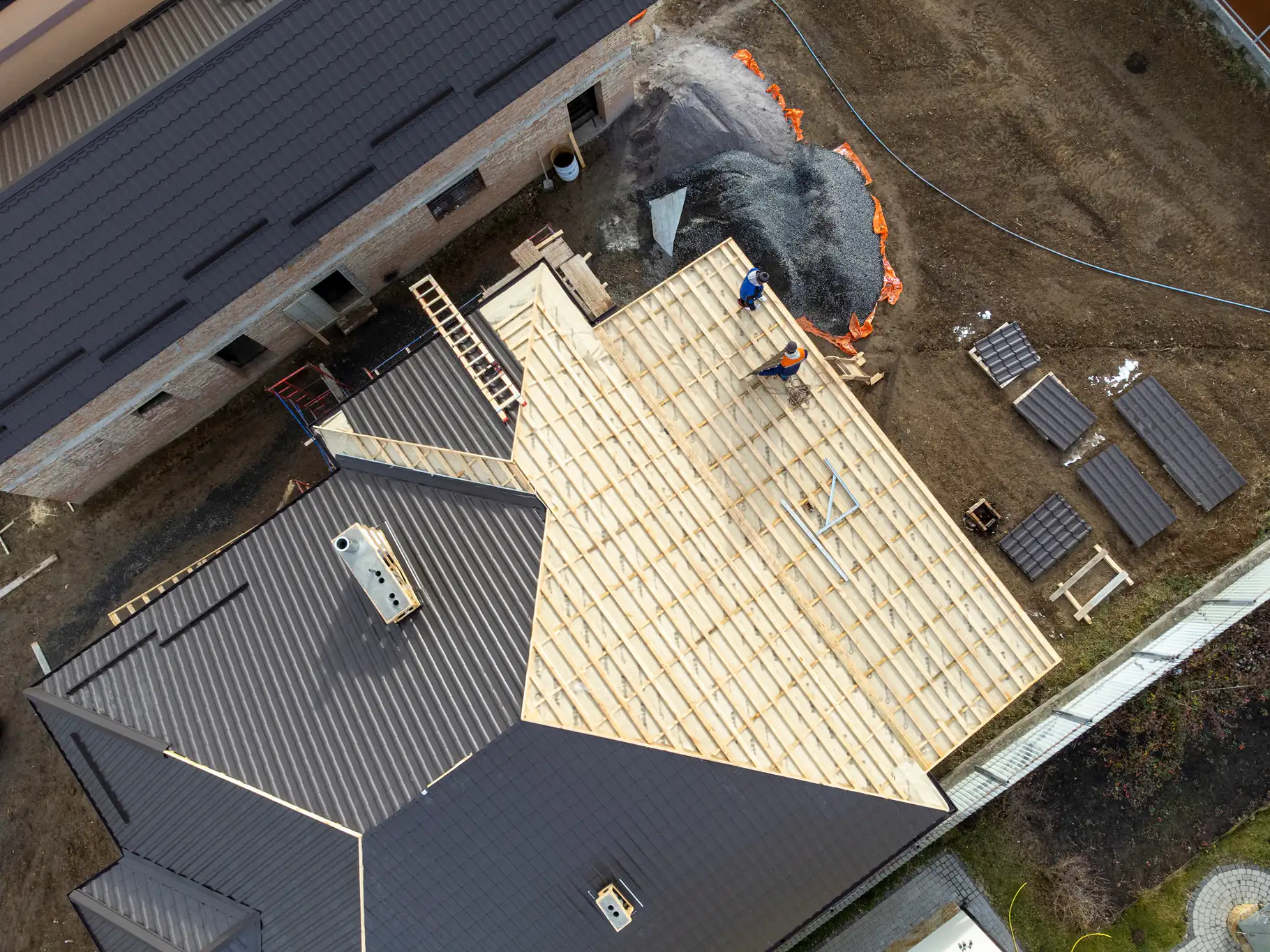
Yes — re-roofing in San Mateo requires a permit, and that applies to the Central neighborhood just like the rest of the city. The permit must be obtained before work begins, not after. This catches a lot of homeowners off guard because it applies even to straightforward shingle replacements, not just major structural work.
The reason this matters beyond just following the rules: an unpermitted roof replacement can create real problems when you go to sell your home or file an insurance claim. In a market where Central San Mateo homes are valued well into seven figures, that’s a risk that isn’t worth taking. We handle the permit application as part of every re-roofing project in Central — you don’t have to navigate the City’s system yourself or figure out the inspection timeline. It’s built into the process.
The honest answer is that most homeowners in Central can’t tell from the ground. What you can see — a few lifted shingles, some granules in the gutter — doesn’t tell you what’s happening at the underlayment level or around the flashing on your chimney or skylights. Those are the spots where water actually gets in, and they’re not visible without getting up there.
What does give you real signals: ceiling stains that appear or grow after rain, a musty smell in the attic, shingles that are curling at the edges, or a roof that’s more than 20 years old on a home built in the 1950s or 1960s. Given that most homes in Central San Mateo North were built between 1940 and 1969, a lot of roofs in this neighborhood are either at or well past the end of their expected service life — even if they haven’t leaked yet. A professional inspection tells you exactly where you stand.
San Mateo’s adopted building code — specifically Title 23, Section 23.08.100 — requires that all roofing assemblies on regulated structures meet a minimum Class B fire-retardant standard. This applies to residential re-roofing projects in Central, not just new construction.
This is something homeowners don’t always know going in, and it’s something that an unlicensed or out-of-area contractor might not flag for you. If non-compliant materials are installed, you’re looking at a failed inspection, potential insurance issues, and the cost of doing the job again. Every installation we complete in Central uses materials that meet or exceed the Class B requirement, and we can document that compliance for your insurance carrier if needed. It’s not an upsell — it’s just how the job is supposed to be done here.
The first step is containment — get something under the drip to protect your floors and belongings, and if you can safely access your attic, check whether water is pooling anywhere near electrical fixtures or insulation. Do not go on the roof yourself during a storm.
The next step is calling a licensed roofing contractor who offers emergency response. We provide 24-hour emergency roofing services and professional tarping for Central homeowners dealing with active leaks. Tarping is a temporary but effective solution — it stops water intrusion fast and protects your home’s interior while a proper repair is planned. San Mateo’s wet season runs from November through April, and climate data shows the area is seeing more intense, concentrated rainfall events than it used to. That means a roof that held up fine through last winter might not hold up through this one. If you’ve had a significant storm come through, a post-storm inspection is worth doing even if you don’t see an obvious leak yet.
Yes — we offer a 15% senior discount on roofing services, and it’s available to qualifying homeowners in Central, San Mateo. There’s also a 15% military discount for veterans and active-duty service members.
Central’s residential neighborhoods have a meaningful senior population — roughly one in six residents in the North Central area is 65 or older, and many of them are long-term homeowners in homes built in the 1950s and 1960s. Those homes are exactly the ones most likely to need a full roof replacement right now. A major roofing project is a significant expense, and for someone on a fixed income, 15% off is a real number. When you call, just mention that you’re a senior or a veteran and ask about eligibility. It’s a straightforward part of how we work with the community we’ve been serving for four decades.
Central San Mateo sits on the Bay side of the Peninsula, which means it gets more sun than the coastside communities — but it also gets the full force of the winter wet season, and the area sees regular fog accumulation, especially overnight and in the mornings. That persistent moisture is harder on roofing materials than most homeowners realize. Moss and algae growth, which thrive in damp conditions, can degrade asphalt shingles and wood materials significantly faster than dry-climate wear alone.
Beyond moisture, San Mateo’s rainfall pattern has been shifting. The area averages around 20 inches of rain per year, but a growing share of that total is falling in intense, short-duration events rather than steady light rain spread across the season. That kind of concentrated water load hits aging roofs hard — it exposes weaknesses in flashing, overwhelms older drainage systems, and accelerates failure in underlayment that’s already near the end of its life. On a home built in the 1950s or 1960s in Central, these factors combine to make regular professional inspections genuinely important, not just a formality.
Other Services we provide in Central