That whistling sound from your gas furnace might be a dirty filter—or a warning sign of dangerous pressure problems in your San Mateo home requiring immediate attention.
You’re sitting in your living room when you hear it—a high-pitched whistle coming from somewhere near the furnace. Maybe it’s been happening for a few days, or maybe it just started tonight. You tell yourself it’s probably nothing, just the system working a little harder than usual. But then you wonder: should I be worried?
If your furnace is 15 years old or older, that whistle might be trying to tell you something important. Some sounds mean you need a new filter. Others mean you need to call someone right now.
Getting a professional inspection through furnace repair services can help diagnose the issue early and prevent costly breakdowns or safety risks. Here’s how to know the difference and what to do about it.
Gas furnaces don’t whistle for no reason. That sound happens when air is being forced through a space that’s too small or when pressure builds up somewhere it shouldn’t.
In newer systems, this usually points to a simple fix. In aging furnaces, the causes run deeper. Metal components expand and contract thousands of times over the years. Seals dry out. Connections loosen. What started as a tight, efficient system gradually develops weak points that change how air and gas flow through the unit.
The whistle itself is just air moving at high speed through a restricted opening. The question is: what’s causing the restriction, and is it putting your family at risk?
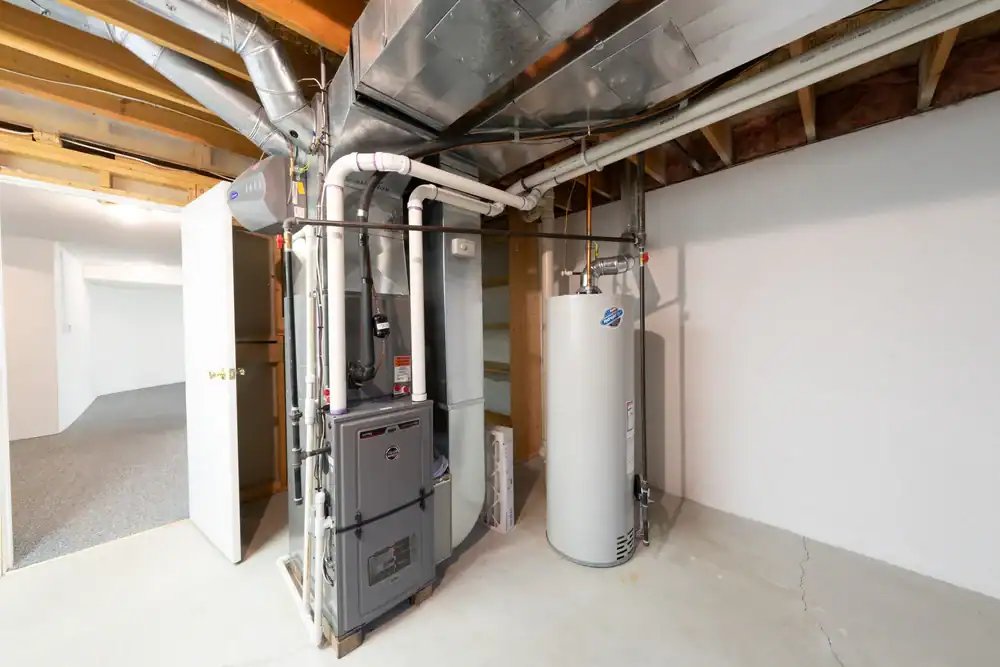
Start with the easy stuff. A clogged air filter is the most common reason furnaces whistle, and it’s something you can check yourself in about 30 seconds. Pull out the filter and hold it up to a light. If you can’t see through it, that’s your problem. Replace it and see if the sound stops.
Blocked return vents cause similar issues. Furniture pushed against a vent, a rug covering a floor register, or dust buildup around the intake can all restrict airflow enough to create that whistling sound. Walk through your home and make sure nothing is blocking the vents, and that at least 75% of them are fully open.
Duct leaks are trickier. If your ductwork is more than 20 years old—which is common in many San Mateo County homes—connections can separate or develop gaps. Air escapes through these openings instead of flowing smoothly through the system, creating whistling sounds at the leak points. You might hear it coming from certain vents more than others, or notice it gets louder when the system first kicks on.
But here’s where aging furnaces get dangerous. The same whistling sound can also mean your gas valve is malfunctioning, your pressure switch is failing, or your heat exchanger has developed a crack. These aren’t DIY fixes. They’re safety issues that need professional attention, and they’re more common in furnaces that have been running for 15 years or more.
The metal in your heat exchanger goes through extreme temperature changes every time your furnace cycles. Over thousands of heating cycles, that metal can develop stress fractures. A cracked heat exchanger doesn’t just affect performance—it can allow carbon monoxide to leak into your home. And carbon monoxide is colorless, odorless, and deadly.
Pay attention to when the whistling happens. If you hear it specifically when the furnace first turns on, before the blower really gets going, that’s often a gas valve issue. The valve controls gas flow into your burner chamber, and when it starts to fail, gas can escape through small openings, creating a whistling or hissing sound from the pressure.
This is one of those situations where you don’t wait to see if it gets worse. If you hear whistling at startup and you smell gas—even faintly—turn off your furnace at the breaker, open windows if you can do so safely, leave your home, and call your gas company from outside. Don’t flip light switches or use your phone inside the house. Any spark can ignite gas that’s accumulated.
Even without a gas smell, whistling at startup needs professional diagnosis. Gas valves in older furnaces wear out. The internal components that regulate pressure and flow degrade over time, and when they fail, they can create dangerous situations fast.
Pressure switch problems show up differently. Your furnace might try to start, then shut down before it actually lights. Or it might cycle on and off repeatedly without ever producing heat. The pressure switch confirms that your inducer motor is creating proper airflow before allowing gas to flow. When it fails, your furnace won’t light—which is frustrating, but it’s actually a safety feature working correctly.
What causes pressure switch failures in aging systems? Sometimes it’s the switch itself wearing out. More often, it’s a symptom of something else: blocked venting, cracked or damaged tubing that connects the switch to the heat exchanger, or problems with the inducer motor. In high-efficiency furnaces, condensate drainage clogs can create pressure problems that prevent the switch from closing.
These components work together as a safety system. When one fails, your furnace shuts down to prevent dangerous conditions. That’s why you might notice your furnace trying to start three or four times, then giving up and just blowing room-temperature air through your vents. It’s not broken randomly—it’s detecting a problem and refusing to light.
Get a Free Quote!
Connect with a Eco Air Cooling and Heating expert for fast, friendly support.
This is the part nobody wants to hear about, but if your furnace is 15 years old or older, you need to understand it. The heat exchanger is the barrier between combustion gases and the air that circulates through your home. When it cracks, those barriers break down.
Carbon monoxide is a byproduct of burning natural gas. In a healthy furnace, it vents safely outside. When your heat exchanger cracks, carbon monoxide can leak into the air that’s being pushed through your ductwork and into your living spaces. You won’t smell it. You won’t see it. But you’ll feel it—headaches, dizziness, nausea, fatigue. Symptoms that feel like the flu but won’t go away as long as you’re in the house.
Older furnaces develop cracks because of metal fatigue. Every time your system heats up and cools down, the metal expands and contracts. After thousands of cycles, weak points develop. The metal becomes brittle. Small cracks form, then grow larger over time.
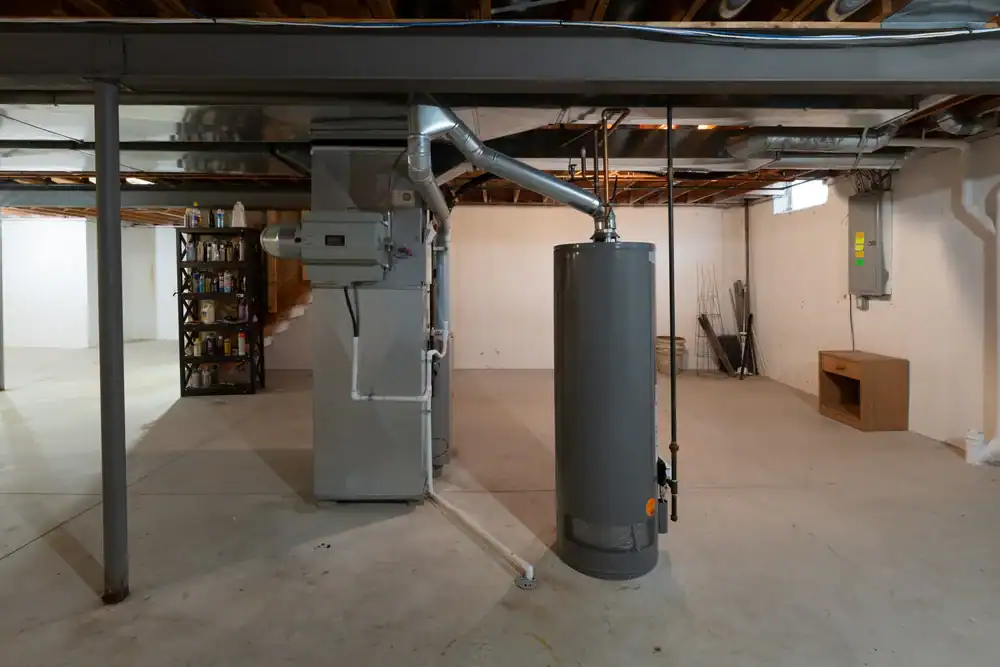
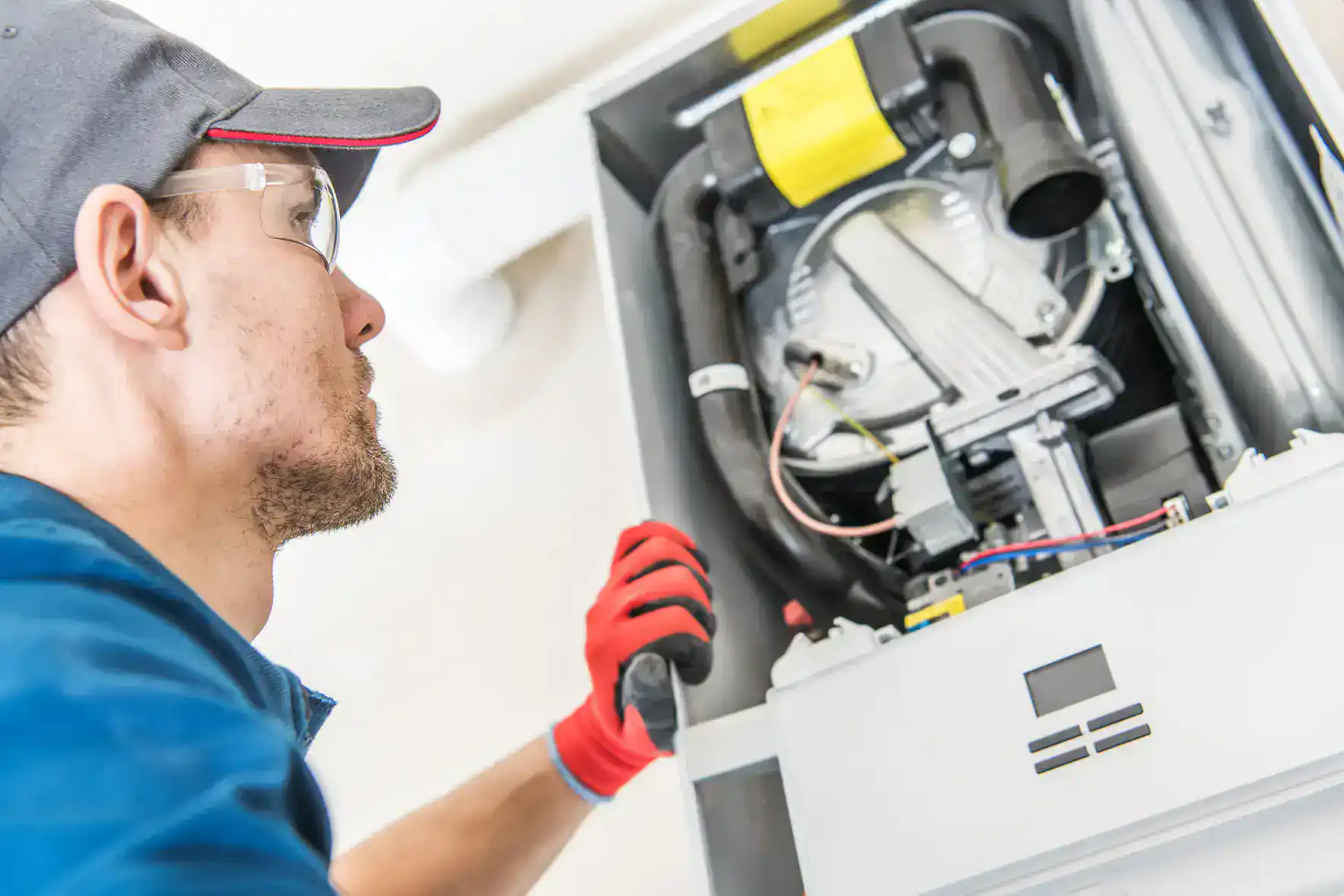
You can’t see a cracked heat exchanger without taking your furnace apart, and even then, cracks hide in places that are hard to inspect. That’s why professional HVAC technicians use specialized cameras and carbon monoxide testing equipment to find them.
But there are signs you can watch for. If your carbon monoxide detector goes off, that’s the most obvious one—and it means you need to evacuate immediately and call for help from outside your home. Don’t assume it’s a false alarm. Don’t try to troubleshoot. Get everyone out, including pets, and call 911.
More subtle signs include changes in how your burner flames look. A healthy gas furnace flame is blue with maybe a small yellow tip. If the flames are mostly yellow or orange, something’s wrong with combustion. That could be a cracked heat exchanger allowing extra air into the chamber, or it could be another issue affecting the air-to-fuel ratio. Either way, it needs professional attention.
Soot buildup inside your furnace cabinet or around the burner area suggests incomplete combustion. When gas doesn’t burn completely, it produces more carbon and leaves black residue. This happens when the combustion process is disrupted—often by cracks or damage in the heat exchanger.
Some furnaces shut down when heat exchangers crack, triggered by safety features like flame rollout sensors. If your furnace keeps trying to start but shuts off before it produces heat, or if it cycles on and off rapidly without completing a full heating cycle, the safety system might be detecting a problem. That’s actually the best-case scenario—your furnace protecting you by refusing to run.
When we find a cracked heat exchanger, most homeowners ask if it can be repaired. The answer is almost always no, and here’s why: welding or patching a crack in a heat exchanger doesn’t create a reliable, long-term fix. The metal is already compromised. The extreme temperatures inside the chamber would quickly weaken any patch. And since you can’t easily access the exchanger to monitor it, you’d never know if the repair failed until carbon monoxide started leaking again.
Industry safety standards don’t allow technicians to repair cracked heat exchangers for these reasons. The risk is too high. And even if repair were technically possible, the cost would approach or exceed the cost of a new furnace anyway.
This is especially true for furnaces that are 15 years old or more. By that age, other components are also nearing the end of their lifespan. Replacing just the heat exchanger—if you could—means you’d still have an aging blower motor, worn gas valve, old pressure switches, and deteriorating ductwork. You’d likely face another major repair within a year or two.
It’s a tough conversation, but it’s also a safety issue. Carbon monoxide exposure is serious. Low-level exposure over time can cause long-term health problems. High-level exposure can be fatal. When a heat exchanger cracks, the safest response is furnace replacement.
If you’re told your heat exchanger is cracked, ask to see the evidence. We’ll show you the crack using a camera or mirror, or we’ll show you the carbon monoxide readings that indicate a problem. We’ll explain what we found and why it’s a concern. If someone tells you your heat exchanger is cracked but can’t or won’t show you proof, get a second opinion.
Strange sounds from your furnace don’t always mean emergency, but they always mean something. Start with the simple checks—replace your filter, clear blocked vents, make sure nothing is obstructing airflow. If the whistling stops, you’ve solved it.
If it doesn’t stop, or if the sound happens at startup, or if you smell gas at any point, call for professional heating repair. Aging furnaces need experienced eyes. The issues that develop after 15 or 20 years of operation aren’t always obvious, and they can be dangerous if ignored.
Your furnace is trying to tell you something. The question is whether it’s saying “I need a filter” or “I need help now.” When you’re not sure, err on the side of caution. A service call costs less than an emergency replacement, and it costs a lot less than the alternative if something is seriously wrong.
We’ve been diagnosing furnace problems in the Bay Area for 40 years. If your aging system is making sounds you don’t understand, or if it’s been more than a year since your last inspection, reach out for a thorough evaluation from knowledgeable HVAC technicians who’ve seen it all.
Summary:
Article details:
Share: